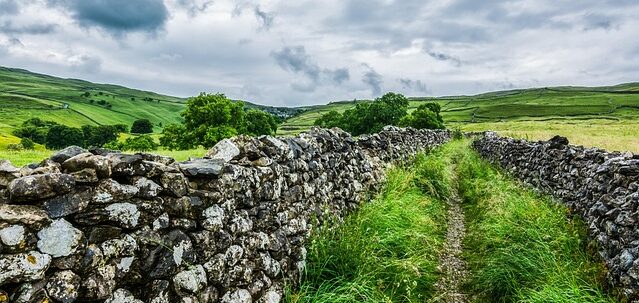
Route: London → York → Edinburgh Total distance: approximately 540 km (335 miles) Driving time: approximately 7–8 hours via M1/A1(M) (spread over 5–7 days) Alternative: East Coast Main Line train — London King’s Cross to Edinburgh Waverley in approximately 4.5 hours (LNER) Currency: British Pound Sterling (£). 1 EUR ≈ £0.85 Driving side: Left Best months: May–June, September (mild, long daylight, pre/post-tourist peak); August for Edinburgh Festival
The Shape of This Route
This route follows the ancient north-south spine of England into Scotland — the road that the Romans built, the Danes raided, the Normans controlled, and the East Coast Main Line now parallels at 200 km/h. London to York to Edinburgh is not just a drive between three cities. It is a cross-section of a country that has been arguing with itself for a thousand years about power, identity, and who gets to call what “home,” and has conducted the argument in a language that never says directly what it means.
The route moves from overwhelming to intimate to dramatic. London is the city that contains everything and refuses to simplify. York is the city that stopped growing at the right moment and preserved the result. Edinburgh is the city that put a castle on a volcano and a parliament at the bottom of the hill and lets the visitor decide which one represents Scotland.
Three cities. Three versions of Britain. One road north, getting narrower, getting older, getting more honest — because the further you travel from London, the less the country hides behind understatement and the more it says what it actually feels.
London — The Overwhelming Start
London does not introduce itself. It arrives — all of it, simultaneously — and expects you to find your own way through the layers. Roman walls under medieval churches under Georgian terraces under Victorian train stations under glass towers under construction cranes under a sky that is grey more often than not and that Londoners describe as “not too bad, actually” when it is raining.
The Tower of London sits on the north bank of the Thames — a fortress built by William the Conqueror in the 1070s after he decided that the best way to control a conquered city was to build a castle inside it and fill it with soldiers and, eventually, prisoners and Crown Jewels. The White Tower at its centre is Norman architecture at its most blunt: thick walls, small windows, the aesthetic of a building that was designed to intimidate and has been doing so for nearly a thousand years. The Crown Jewels are inside the Jewel House — the queue moves on a conveyor belt past the Imperial State Crown and the Sovereign’s Orb, which tells you everything about the British relationship with their monarchy: they built a conveyor belt to move tourists past the crown, and nobody finds this contradictory. Adult tickets approximately £35–37. Book online. Allow 3 hours.
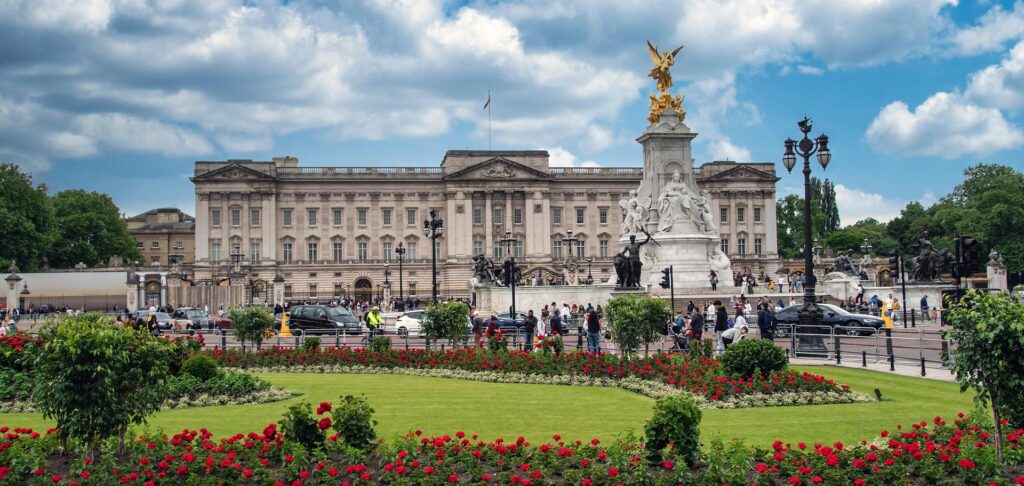
Westminster Abbey has been the coronation church since 1066 — every English and then British monarch has been crowned here, and many are buried here, alongside poets, scientists, and national heroes. The architecture is Gothic in a way that defines what Gothic means: pointed arches, ribbed vaults, flying buttresses, the whole stone grammar of medieval Christianity expressed at the scale of national identity. Entry approximately £27 for adults. Closed to tourists on Sundays (open for worship — free but no sightseeing). Book timed tickets.
The South Bank is the walk that reveals London’s contradictions best. Start at the Tate Modern (free), walk east along the Thames past the Globe Theatre (Shakespeare’s playhouse, reconstructed in oak and thatch), the food stalls under Waterloo Bridge, the street performers, the skateboarders, the National Theatre, and the brutalist concrete of the Southbank Centre. On the opposite bank: the Houses of Parliament, St Paul’s Cathedral, the Tower, the City of London’s glass towers — the entire institutional weight of British history visible across the river from a path where buskers play saxophone and someone is selling crêpes from a van. The South Bank is free, always open, and the best way to understand that London is not one city but dozens of cities occupying the same postal code and pretending to get along.
Eat fish and chips — but only from a proper chippy, not a tourist restaurant on the Strand. Eat a Sunday roast — beef, Yorkshire pudding, roast potatoes, gravy, vegetables boiled to the point of confession. Drink a pint in a pub that has carpet (the presence of carpet in a pub is the most reliable indicator of authenticity; chains have wooden floors). A pint costs £6–8 in central London and the publican will not ask if you want a large or a small — “a pint” means a pint, 568 ml, and anything less is a half.
Stage One — London to York
Distance: approximately 330 km (205 miles) Driving time: 4–4.5 hours via M1 then A1(M) Train: approximately 2 hours (LNER from King’s Cross to York)
The drive north on the M1 is the least scenic motorway in England — flat, industrial, lined with distribution centres and service stations. The landscape improves after you join the A1(M) north of Doncaster: the Vale of York opens, the terrain greens, and the Minster’s tower appears above the plain before anything else in the city is visible. The train is the better option if you are not committed to the car — the East Coast Main Line from King’s Cross to York is fast, comfortable, and the views through Cambridgeshire and Yorkshire are the kind of gentle pastoral that English landscape painters spent centuries trying to capture and eventually did.
Driving in Britain requires adjustment from continental Europe: you drive on the left, the steering wheel is on the right, roundabouts circulate clockwise, and the motorway speed limit is 70 mph (113 km/h). Rental cars are typically right-hand drive. If arriving from the continent, request an automatic transmission — British manuals require left-hand gear changes, which is disorienting on top of left-hand driving.
York — The Walled City
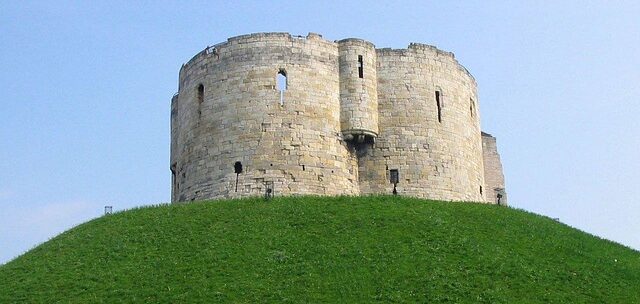
York is the city that stopped at the right time. The medieval walls — 3.4 km of them, the longest in England — still encircle the old centre, and you can walk the circuit on top of them, looking down into streets that have been in continuous use since the Romans built Eboracum here two thousand years ago.
York Minster is England’s largest medieval cathedral — a Gothic structure that took 250 years to build (1220–1472) and contains the greatest concentration of medieval stained glass in the country. The Great East Window, measuring approximately 23 by 9.4 metres, is the largest expanse of medieval stained glass in the world. The glass survived the Reformation, the Civil War, the Baedeker Blitz of World War II, and a devastating fire in 1984, each time being removed, stored, or repaired by people who understood that some things are worth more effort than efficiency can justify. Adult entry approximately £20; tower climb £26 combined. Children under 16 free with a family group.
The Shambles is a medieval street so narrow that the timber-framed buildings lean toward each other across the lane, nearly touching at roof level. The buildings date to the fourteenth century, the street name derives from the Anglo-Saxon Fleshammels (the street of the butchers), and the visual atmosphere inspired the set design for Diagon Alley in the Harry Potter films, though the street existed six hundred years before J.K. Rowling noticed it. It is always crowded. It is always worth it.
The Jorvik Viking Centre is built on the site of an actual Viking-age excavation — Jórvík, the Norse name for York, which was the capital of the Viking Kingdom of Northumbria in the ninth and tenth centuries. The centre uses the original archaeological finds to recreate the Viking-age streets, complete with sounds, smells, and a ride through the reconstruction on a moving car. It is part museum, part theme park, and entirely honest about being both. Entry approximately £15 adults.
Eat Yorkshire pudding — not as a side dish but as a main course, filled with stew or roast beef and gravy, the way Yorkshire people eat it. Drink Yorkshire tea — the county considers tea a fundamental human right and the quality reflects this conviction. Drink ale from one of York’s many pubs — the city has more pubs per square mile than almost any other English city, and several of them date to the fifteenth century, which means the floors are uneven, the ceilings are low, and the beer is excellent.
Stage Two — York to Edinburgh
Distance: approximately 310 km (195 miles) Driving time: 3.5–4 hours via A1(M) then A68/A7 or A1 to Edinburgh Train: approximately 2.5 hours (LNER from York to Edinburgh Waverley)
The drive north from York crosses the Vale of Mowbray, passes Durham (whose Norman cathedral is visible from the motorway and is worth a stop if you have the time), and crosses into Scotland after Berwick-upon-Tweed — the most besieged town in English history, which changed hands between England and Scotland thirteen times. The border itself is marked by a sign that says “Welcome to Scotland” in English and Gaelic, and the landscape does not change, because the border is a political fact, not a geographic one, and the hills do not recognise it.
The alternative: cross the border on the A68 through the Scottish Borders — a slower, emptier, more dramatic road through the Cheviot Hills, Jedburgh (ruined abbey), and the Moorfoot Hills into Edinburgh from the south. This is the road the armies used. It feels like it.
Edinburgh — The Dramatic End
Edinburgh is a city of vertical argument. The Old Town sits on the ridge between the Castle Rock and Holyrood, medieval and dense, the buildings stacked six or seven stories high with narrow “closes” — alleyways — dropping steeply off both sides. The New Town sits to the north, built in the eighteenth century, neoclassical and spacious, the streets laid out in a grid that was designed to look like Athens and succeeded enough that Edinburgh is still called the Athens of the North. The two towns face each other across a valley that was once a loch and is now a park and a railway line, and the argument between them — medieval versus Enlightenment, chaos versus order, romance versus reason — is the argument that Scotland has been having with itself for three hundred years.
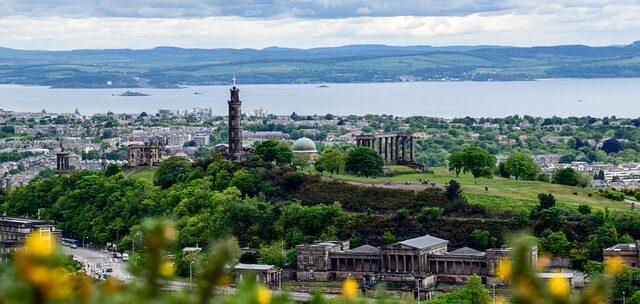
Edinburgh Castle dominates from the Castle Rock — a volcanic plug that has been fortified since at least the twelfth century. The castle holds the Scottish Crown Jewels (the Honours of Scotland, older than the English Crown Jewels), the Stone of Destiny (returned from Westminster in 1996 after 700 years), and the One O’Clock Gun, which has been fired every day except Sundays since 1861 as a time signal for ships in the Firth of Forth. Adults approximately £21.50 online, £24 walk-up. Book online — this is Scotland’s most visited paid attraction.
Arthur’s Seat — an ancient volcanic peak, 251 metres high, sitting in Holyrood Park at the eastern end of the Royal Mile — is the reason Edinburgh feels like no other capital in Europe. You can walk from a café on the Royal Mile to the summit of a volcano in forty-five minutes, and from the top, the view includes the castle, the Firth of Forth, the Pentland Hills, and the North Sea. The hike is free, open year-round, and requires only sturdy footwear and the acceptance that Edinburgh’s weather can change three times during the ascent. Go in the evening for the light. Go in the wind for the honesty.
The Royal Mile runs from the castle at the top to Holyrood Palace at the bottom — one mile, one street, the spine of the Old Town. The buildings are stone, tall, and dark with the particular Scottish darkness that comes from centuries of coal smoke and rain. The closes that branch off the Mile — Advocate’s Close, Mary King’s Close, Fleshmarket Close — are narrow, steep, and historically dense: plague victims were sealed into some of them, body snatchers operated in others, and the ghost tours that run through them every evening are simultaneously theatrical and historically accurate.
Eat haggis — Scotland’s national dish: sheep’s heart, liver, and lungs, minced with onion, oatmeal, and spices, traditionally encased in a sheep’s stomach. It tastes better than it reads. Eat cullen skink — smoked haddock chowder, thick and warming, the soup equivalent of a Scottish afternoon. Drink Scotch whisky — the Scotch Whisky Experience on the Royal Mile offers guided tastings, and the city has dedicated whisky bars where the selection runs to hundreds of single malts. A dram is the measure. The plural is drams. The British understatement system does not apply to whisky: when a Scot says a whisky is “no bad,” they mean it is excellent, and when they say it is “grand,” they mean you should order another.
Practical Notes
Driving: The UK drives on the left. This is non-negotiable and requires full attention for the first day. Roundabouts are clockwise. Speed limits: 70 mph motorway, 60 mph single carriageway, 30 mph in towns. Speed cameras are everywhere and automated. London has the Congestion Charge (£15/day, Mon–Fri, payable online via tfl.gov.uk) and the Ultra Low Emission Zone (ULEZ, £12.50/day for non-compliant vehicles). If you are not driving in London — and you should not be driving in London — these do not apply.
Trains: The East Coast Main Line (LNER) runs London King’s Cross → York → Edinburgh Waverley. London to York: ~2 hours. York to Edinburgh: ~2.5 hours. Advance tickets from approximately £30–50 per leg if booked early; walk-up fares are significantly more. Book at lner.co.uk or trainline.com. The train is faster and less stressful than driving and the views through Yorkshire and Northumberland are the reason windows were invented.
Weather: It will rain. Not constantly, but often, and without the courtesy of a forecast you can rely on. Pack layers. Pack waterproofs. The British description “changeable” means: bring everything. Edinburgh is windier and colder than London. York is in between. The marble in your pocket from Brno will not help with any of this.
Pubs: Pubs close at 11 PM in England (later on weekends, later in Scotland). Last orders are called approximately 15 minutes before closing. A “round” means you buy drinks for everyone at your table and they reciprocate on subsequent rounds. Leaving before buying your round is a social offence more serious than most criminal acts. Tipping at bars is not expected (unlike restaurants, where 10–12.5% is standard).
Cost: London is expensive — among the most expensive cities in Europe. York is moderate. Edinburgh sits between the two. A pint: £5.50–8 depending on city and pub. Fish and chips: £8–14. Museum entries: many London museums (British Museum, National Gallery, Tate Modern, V&A) are free. York Minster and Edinburgh Castle are paid. Budget accordingly — one day in London costs what three days cost in Brno.
What This Route Is Really About
Britain is the country where the distance between what is said and what is meant is the culture itself.
London says “mind the gap” and means: watch where you step, manage your expectations, pay attention to the space between the platform and the train and, by extension, between the surface of everything and the reality underneath it. The gap is the instruction. Mind it.
York says “quite nice, actually” and means: a walled city with a Gothic cathedral and Viking ruins and the best preserved medieval street in Europe, described with the same adjective a Yorkshireman would use for a decent cup of tea, because the gap between the magnificence of the thing and the modesty of the description is where the pride lives.
Edinburgh says nothing. It puts a castle on a volcano and a parliament at the bottom of the hill and lets the view speak. Scotland’s relationship with understatement is different from England’s — it is not that Scots do not say what they mean, but that they do not need to, because the landscape is already making the argument at full volume. The castle is on a rock. The volcano is in the park. The wind is on the Royal Mile. The whisky is in the glass. None of it requires interpretation. All of it requires presence.
This route traces the gradient from interpretation to presence — from a city where everything is coded (London) through a city where history is preserved so completely that the code is visible in the architecture (York) to a city where the code drops away and the rock and the wind and the whisky say directly what they mean (Edinburgh). By the time you reach Arthur’s Seat, you are standing on a volcano in a capital city, and nobody is being ironic about it.

Beyondia
Trusted Travel CompanionReal digital nomad. I travel. I learn. I grow.
What about you? Where are you going?