GoBeyondia Atlas 🗺️ North-America Caribbean 🗾
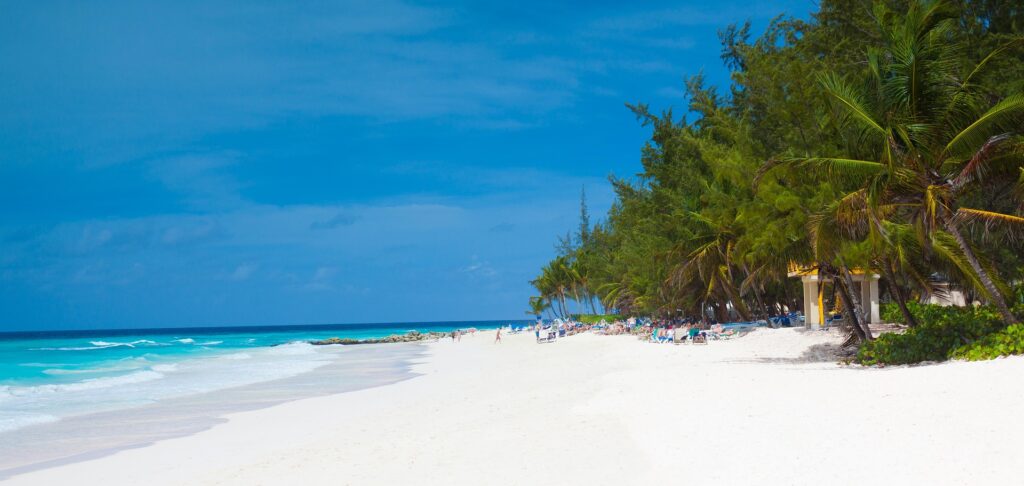
Barbados: Where the first permanent English settlement arrived in 1627 and by the 1640s the entire island had been converted into a sugar plantation worked by enslaved Africans under a legal code that defined them as real estate — the prototype of British slave society that was then exported to Jamaica, the Carolinas, and across the Atlantic world — and where between 1627 and 1807 approximately 387,000 Africans were shipped against their will to an island twenty-one miles long and fourteen miles wide to produce sugar for a European market whose appetite for sweetness was functionally limitless — and where on April 14, 1816, an African-born enslaved man named Bussa led four hundred people into the largest slave rebellion in Barbadian history, was killed in battle, and is now a National Hero — and where at midnight on November 30, 2021, three hundred and ninety-six years after the British first claimed the island, the royal standard was lowered, Dame Sandra Mason was sworn in as the first president, a Barbadian poet told the ceremony to “full stop this colonial page,” and a country of three hundred thousand people became the world’s newest republic — because Barbados does not leave sentences unfinished.
Barbados in 30 Seconds
A coral island in the eastern Caribbean, the most windward of the West Indies, roughly triangular, flat enough that there was nowhere for enslaved people to hide when they rebelled — no mountains, no jungle, no interior. That geography shaped everything. When the English arrived in 1627, they found an island uninhabited — the indigenous Arawak and Carib peoples had already been removed by the Spanish and Portuguese. Within two decades, English investors had committed every acre to sugar. By the 1670s, enslaved Africans outnumbered white settlers nearly ten to one. The Barbados Slave Code of 1661 was the legal architecture of dehumanization — defining enslaved Africans as lifelong chattel property, then as real estate — and this code was exported to colony after colony, including to the Carolinas in North America, where settlers from Barbados founded Charleston. Barbados was not one plantation colony among many. It was the first. The model. The proof of concept for an economic system that enriched the British Empire and its royal family for two centuries. Between 1627 and 1807, approximately 387,000 Africans were transported to this island — more than the total population of Barbados today. The mortality rate on the sugar plantations was so high that a constant supply of new enslaved people was required simply to maintain the workforce. In 1816, Bussa — an African-born man who held the position of ranger on Bayley’s Plantation, giving him more freedom of movement than most enslaved people — led four hundred men and women into rebellion on Easter Sunday. Over seventy plantations were affected. White planters fled to Bridgetown. The rebellion was crushed within three days by colonial militia on Barbados’s flat terrain, where horses and firearms had every advantage. Bussa was killed in battle. About one thousand enslaved people died — fifty in combat, seventy executed in the field, one hundred and forty-four executed after trial. One white civilian was killed. Slavery was abolished in the British Empire in 1834. Barbados gained independence in 1966 but retained Queen Elizabeth II as head of state. On November 30, 2021, at the stroke of midnight, Barbados became a republic. The Queen’s representative was replaced by Dame Sandra Mason — a woman from a working-class rural family, educated in the public school system, the first woman called to the Barbados Bar. Prince Charles attended the ceremony and acknowledged the “appalling atrocity of slavery” without apologizing for the monarchy’s role in it. Rihanna — born Robyn Rihanna Fenty, from a working-class Barbadian family — was declared a National Hero. The prime minister told her: “May you continue to shine like a diamond.”
Evoke — Why You Visit Barbados
You come to Barbados because you have been carrying something inherited — a structure, a contract, a relationship, a title — that was imposed by someone else’s design, and you have been functioning within it so long that you have forgotten it was never yours. Barbados carried the British monarch as head of state for three hundred and ninety-six years. The monarch whose ancestors invested in the transportation and sale of enslaved Africans. Whose government wrote the slave codes. Whose empire extracted the sugar. Barbados did not throw off the monarchy in revolution. It did not break away in anger. It held a ceremony. It lowered a flag. It raised another. It swore in a president who looked like the country. A poet said the most precise sentence in the history of decolonization: “Full stop this colonial page.” Not a dash. Not an ellipsis. A full stop. The sentence was finished. You come because you have a sentence that needs finishing — the partnership that ended but was never formally closed, the agreement that expired but was never revoked, the identity that was given to you by someone who no longer has the authority to define you. Barbados will show you that the most powerful act of independence is not the dramatic break. It is the quiet completion. The ceremony at midnight. The flag coming down. The new one going up. The full stop.
Explore — How You Experience Barbados
Walk through Historic Bridgetown, a UNESCO World Heritage Site, and understand that this port was built on sugar money and that the sugar was built on enslaved labor — the entire city a monument to extracted wealth and the people who survived its extraction. Visit the Bussa Emancipation Statue in Bridgetown, commemorating the man who led four hundred people into rebellion on flat ground with no cover against a mounted militia, knowing the odds, choosing to fight anyway. Stand at Gun Hill Signal Station in the Parish of St. George, one of six lookout points built after the 1816 rebellion so that colonial authorities could detect slave revolts from high ground — the island’s geography weaponized into a surveillance system. Then visit a sugar plantation — several are preserved — and understand that the entire landscape was engineered for a single purpose: maximum extraction from minimum mercy. The fields are flat. The processing works are central. The quarters for enslaved people are positioned for oversight. Every sightline serves the planter. Then go to Heroes Square in the capital — the site where, on November 30, 2021, the royal standard came down for the last time. Stand where Sandra Mason stood when she said: “We the people must give Republic Barbados its spirit and its substance. We must shape its future.” Understand that those words were spoken in the shadow of the same parliament building that once housed a legislature controlled entirely by slaveholding planters — the same physical architecture, repurposed by the descendants of the people it was designed to exclude.
Evolve — Who You Become in Barbados
You leave Barbados understanding that completion is its own revolution. The island did not need to burn the colonial page. It needed to finish it. Bussa’s rebellion in 1816 was crushed — but it was the first of three uprisings across the British West Indies that shook public faith in slavery and contributed to abolition eighteen years later. The rebellion failed on its own terms and succeeded on history’s. Independence in 1966 was incomplete — sovereignty with a foreign sovereign. The republic in 2021 was the full stop. And the three most powerful people on stage that night were women: the prime minister, the president, and the national hero. All three from working-class Barbadian families. All three shaped by a public education system that was itself a product of post-independence investment. The country that was the first British slave society produced, three hundred and sixty years later, the ceremony that showed the rest of the Caribbean what a completed sentence looks like. You come home and look at the inherited structure you are still carrying — the title that was given, the relationship that was imposed, the definition of yourself that came from someone else’s system — and you do not revolt against it. You do not argue with it. You hold a ceremony. You lower the flag. You raise your own. You say the sentence that needed saying. Full stop.
Your practical guide to Barbados starts bellow 👇
🕰️ Barbados Historical Backdrop
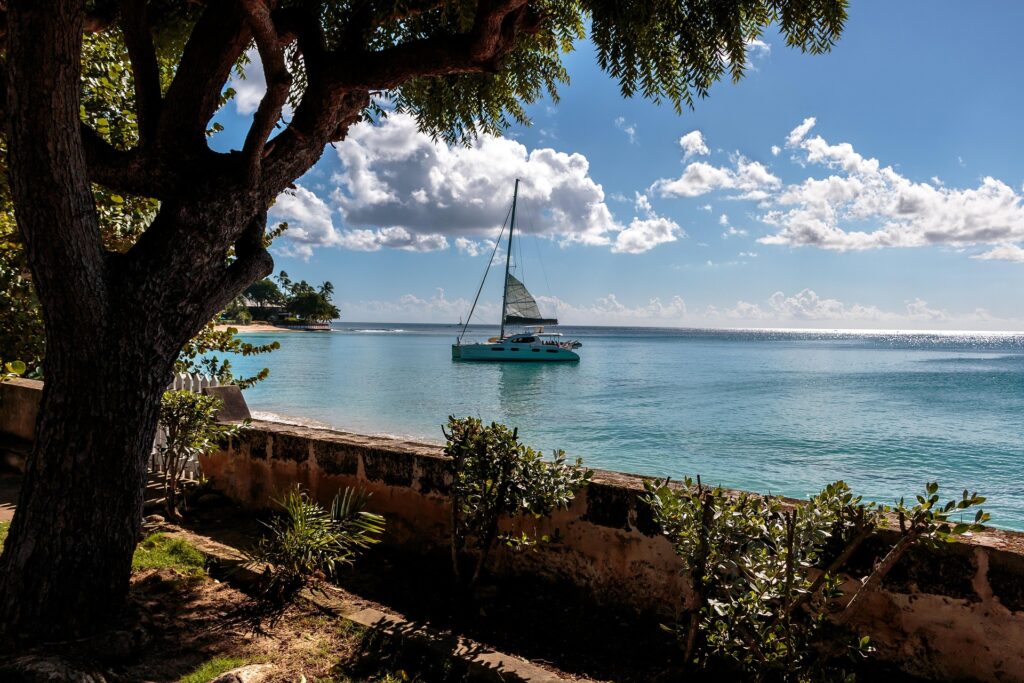
Barbados’ history is a distinct narrative of continuity and resilience. Settled by the British in 1627, it remained an uninterrupted colony for over 300 years until its independence in 1966—a rarity in the Caribbean’s shifting colonial landscape. This “Little England” heritage is woven into the island’s fabric, from its love of cricket to the neo-Gothic Parliament buildings in Bridgetown. The island’s story is fundamentally linked to the sugarcane industry, which shaped its economy and social structure, but it is also defined by the courage of those who sought freedom. Today, Barbados is a sophisticated republic that fiercely protects its “Bajan” identity, blending high-end luxury with an authentic, community-focused spirit that prioritizes education, hospitality, and sustainable island living.
🌟 Barbados Local Experiences
Beyond the world-class resorts, discover the soul of Barbados in the joyful, smoky chaos of the Oistins Fish Fry on a Friday night, where the scent of grilled flying fish and the sound of calypso fill the air. Experience the profound stillness of the underground world at Harrison’s Cave, the exhilarating spray of the Atlantic at Bathsheba’s “Soup Bowl,” or the simple joy of a “Rum Shop” conversation over a game of dominoes. Whether it’s witnessing the morning gallop of racehorses at Pebbles Beach or learning the intricate process of rum aging at Mount Gay, these moments reveal a nation that finds richness in the ritual of the gathering and a deep pride in its craftsmanship.
🌄 Barbados Natural Wonders
- Harrison’s Cave: A spectacular crystallized limestone cavern featuring deep pools, towering columns, and an underground tram journey.
- Bathsheba & The Soup Bowl: A ruggedly beautiful Atlantic coastline known for its massive boulders and world-class surfing waves.
- Animal Flower Cave: Located at the northernmost tip of the island, this sea cave features natural rock pools and breathtaking cliff-top views.
- The Crane Beach: Consistently ranked among the world’s best, famous for its soft pink-tinted sands and dramatic cliff-side setting.
- Welchman Hall Gully: A lush tropical hideaway that is part of a collapsed cave system, home to wild monkeys and exotic flora.
- Carlisle Bay: A natural harbor and marine park in Bridgetown, home to six shipwrecks and thriving sea turtle populations.
🏙️ Barbados Must-See Towns & Districts
- Bridgetown: (Capital) A UNESCO World Heritage site blending historic military architecture with vibrant duty-free shopping and the scenic Constitution River. (Historic, Urban, Bustling)
- Holetown: The site of the first British landing, now the hub of the West Coast’s luxury dining and “Second Street” nightlife. (Elegant, Coastal, Social)
- Oistins: A traditional fishing village that transforms into the island’s primary social hub every weekend. (Authentic, Culinary, Lively)
- Speightstown: Once the island’s main port, it retains a charming, old-world feel with colonial buildings and quiet beaches. (Picturesque, Historical, Relaxed)
- Bathsheba: The heart of the East Coast, offering a wilder, more dramatic landscape far from the resort track. (Wild, Scenic, Serene)
🏞️ Barbados National Parks & Nature Reserves
Managed with a focus on island biodiversity by the National Botanical Gardens and Parks.
- Farley Hill National Park: A former palatial estate turned park, offering panoramic views of the Atlantic coast from the ruins of a 19th-century mansion.
- Barbados Wildlife Reserve: A sanctuary where green monkeys, tortoises, and maras roam freely in a mahogany forest.
- Flower Forest Botanical Gardens: A 53-acre garden set in the hills of the Scotland District, offering peace and spectacular vistas.
🏛️ UNESCO World Heritage Sites
- Historic Bridgetown and its Garrison — An outstanding example of British colonial architecture and military fortification, representing the transformation of the Atlantic trade.
- For more information on the island’s heritage initiatives, visit the UNESCO Barbados Portal.
🖼️ Barbados Museums & Cultural Sites
- Barbados Museum & Historical Society: Housed in a historic military prison, detailing the island’s history from the Amerindians to independence.
- George Washington House: The only place outside of British North America where the future first US President ever lived.
- St. Nicholas Abbey: A 1658 Jacobean mansion and working rum distillery, featuring a historic steam railway.
- Mount Gay Rum Visitor Centre: Detailing the heritage of the world’s oldest continuously running rum distillery (since 1703).
🎉 Barbados Festivals & Celebrations
- Crop Over Festival: (June–August) The island’s biggest festival, originating from the end of the sugar harvest, culminating in the spectacular Grand Kadooment parade.
- Barbados Food and Rum Festival: (October) A high-end culinary showcase featuring local and international chefs.
- Holetown Festival: (February) Commemorating the first settlement with street fairs, music, and historical re-enactments.
- Oistins Fish Festival: (Easter Weekend) A celebration of the island’s fishing heritage with boat races and traditional games.
🧽 How to Arrive
- ✈️ By Air
- Grantley Adams International (BGI) is the primary gateway and a major regional hub for the Southern Caribbean.
- Airlines: Caribbean Airlines and major international carriers (British Airways, Virgin Atlantic, American, Delta, JetBlue) connect Barbados to the world.
- 🚢 By Sea
- The Bridgetown Cruise Terminals are among the busiest in the region, serving as a primary port of call and home-porting hub for Caribbean itineraries.
- 🚗 By Road
- Driving is on the left (British legacy). Car rentals are widely available, and the island is well-served by an extensive network of paved roads.
📶 Stay Connected
- SIM Cards: The two main providers are Flow and Digicel.
- Where to buy: Kiosks are available at BGI airport and in all major shopping centers. Passport registration is standard.
- eSIM: Supported by Flow; available via global platforms like Airalo for data.
🏨 Where to Stay
Barbados offers everything from “Gold Standard” luxury estates to boutique historic inns and family-run guesthouses.
- Sandy Lane: The pinnacle of Caribbean luxury, world-famous for its pink architecture and golf courses.
- Cobblers Cove: A family-owned Relais & Châteaux hotel blending English country house style with island charm.
- The Crane Resort: The oldest continuously operating hotel in the Caribbean, perched on a dramatic clifftop.
- Little Good Harbour: A boutique hotel set in a restored 17th-century fort on the quiet northwest coast.
⛳ Unique Finds
- Rum Shops: With over 1,500 on the island, these small community shops are the best way to experience local life and taste a “snap” of rum.
- Green Monkeys: Look for these distinctive residents in the gullies and gardens; they were brought from West Africa in the 17th century.
- Lords Cricket Ground: Visit the Kensington Oval to watch a match and understand why cricket is considered a religion in Barbados.
- The Chattel House: Admire the colorful, mobile wooden houses that were designed to be moved from one plantation to another.
🤝 Barbados Cultural Guidance
- Greetings: Barbados is a polite society. A “Good morning” or “Good afternoon” is a mandatory protocol before engaging in any transaction.
- Island Pace: While efficient, life moves at a steady, unhurried rhythm. Embrace the concept of “Island Time.”
- Dress Code: Beachwear is strictly for the beach. When in Bridgetown or public buildings, modest attire is expected. Camouflage clothing is illegal for civilians.
- Basic Phrases:
- Hello: “How you keepin’?”
- Thank you: “Bless up” / “Thank you”
- Take it easy: “Go easy”
- Everything is good: “Direct” / “It sweet”
🛂 Barbados Entry & Visa Requirements
- Visa-Free: Citizens of the UK, US, Canada, EU, and many Commonwealth nations generally do not require a visa for tourism stays up to 90 or 180 days.
- Travel Form: All travelers must complete the Online Immigration/Customs Form before arrival.
- Official Source: Consult the Barbados Immigration Department.
💰 Practical Essentials
- Currency: Barbadian Dollar (BBD). It is pegged 2:1 to the US Dollar (USD) (2 BBD = 1 USD). US Dollars are accepted interchangeably across the island.
- Electricity: Type A and B (Flat pins). Voltage is 115V.
- Safety: One of the safest destinations in the Caribbean. Standard urban vigilance is advised in Bridgetown at night.
- Climate: Subtropical. Best visited December to May (Dry Season) to avoid the humid rainy window.
✨ Bonus Tip: The East-West Recalibration
To truly embrace Barbados, you must experience its “Dual Horizon.” Most travelers spend their entire stay on the calm, protected Caribbean West Coast. Instead, dedicate a day to the Atlantic East Coast. It is in the transition from the manicured lawns of the West to the wild, salt-sprayed boulder fields of Bathsheba that you will find the island’s true spirit. The contrast between the two shores acts as a natural reset for the mind—a lesson in how a single small island can hold both total serenity and raw, untamed power.
🔗 Featured Links
- Official Tourism: Visit Barbados.
- National Trust: Barbados National Trust.
Beyondia
Trusted Travel CompanionReal digital nomad. I travel. I learn. I grow.
What about you? Where are you going?