Route: Barcelona → Valencia → Málaga Total distance: approximately 1,000 km Driving time: 10 hours (spread over 5–7 days) Road: AP-7 / A-7 (Autopista del Mediterráneo) — stays within sight of the sea for most of the route Currency: Euro (€) Driving side: Right Best months: May–June, September–October
The Shape of This Route
This is the final Mediterranean drive. The road runs southwest from Catalonia through Valencia to Andalusia, following the coast the entire way, and ends in a city founded by the Phoenicians — the same civilisation that painted the eyes on fishing boats in Malta and built Carthage on the hill in Tunisia. The circle closes here.
The route traces the transition from Europe’s most architecturally ambitious city through Spain’s agricultural heartland to the sun-drenched coast where the Mediterranean begins to narrow toward the Strait of Gibraltar. One motorway connects all three — the AP-7, the Autopista del Mediterráneo — and the light changes along it in a way that is not gradual but definitive. Barcelona’s light is crisp, reflecting off glass and ceramic tiles. Valencia’s light is flat and bright, the agricultural light of rice fields and lagoons. Málaga’s light is deep and golden, filtered through palm trees and Moorish arches, the last warm light of this sea before the Atlantic takes over.
Three cities. Three versions of Spain. One coast, heading toward its end.
Barcelona — The Modernist Anchor
Barcelona operates on two grids. The first is Ildefons Cerdà’s Eixample — a rational nineteenth-century expansion of identical octagonal blocks stretching from the old town to the hills. The second is Antoni Gaudí, who spent his entire career interrupting that grid with buildings that look like the grid’s fever dreams.
The Sagrada Família is the intersection of both. A basilica under construction for over 140 years, designed by Gaudí as a “forest of stone” — the interior columns branch like trees, the light through the stained glass shifts from cool blue on the north to warm gold on the south, and the building will not be finished until at least 2026, possibly later. It is the most visited monument in Spain and it earns that status honestly. Book tickets online well in advance — walk-ups are not possible in any season.
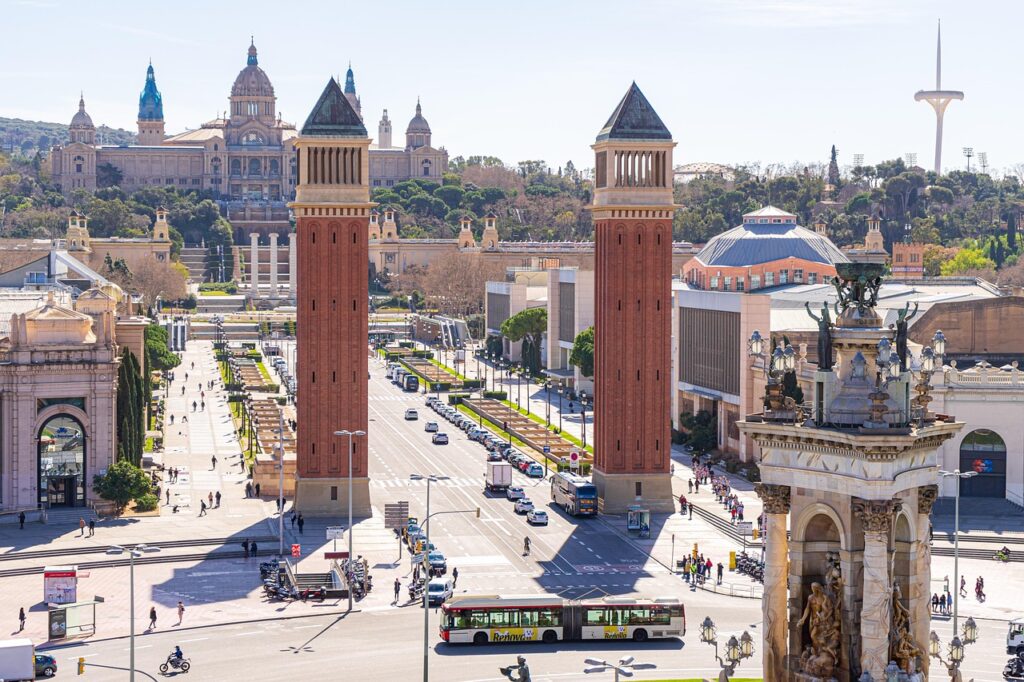
The Bunkers del Carmel — a Civil War anti-aircraft battery on the hill above the city — offers the best free panoramic view of Barcelona: the Eixample grid meeting the sea, the Sagrada Família’s towers rising from the grid, Montjuïc to the south, the port below. Go at sunset.
The Gothic Quarter and the Ramblas are the tourist centre and they function as one: a medieval core surrounded by pedestrian streets that channel visitors from the port to the Plaça de Catalunya. The real Barcelona lives slightly outside this — in the Gràcia neighbourhood, in the Born, in the Barceloneta seafront where fishermen and tourists share the same waterfront and neither pretends the other isn’t there.
Eat pa amb tomàquet — Catalan bread rubbed with ripe tomato, drizzled with olive oil, and salted. It is the simplest breakfast in Spain and one of the most evocative. Drink cava — Catalan sparkling wine — which is better than its price suggests and should not be compared to champagne because it is not trying to be champagne.
Stage One — Barcelona to Valencia
Distance: approximately 350 km Driving time: 3.5–4 hours Road: AP-7 / A-7 southbound along the coast
Leave Barcelona heading south on the AP-7. The motorway hugs the coast through Catalonia, passing Tarragona — a Roman city with an amphitheatre overlooking the sea that is worth a stop if you have the time — before crossing into the Valencian Community.
Much of the AP-7 along this stretch has been returned to the state and is now toll-free. Some sections, particularly around Barcelona, retain tolls. Budget approximately €20–40 for the full Barcelona-to-Málaga route depending on which sections are tolled. Payment is by cash or card at toll booths; the Via-T electronic tag system allows passage without stopping if you plan to use tolled sections frequently.
The landscape shifts as you move south. Catalonia’s rocky coast gives way to the flatter, wider coastal plains of Valencia — orange groves, rice paddies, the beginning of the agricultural Spain that feeds the rest of the country.
Valencia — The Agricultural Heart
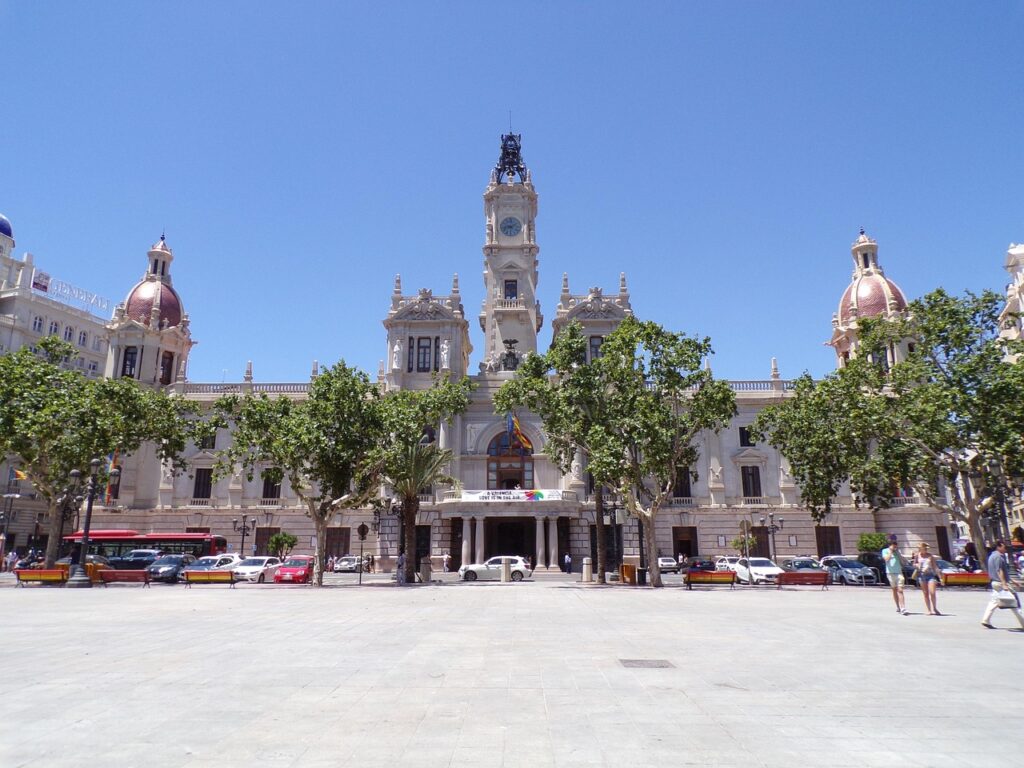
Valencia is a city of contradictions held in balance. The old centre — a medieval core of narrow streets, the massive Central Market, and the Miguelete bell tower — sits alongside the Turia riverbed, which was drained after a catastrophic flood in 1957 and converted into 9 km of parkland running through the city. At the eastern end of this dry riverbed, Santiago Calatrava built the City of Arts and Sciences — a complex of futuristic white structures that look like they landed from another century and decided to stay.
The contrast between the Central Market (Mercado Central) — one of the largest covered markets in Europe, housed in a Modernist building of iron and stained glass, selling produce that arrived that morning — and Calatrava’s sculptural white forms a kilometre away in the riverbed park is the visual thesis of Valencia: a city that keeps its agricultural roots and its architectural ambitions in the same sentence without either embarrassing the other.
The Albufera is Valencia’s ecological anchor — a freshwater lagoon south of the city, separated from the sea by a thin sand bar, surrounded by rice paddies. This is where Spanish rice culture began. It is where paella was invented. Paella Valenciana in its authentic form is a rice dish cooked over wood fire with rabbit, chicken, green beans, white beans, and sometimes snails. It does not contain seafood. The seafood rice dish exists — it is called arroz a banda — and it is excellent, but it is not paella. Ordering “seafood paella” in Valencia is the equivalent of ordering “authentic Neapolitan pizza with pineapple” in Naples. The Valencians are polite about it. They will serve it. They will not respect you.
Drink orxata — tiger nut milk, served cold, with fartons (soft, sweet bread sticks for dipping). It is Valencia’s defining non-alcoholic drink, available from horchaterías across the city, and it tastes like nothing else because the tiger nut grows almost nowhere else.
Stage Two — Valencia to Málaga
Distance: approximately 650 km Driving time: 6–6.5 hours Road: AP-7 / A-7 continuing south through Alicante and Murcia, then into Andalusia
This is the long leg, and it is beautiful. The AP-7 south of Valencia passes through the Costa Blanca — Benidorm’s towers visible from the motorway, the mountains of the Sierra de Aitana rising inland — before crossing Murcia and entering Andalusia. The landscape becomes drier, the light warmer, the palm trees more frequent. By the time you reach the Costa del Sol, the Mediterranean has narrowed enough that on clear days you can sense the proximity of Africa — not see it yet, but feel the scale of the water shrinking.
Break this leg over two days. Alicante or Cartagena make natural overnight stops. Cartagena has Roman ruins, a Punic wall, and a harbour that has been in use since the Carthaginians gave the city its name.
Málaga — The Coastal Gateway
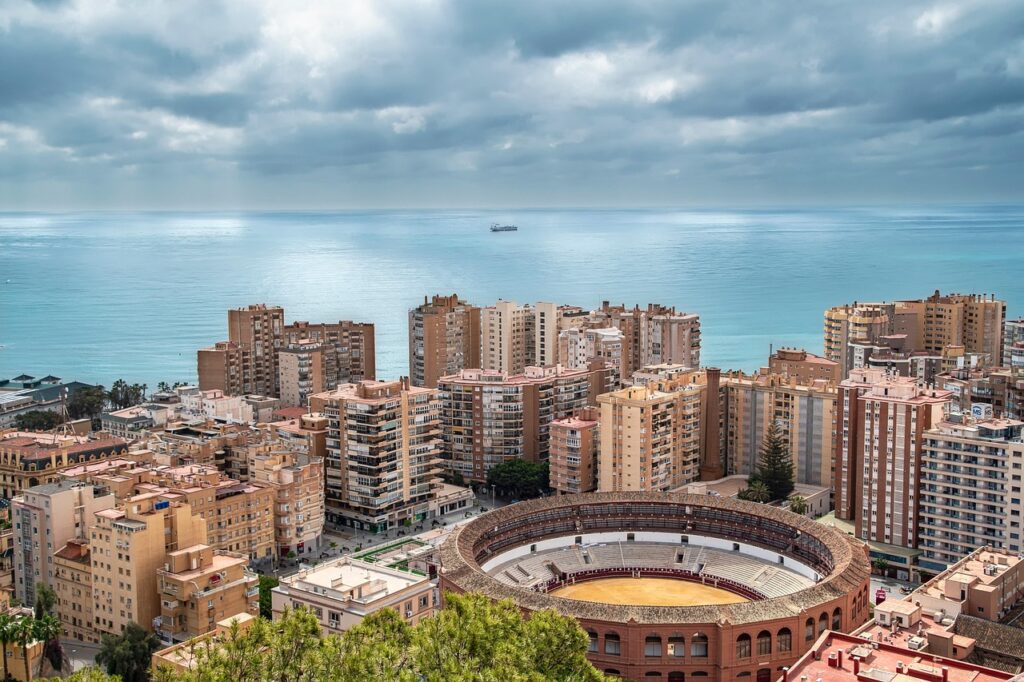
Málaga is one of the oldest continuously inhabited cities in the world, founded by Phoenicians around 770 BC as Malaka — a trading post on a coast they were colonising at the same time they were painting eyes on boats in Malta and building harbours in Carthage. The circle of this season’s journey closes here, at a city founded by the same civilisation that started the maritime trade routes the entire Mediterranean still runs on.
The Alcazaba — a Moorish fortress built in the eleventh century on the site of the Phoenician settlement — is Málaga’s centrepiece. It sits above the Roman theatre (first century BC, partially excavated, free to view from street level) and offers views across the city to the harbour and the sea beyond. The Alcazaba is a preview of the Alhambra in Granada — horseshoe arches, courtyards with fountains, geometric tilework — on a smaller, more intimate scale. Entry is approximately €3.50. Visit in the late afternoon when the golden stone absorbs the southern light and the terraces overlook a harbour where Phoenician, Roman, Moorish, and modern Spanish ships have docked across twenty-eight centuries of continuous use.
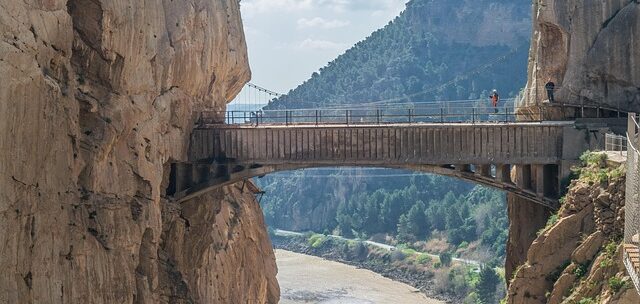
The Caminito del Rey is approximately one hour inland from Málaga — a 7.7 km walkway pinned to the walls of the Desfiladero de los Gaitanes gorge, suspended up to 100 metres above the Guadalhorce River. Originally built in 1905 for hydroelectric workers and restored in 2015, it is now one of Spain’s most visited outdoor attractions. General admission is €10, guided tours €18. Parking at the visitor centre is €2, shuttle bus €2.50. Children under 8 are not permitted. The walk takes 3–4 hours including the approach trail. Book well in advance — tickets sell out weeks ahead, particularly for weekend and morning slots. Accessible by car from Málaga or by train to El Chorro station.
Eat espetos de sardinas — fresh sardines skewered on bamboo and roasted over olive wood pits directly on the beach. This is Málaga’s beach cuisine at its simplest and best: fish, fire, salt, sand. You will find them at chiringuitos (beach bars) along the eastern beaches. They are cheap, they are honest, and they taste like the end of a journey along a coast that has been feeding people from the sea since the Phoenicians worked out that this was a good place to stop.
Practical Notes
Tolls: Spain’s toll system distinguishes between toll motorways (marked AP) and free motorways (marked A). Much of the AP-7 between Barcelona and Valencia has been returned to the state and is now toll-free. Sections around Barcelona and along the Costa del Sol in Málaga province retain tolls. Total tolls for the full Barcelona-to-Málaga route are approximately €20–40, payable by cash, card, or Via-T electronic tag.
Driving: Spain drives on the right. Motorway speed limits are 120 km/h. Speed cameras are well-signed and enforced. The AP-7/A-7 is a high-quality motorway for most of the route. The Costa del Sol section around Málaga is busier and the older A-7 coastal road can be congested in summer — use the AP-7 toll road for this stretch if you want to keep moving.
Low Emission Zones: Barcelona and Málaga both operate Low Emission Zones (ZBE — Zona de Bajas Emisiones). Vehicles must display an environmental badge or be registered. If driving a rental, confirm the vehicle is compliant — most modern rentals are. Fines for non-compliance are enforced by camera.
Season: May, June, and September are optimal. July and August bring extreme heat in Andalusia (regularly above 40°C in Málaga) and heavy traffic along the entire Costa del Sol. October is warm and quiet. The Caminito del Rey operates year-round but can close for weather — check before booking.
Food: Barcelona runs on pa amb tomàquet, cava, and Catalan market cuisine. Valencia runs on paella (the real one), orxata, and fresh produce from the Central Market. Málaga runs on espetos, fried fish, and sweet Málaga wine. The entire route is a GoBeyondia Food season in itself.
Cost: Barcelona is expensive by Spanish standards. Valencia is moderate and excellent value for food. Málaga’s city centre is affordable; the Costa del Sol resort strip west of the city is priced for international tourism.
What This Route Is Really About
This is the last Explore of the Mediterranean Season. The route began in a Roman kitchen where a bird tapped a window. It ends on a coast where the Phoenicians built a harbour three thousand years ago and the same harbour is still in use.
Between Barcelona and Málaga, the Mediterranean narrows. The African coast — Morocco, the Strait of Gibraltar — is close enough that the sea between here and there feels less like an ocean and more like a river. The same Phoenicians who founded Málaga founded Carthage, and she stood on that hill in Tunisia and looked north. Now she looks south from the other side. The view is the same water.
Every route in this season has followed the Mediterranean — its northern coast, its eastern islands, its southern shore, its centre, its western edge. Spain is the edge. After Málaga, the coast curves toward the strait, and beyond the strait is the Atlantic, and beyond the Atlantic is the rest of the world.

Beyondia
Trusted Travel CompanionReal digital nomad. I travel. I learn. I grow.
What about you? Where are you going?