Bulgaria: Where the oldest processed gold on earth — a thousand years older than anything in Egypt or Mesopotamia — was dug up by a twenty-two-year-old excavator operator who put it in a shoebox and took it home, the alphabet now used by two hundred and fifty million people was created by refugee scholars fleeing persecution who were given shelter by a king who needed a language more than an army, and one grave from 4500 BC contained more gold than the entire rest of the world from that era combined — because Bulgaria is where the most important things in civilization arrived looking like nothing.
Bulgaria in 30 Seconds
A Balkan country between Romania and Greece, the size of Tennessee, that most travelers skip on the way to somewhere else. In 1972, outside the Black Sea city of Varna, a twenty-two-year-old excavator operator named Raycho Marinov hit something metallic while digging foundations for a canning factory. He collected the objects — bracelets, a breastplate, small golden pieces — put them in a shoebox, and took them home. Days later he contacted local archaeologists. What he had found was the Varna Necropolis: two hundred and ninety-four graves dating from 4600 to 4200 BC containing over three thousand gold artifacts weighing six kilograms, the oldest processed gold in human history. Grave 43 alone — the burial of a single high-status male — held more gold than has been found anywhere else on earth from that entire millennium. A thousand years before the first pyramid was built, before Sumer had a written language, a civilization on the Bulgarian Black Sea coast was burying its dead with twenty-three-karat gold of a purity that metallurgists still cannot fully explain. And in 886 AD, when the disciples of Saints Cyril and Methodius were expelled from Great Moravia and persecuted by Germanic clergy, three of them — refugees with nothing but knowledge — found shelter in the court of Bulgarian Tsar Boris I, who gave them royal patronage, housing, and a mandate to teach. At the Preslav Literary School, they created the Cyrillic alphabet. Today it is used by over two hundred and fifty million people across twelve countries. When Bulgaria joined the EU in 2007, Cyrillic became the third official script of the European Union.
Evoke — Why You Visit Bulgaria
You come to Bulgaria because the thing you have been building does not look impressive yet — the early version, the prototype, the first draft that nobody takes seriously — and you need a country that proves the most important things in history arrived looking ordinary. The oldest gold in the world was carried home in a shoebox. A twenty-two-year-old with no archaeological training held in his hands the evidence of a civilization that predated Egypt by a thousand years and did not know what he was looking at. The communist intelligence services followed him for weeks afterward to make sure he had not hidden anything to sell. He was paid five hundred leva — a few months’ salary — for the discovery of humanity’s first relationship with gold. The alphabet that gave written language to the entire Slavic world was delivered not by conquerors but by refugees — scholars expelled from one country, persecuted by clergy, arriving in Bulgaria with nothing but what they had memorized. Tsar Boris I did not take them in out of charity. He took them in because he understood that a Bulgarian church conducting services in Greek would always be a colony of Byzantium, and that sovereignty begins not with an army but with an alphabet. He was right. The Preslav Literary School did not just create Cyrillic — it produced the first major body of Slavic literature, trained thousands of native clergy, and exported the script to Serbia, Russia, and eventually across Eurasia. You come because your first version looks like a shoebox. Bulgaria will show you what shoeboxes become.
Explore — How You Experience Bulgaria
Visit the Varna Archaeological Museum and stand before Grave 43, reconstructed exactly as it was found — the skeleton of a tall man laid out with a golden scepter, a golden penis sheath, bull-shaped gold platelets across his chest, and bracelets on both arms, buried six and a half thousand years ago in a society sophisticated enough to have social hierarchy, international trade networks, and metallurgy that produced gold of near-perfect purity. Note the empty graves — symbolic burials containing gold arranged around clay masks but no bodies, believed to be memorials for warriors who died far from home, evidence that this culture grieved absence as much as it honored presence. Walk through Plovdiv, one of the oldest continuously inhabited cities in Europe, where Roman amphitheater seats two hundred still host performances above streets where Thracian, Roman, Byzantine, Ottoman, and Bulgarian layers are visible in a single cross-section of exposed wall. Explore Veliko Tarnovo, capital of the Second Bulgarian Empire, where the Tsarevets fortress perches on a hill above the Yantra River and the medieval literary schools continued the tradition that Preslav began. Travel to Rila Monastery, founded in the tenth century by a hermit who withdrew to the mountains and accidentally created the spiritual center of a nation — its frescoes and architecture surviving five centuries of Ottoman rule because the monastery became the place where Bulgarian identity was preserved when there was no Bulgarian state to preserve it in.
Evolve — Who You Become in Bulgaria
You leave Bulgaria understanding that beginnings do not announce themselves. The oldest gold arrived in a shoebox. The most consequential alphabet arrived with refugees. The spiritual center of a nation was founded by a man trying to be alone. Grave 43 held more gold than the entire world produced in that millennium, and nobody knew it was there until an excavator broke the ground by accident while building a canning factory. You come home and look at the early version of the thing you are building — the draft nobody has praised, the prototype that looks unfinished, the idea that arrived without credentials — and you stop waiting for it to look important before you treat it as important. Boris I did not wait for the refugees to prove themselves. He gave them patronage on arrival because he recognized what they carried, even though what they carried was invisible. Marinov put the gold in a shoebox because he did not know what gold looks like when it has been underground for six thousand years. The beginning never looks like the beginning. The oldest civilization in Europe was found under a canning factory. The alphabet used by a quarter of a billion people was named after a man who did not invent it, created by scholars nobody remembers, in a country most people cannot find on a map. Bulgaria does not need you to know this for it to be true. But now you know.
Your practical guide to Bulgaria starts bellow 👇
🕰️ Bulgaria Historical Backdrop
Bulgaria’s history is a 6,000-year “Audit of Endurance.” As one of the oldest states in Europe to keep its original name, it functions as a “Historical Hedge” at the crossroads of East and West. Its story is told in the world’s oldest processed gold found in Varna, the monumental Roman amphitheaters of Plovdiv, and the 9th-century “Intellectual Export” of the Cyrillic alphabet. From the First Bulgarian Empire’s Golden Age to the strategic resilience of the National Revival and its modern-day emergence as a regional tech hub, Bulgaria has always mastered the art of “Core Asset Preservation.” It is a land where the weight of the past does not hinder the momentum of the future, but rather provides the “Fundamental Quality” upon which a modern, diverse nation is built.
🌟 Bulgaria Local Experiences
Beyond the coastal resorts, discover Bulgaria’s soul in the ritual of the “Rose Audit”—experiencing the Valley of the Roses during the May harvest, where the world’s most precious oil is extracted with scientific precision. Experience the profound “Acoustic Stillness” of a Bulgarian polyphonic choir, the exhilarating “Kinetic Connection” of skiing the vertical drops of Bansko, or the simple joy of sharing a Shopska salad and a glass of Rakia under a vine-covered trellis. Whether it’s witnessing the Nestinari (barefoot fire-dancing)—a proven example of ancient physical resilience—or exploring the trendy “Art Districts” of Sofia, these moments reveal a nation that finds its greatest margin in the balance of raw nature and refined culture.
🌄 Bulgaria Natural Wonders
- The Seven Rila Lakes: A spectacular glacial “Stairway to Heaven,” where seven crystal-clear lakes sit at different altitudes, linked by cascading streams.
- The Valley of the Roses: The world’s primary “Resource Center” for rose oil, transforming into a fragrant pink sea every spring.
- Pobiti Kamani (The Stone Forest): A unique natural phenomenon of hollow stone columns that look like a prehistoric “Infrastructure Project” left by the sea.
- Belogradchik Rocks: Bizarrely shaped sandstone formations that have served as a natural fortress for centuries.
- The Black Sea Coast: A 378km “Strategic Asset” featuring everything from the wild dunes of Arkutino to the historic peninsula of Nessebar.
- Pirin National Park: A rugged, high-altitude wilderness home to some of the oldest trees in Europe.
🏙️ Bulgaria Must-See Cities & Regions
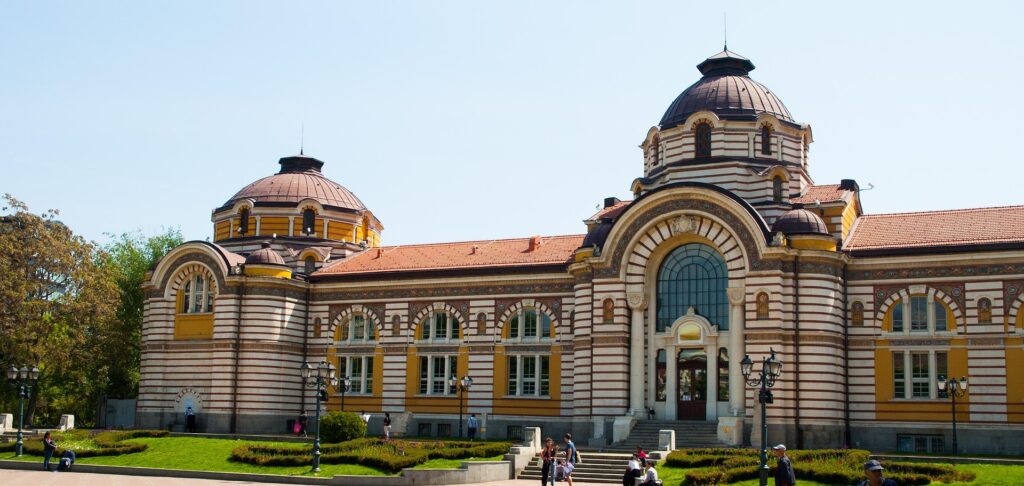
- Sofia: (Capital) A city where Roman ruins are integrated into the metro stations and the gold-domed Alexander Nevsky Cathedral dominates a skyline of “Modern-Meets-Monolithic.” (Dynamic, Green, Historic)
- Plovdiv: One of the oldest continuously inhabited cities in the world and Europe’s 2019 Capital of Culture, famous for its “Old Town” and Roman Theater. (Artistic, Ancient, Bohemian)
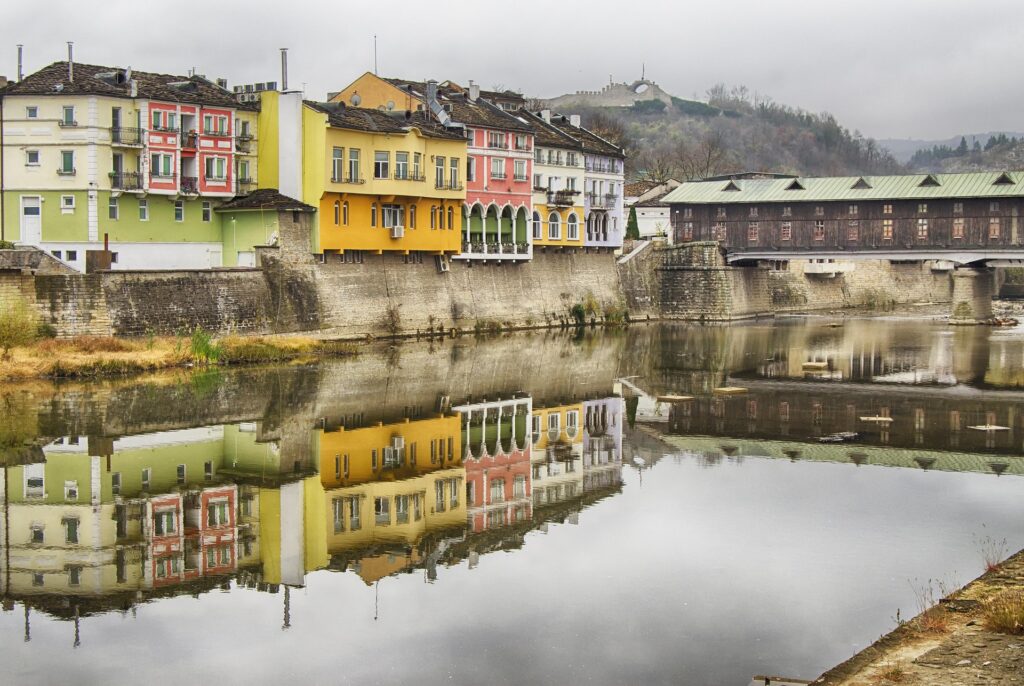
- Veliko Tarnovo: The “City of the Tsars,” where the massive Tsarevets Fortress sits atop a hill surrounded by the winding Yantra River. (Majestic, Medieval, Panoramic)
- Varna: The “Sea Capital,” a sophisticated maritime hub known for its massive Sea Garden and the oldest gold in the world. (Coastal, Vibrant, Historic)
- Bansko: A traditional mountain town that has evolved into a world-class ski resort and a premier global hub for digital nomads. (Adventurous, Alpine, Entrepreneurial)
🏞️ Bulgaria National Parks & Nature Reserves
Managed with a focus on preserving the “Primary Assets” of the Balkan ecosystem.
- Rila National Park: Home to Musala, the highest peak in the Balkans (2,925m).
- Central Balkan National Park: Protecting the “Old Mountain” range and some of Europe’s most dramatic waterfalls.
- Srebarna Nature Reserve: A UNESCO-listed freshwater lake and primary sanctuary for migratory birds.
🏛️ UNESCO World Heritage Sites
- Rila Monastery — The spiritual heart of the nation and a masterpiece of the Bulgarian Renaissance.
- Ancient City of Nessebar — A 3,000-year-old museum-town on a rocky peninsula.
- Madara Rider — A unique relief carved into a 100-meter-high cliff, a symbol of the First Bulgarian Empire.
- Boyana Church — Home to 13th-century frescoes that are considered precursors to the European Renaissance.
- For more information, visit the UNESCO Bulgaria Portal.
🖼️ Bulgaria Museums & Cultural Sites
- National Historical Museum (Sofia): Housing the incredible Panagyurishte Gold Treasure—a high-margin “Asset” of ancient craftsmanship.
- Ethnographic Open-Air Museum “Etar”: A living workshop where 18th-century water-powered machinery still functions perfectly today.
- Thracian Tomb of Kazanlak: Offering a “Visual Audit” of the afterlife beliefs of one of history’s most mysterious civilizations.
🎉 Bulgaria Festivals & Celebrations
- Surva (International Festival of Masquerade Games): (January) A spectacular “Noise Audit” to scare away evil spirits, featuring thousands of costumed Kukeri.
- Festival of Roses (Kazanlak): (June) Celebrating the harvest with parades, workshops, and the crowning of the Queen of Roses.
- A-Z Jazz Festival (Sofia): (July) A high-energy outdoor celebration of the city’s modern musical “Operational Bandwidth.”
- Humor and Satire Festival (Gabrovo): (May) A unique celebration in the “World Capital of Humor.”
🧽 How to Arrive
- ✈️ By Air
- Sofia Airport (SOF) is the primary gateway, served by major carriers and budget hubs (Wizz Air/Ryanair).
- Varna (VAR) and Burgas (BOJ) serve the coastal regions, particularly in summer.
- 🚆 By Rail
- Bulgaria is connected to Istanbul, Turkey and Bucharest, Romania via daily international trains. The BDZ (Bulgarian State Railways) operates the domestic network.
- 🚗 By Road
- Bulgaria is a key part of the Pan-European Corridors. Driving is on the right. A Vignette (E-Vinetka) is mandatory for highway use and can be bought online.
📶 Stay Connected
- SIM Cards: Major providers are A1, Yettel, and Vivacom.
- Where to buy: Kiosks are available at Sofia Airport and in every major mall. Registration with a passport is standard.
- eSIM: Supported by all major providers and available via global platforms like Airalo.
- Connectivity: Bulgaria consistently ranks among the top countries for high-speed internet—a “Data-Driven Validation” for its booming IT sector.
🏨 Where to Stay
Bulgaria offers a “Diversified Portfolio” ranging from five-star metropolitan grand hotels to boutique mountain retreats.
- Grand Hotel Sofia: A classic, high-margin landmark overlooking the City Garden.
- Zornitza Family Estate: A Relais & Châteaux property in the Melnik wine region, offering ultimate luxury and viticulture integration.
- Kempinski Hotel Grand Arena (Bansko): The “Defensive Staple” for luxury skiing in the Pirin mountains.
- Guesthouses (Arbanasi/Plovdiv): Stay in restored 18th-century “National Revival” houses for authentic atmosphere.
⛳ Unique Finds
- The Oldest Gold: Visit the Varna Archaeological Museum to see the gold that redefined the timeline of human civilization.
- Martenitsa: If visiting in March, wear the red-and-white “Baba Marta” threads—a cultural “Health Benchmark” for the arrival of spring.
- Lutenitsa: Taste the national pepper spread; every family has their own “Proven Recipe.”
- Melnik Wine: Visit the smallest town in Bulgaria to taste wine from the “Broad-Leaved Melnik Vine,” famously favored by Winston Churchill.
🤝 Bulgaria Cultural Guidance
- The Nod Paradox: Be aware of the “Bulgarian Shake”—traditionally, a head shake can mean “Yes” and a nod can mean “No.” Modernization has blurred this, so “Da” (Yes) and “Ne” (No) are safer bets.
- Hospitality: If invited to a home, bringing a small gift (flowers or sweets) is a standard “Protocol.”
- Directness: Bulgarians are honest and practical. They value direct communication and long, intellectual dinner conversations.
- Basic Phrases:
- Hello: “Zdravei” (Informal) / “Dobur den” (Formal)
- Thank you: “Blagodarya” (Formal) / “Mersi” (Informal)
- How are you?: “Kak si?”
- Cheers: “Nazdrave!”
🛂 Bulgaria Entry & Visa Requirements
- Schengen Area: Bulgaria is a member of the Schengen Area (air and sea borders as of 2024). Citizens of the UK, US, Canada, EU, and Gulf nations generally do not require a visa for tourism stays up to 90 days.
- Official Source: Consult the Bulgarian Ministry of Foreign Affairs.
💰 Practical Essentials
- Currency: Bulgarian Lev (BGN). Pegged to the Euro (1 EUR ≈ 1.95 BGN). While cards are widely accepted in cities, cash is essential for rural markets and small shops.
- Electricity: Type C and F (European round pins). Voltage is 230V.
- Safety: Very safe for travelers. Use official taxi apps like Yellow or TaxiMe in Sofia to ensure pricing transparency.
- Climate: Best visited from May to September (Summer/Nature) or January to March (Skiing).
✨ Bonus Tip: The Mosaic Recalibration
To truly embrace Bulgaria, you must practice “Layered Observation.” Don’t just look at the modern facade of a city; look for the “Foundation Quality.” In Sofia, you can see a 4th-century church, a 16th-century mosque, and a 20th-century monument within the same block. This is the perfect analogy for the country: it is a “Diversified Portfolio” of eras. It is in this appreciation of the “Vertical History”—how one civilization builds upon another without erasing it—that your own sense of long-term strategic resilience will finally reveal itself.
🔗 Featured Links
- Official Tourism: Bulgaria Travel.
- National Rail: BDZ Official Site.

Beyondia
Travel CompanionHelping you to find inspiration, discover authentic local customs and create experiences that go beyond the typical tourist trails.
What about you? Where are your thoughts wondering?
Let’s talk! Let’s explore!