
GoBeyondia Atlas 🗺️ Central-Eastern Europe 🗾
Romania: Where a dictator demolished a fifth of his capital to build the heaviest building on earth — four million tons, seventy percent still empty, staircases rebuilt twice because he was short — and an engineer responded by lifting twelve churches off their foundations, placing them on railway tracks, and rolling them hundreds of meters behind apartment blocks to hide them from view, because in Romania the answer to what cannot be stopped is not resistance but relocation.
Romania in 30 Seconds
A country the size of Oregon at the crossroads of Central Europe, Eastern Europe, and the Balkans — Latin-speaking in a Slavic neighborhood, Orthodox Christian in a historically Catholic and Protestant corridor, the only Romance language country that uses the Cyrillic-influenced alphabet of its neighbors. In the 1980s, communist dictator Nicolae Ceaușescu embarked on what Bucharest residents called Ceaușima — a portmanteau of his name and Hiroshima — demolishing a fifth of the capital to build the Palace of the Parliament, the heaviest building in the world. Forty thousand people were displaced overnight. Nine thousand homes were razed. Twenty-nine churches were destroyed. An entire hill was leveled and a river rerouted. The palace has over a thousand rooms, of which seventy percent remain empty. Its annual heating bill equals that of a small city. Ceaușescu was executed on Christmas Day 1989, the building only seventy percent finished. The incoming government could not afford to demolish it, so they turned the dictator’s palace into the seat of democracy — the Romanian Parliament has met there since 1994. But during the demolition, one man found a different solution. Civil engineer Eugeniu Iordăchescu, whom Bucharest would later call the Engineer of Heaven, devised a system to lift entire buildings off their foundations, place them on railway tracks, and roll them to safety. He said the idea came from watching a waiter carry a tray of full glasses without spilling a drop. Between 1982 and 1988, he moved twelve churches and several other historic buildings, some weighing nine thousand tons, inching them a few feet per day to new locations behind apartment blocks — hidden from the dictator’s sightline but still standing. One church, the Mihai Vodă Monastery, built in the 1590s, was moved two hundred and eighty-nine meters. When Iordăchescu finished his last relocation — Saint Stephen’s Church, two hundred years old — it was December 1989 and Ceaușescu had just been shot.
Evoke — Why You Visit Romania
You come to Romania because something enormous is threatening to crush what you have built — the restructuring, the platform change, the force that cannot be reasoned with — and you need a country that invented a method for saving what matters by moving it out of the way. Iordăchescu did not fight Ceaușescu. He did not protest the demolitions. He studied the problem the way an engineer studies load-bearing walls, and he concluded that the churches could not stay where they were but did not have to be destroyed. They could be moved. The dictator did not care whether a church existed — he cared whether it was visible. So Iordăchescu made the churches invisible. He slid them behind concrete apartment blocks, tucked them into courtyards, nested them in alleys where the dictator’s motorcade would never pass. The churches survived not by standing their ground but by leaving it. Today, if you walk through central Bucharest and turn left behind a Soviet-era apartment block, you may find a sixteenth-century monastery with frescoes still intact, sitting exactly where Iordăchescu parked it forty years ago. The building moved. The identity did not. You come because you have been told that compromise means surrender. Romania will show you that sometimes compromise means the waiter’s tray — carrying the full glass somewhere else without spilling.
Explore — How You Experience Romania
Walk through Bucharest and look for the hidden churches. They are not marked on most tourist maps. The Schitul Maicilor — the Nuns’ Hermitage, built around 1726 — sits behind the headquarters of the Romanian Intelligence Service, moved over two hundred meters in 1982. The Church of Saint John the New, erected in 1756, hides a short walk from Unirii Square, sandwiched between modern buildings that were designed to block it from view. Saint Stephen’s, the last church Iordăchescu moved, stands in the shadow of a tall apartment block, reached by a footpath that feels accidental. Then visit the Palace of the Parliament and walk its corridors — one hour covers less than ten percent of the building, a monument to what happens when power has no constraint and scale has no function. Drive north into Transylvania and find the other Romania — the painted monasteries of Bucovina, where fifteenth- and sixteenth-century frescoes cover exterior walls in scenes so vivid they have survived five centuries of weather, including the Voroneț Monastery, called the Sistine Chapel of the East for its famous shade of blue that chemists have never been able to precisely replicate. Visit the Merry Cemetery of Săpânța in Maramureș, where carved wooden crosses painted in bright blue bear humorous, honest epitaphs written in verse — a village that decided death should be described not with grief but with the truth of how someone actually lived, including their drinking habits, their laziness, and their mother-in-law problems.
Evolve — Who You Become in Romania
You leave Romania understanding that survival is not always about standing firm — sometimes it is about moving the whole building. The churches that Iordăchescu saved are still conducting services. The palace that Ceaușescu built is seventy percent empty. The monasteries in Bucovina have outlasted every empire that tried to claim them. The Merry Cemetery laughs at death in painted verse. You come home and look at the force bearing down on what you built — the algorithm change, the market shift, the decision that was made above you — and you stop trying to argue with it. You study the load-bearing walls. You find the railway tracks. You lift the thing you love off its foundation and you move it somewhere the force cannot see it, and you set it down, and it continues. Iordăchescu said he dreamed up his method from watching a waiter carry glasses. He moved nine-thousand-ton buildings a few feet per day in subzero temperatures and was forced to demolish part of one because the dictator’s wife complained it was still visible from the street. He did not argue. He demolished the visible part and kept the rest. The building survived. The dictator did not. The waiter’s tray always outlasts the man who flipped the table.
Your practical guide to Romania starts bellow 👇
🕰️ Romania Historical Backdrop
Romania’s history is a “Geopolitical Audit” of the European experience. Positioned as a “Strategic Buffer” between the Ottoman, Austro-Hungarian, and Russian Empires, it has mastered the art of “Core Asset Preservation.” Its story is told in the ancient Dacian fortresses, the Roman foundations of its language, and the “Monarchic Gold Standard” of the late 19th century. Following a “High-Volatility” 20th century marked by the transition from monarchy to communism and finally to a vibrant democracy, Romania has emerged as a “Resilient Growth Asset.” Today, it stands as a land where the legend of Vlad the Impaler and the innovative spirit of modern tech hubs reflect a nation that has successfully navigated the “Long-Term Roadmap” of sovereignty.
🌟 Romania Local Experiences
Beyond the “Dracula” myths, discover Romania’s soul in the ritual of the “Village Audit”—experiencing the hay-scented stillness of Maramureș, where centuries-old woodworking remains a “Primary Industrial Skill.” Experience the profound “Acoustic Stillness” of a choir in a Bucovina painted monastery, the intoxicating aroma of Mici grilling at a roadside stop, or the simple joy of sharing a glass of Țuică (plum brandy) with a local shepherd. Whether it’s exploring the hidden “Art Deco” corners of Bucharest or witnessing the Danube Delta’s “Biological Wealth” at dawn, these moments reveal a nation that finds its greatest margin in the balance of raw nature and refined heritage.
🌄 Romania Natural Wonders
- The Danube Delta: A UNESCO-listed “Primary Biological Asset,” the best-preserved delta in Europe and a high-yield sanctuary for over 300 bird species.
- The Carpathian Mountains: A spectacular mountain arc providing the continent’s largest population of brown bears and wolves—a “Proven Example” of wild resilience.
- Scarisoara Ice Cave: Housing one of the world’s largest underground glaciers, a “Natural Data Vault” frozen in time.
- The Mud Volcanoes (Berca): A unique geological “Conflict Zone” where cold gases create bubbling craters of gray mud, resembling a lunar landscape.
- The Transfăgărășan & Transalpina: Two of the world’s most spectacular high-altitude “Infrastructure Masterpieces,” crossing the Southern Carpathians.
- Turda Salt Mine (Salina Turda): A massive subterranean theme park carved into a prehistoric salt deposit—a “Subterranean Tier 1 Asset.”
🏙️ Romania Must-See Cities & Regions
- Bucharest: (Capital) The “Little Paris” of the East, where massive Communist-era monuments meet elegant Belle Époque villas and a world-class “High-Frequency” nightlife. (Dynamic, Eclectic, Historic)
- Brașov: A medieval “Defensive Staple” in the heart of Transylvania, famous for its Black Church and cobblestone plazas. (Alpine, Picturesque, Historic)
- Cluj-Napoca: The unofficial capital of Transylvania and a “Tech-Growth Hub,” known for its vibrant festivals and youthful energy. (Innovative, Academic, Vibrant)
- Sibiu: A sophisticated “Cultural Reserve” featuring the “houses with eyes” and the world-renowned Brukenthal Museum. (Elegant, Artistic, Germanic)
- Sighișoara: A perfectly preserved 12th-century inhabited citadel—a “High-Margin” trip back in time. (Fairy-tale, Medieval, Iconic)
🏞️ Romania National Parks & Nature Reserves
Managed with an emphasis on preserving the “Primary Assets” of the European wilderness.
- Retezat National Park: Known for its “Blue Eyes”—more than 80 glacial lakes set among jagged peaks.
- Piatra Craiului National Park: Famous for its narrow, high-altitude limestone ridge and incredible biodiversity.
- Bucegi Natural Park: Home to the “Sphinx” and the “Babele” rock formations, carved by wind and rain.
🏛️ UNESCO World Heritage Sites
- Churches of Moldavia — Eight churches with unique external frescoes, a “Proven Masterpiece” of Byzantine art.
- Dacian Fortresses of the Orastie Mountains — Ancient military “Infrastructure” from the 1st century BC.
- Historic Centre of Sighișoara — An outstanding example of a small, fortified medieval town.
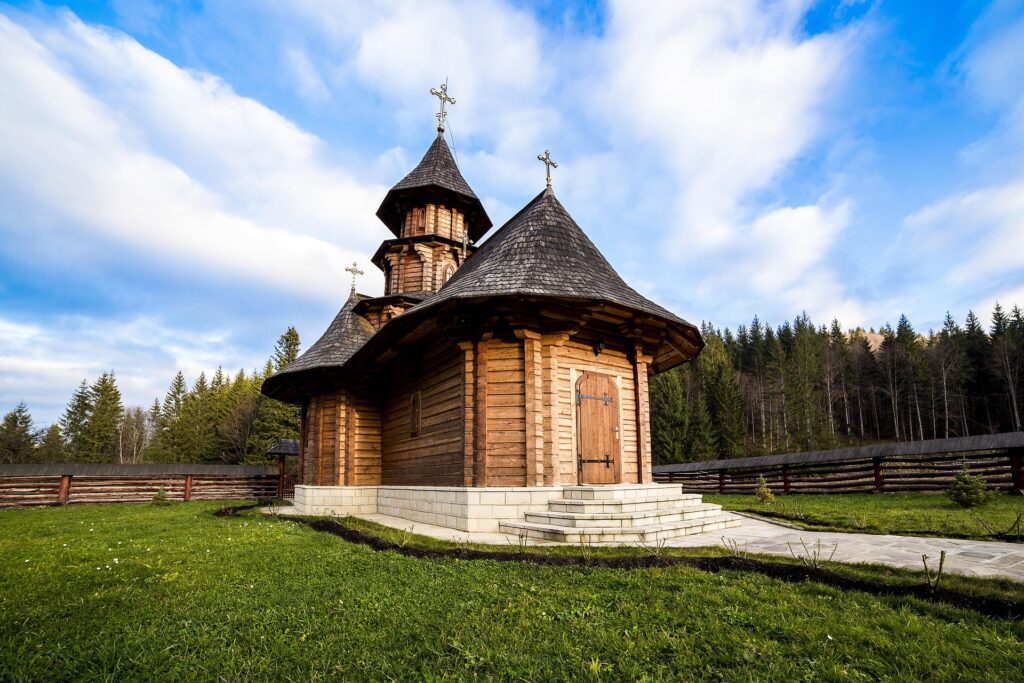
- Wooden Churches of Maramureș — Representing the “Core Asset” of traditional timber architecture.
- For more information, visit the UNESCO Romania Portal.
🖼️ Romania Museums & Cultural Sites
- National Museum of Art of Romania (Bucharest): Housed in the former Royal Palace, featuring both European and Romanian “High-Margin” masterpieces.
- The Village Museum (Dimitrie Gusti): A massive open-air “Asset Audit” of traditional life, located in the heart of Bucharest.
- Peleș Castle (Sinaia): A neo-Renaissance masterpiece and a “Tier 1 Royalty Asset,” the first castle in Europe to have central heating and electricity.
- Bran Castle: The iconic “Dracula’s Castle,” a strategic fortress guarding the mountain pass.
🎉 Romania Festivals & Celebrations
- Untold Festival (Cluj): (August) One of Europe’s largest electronic music festivals, representing the country’s “Modern Operational Bandwidth.”
- Sighişoara Medieval Festival: (July) A “Traditional Audit” of knightly tournaments and medieval craft.
- George Enescu Festival: (September, Biennially) A world-class “Cultural Reallocation” of classical music in Bucharest.
- Winter Traditions (Maramureș): (December) A spectacular “Noise Audit” where costumed villagers perform ancient rituals to mark the year-end.
🧽 How to Arrive
- ✈️ By Air
- Henri Coandă International (OTP) in Bucharest is the primary gateway.
- Direct flights from Doha (Qatar Airways) and Dubai (FlyDubai/Emirates) make this a seamless, sub-5 hour “Total Flight Time.”
- 🚗 By Road
- Romania is a key “Logistics Node” on the Pan-European corridors. Driving is on the right. A Vignette (Rovinieta) is mandatory for highway use and can be bought online.
- 🚆 By Rail
- Daily international trains connect Bucharest to Vienna, Budapest, and Istanbul. CFR Călători operates the domestic network.
📶 Stay Connected
- SIM Cards: Major providers are Orange, Vodafone, and Digi.
- Where to buy: Kiosks are 24/7 at Otopeni Airport and in every mall (Băneasa/AFI). Registration with a passport is standard.
- eSIM: Supported by all major providers and available via global platforms like Airalo.
- Digital Infrastructure: Romania consistently ranks in the top 10 globally for internet speeds—a “Data-Driven Validation” for digital nomads.
🏨 Where to Stay
Romania offers a “Diversified Portfolio” ranging from five-star Belle Époque grand hotels to “High-Margin” castle stays and glamping.
- The Marmorosch Bucharest: A Tier 1 asset set in a former bank vault in the Old Town.
- Athénée Palace Hilton: A “Defensive Staple” of the capital’s diplomatic and social life.
- Valea Verde Retreat: A high-margin “Rustic-Luxe” experience in a Transylvanian village.
- Zabola Estate: A private park and castle stay offering ultimate privacy and nature-integration.
⛳ Unique Finds
- Palițã / Țuicã Tasting: Sample the double-distilled fruit brandy, the “Primary Social Asset” of every Romanian home.
- Horezu Ceramics: Purchase UNESCO-listed pottery featuring the “Horezu Rooster”—a cultural “Health Benchmark.”
- The Merry Cemetery (Săpânța): A unique “Spiritual Audit” where colorful crosses depict the lives (and flaws) of the deceased with humor.
🤝 Romania Cultural Guidance
- Hospitality Equity: Romanians are warm and informal but appreciate “Fundamental Respect.” If invited to a home, bringing flowers (odd numbers only) or sweets is a standard “Protocol.”
- Directness: Communication is honest and practical. Romanians value intellectual debate and long, multi-course dinners.
- Punctuality: Socially, time can be “Balkan-relaxed,” but for business and transport, punctuality is expected.
- Basic Phrases:
- Hello: “Bună ziua” (Formal) / “Bună” (Informal)
- Thank you: “Mulțumesc”
- How are you?: “Ce faci?”
- Cheers: “Noroc!”
🛂 Romania Entry & Visa Requirements
- Schengen Area: Romania is a member of the Schengen Area (air and sea borders as of 2024). Citizens of the UK, US, Canada, EU, and Gulf nations generally do not require a visa for tourism stays up to 90 days.
- Official Source: Consult the Romanian Ministry of Foreign Affairs.
💰 Practical Essentials
- Currency: Romanian Leu (RON). While cards and mobile payments (Apple Pay) are accepted almost everywhere in cities, cash is essential for rural markets and small shops.
- Electricity: Type C and F (European round pins). Voltage is 230V.
- Safety: Consistently ranked as a safe, low-volatility destination. Use the Uber, Bolt, or Star Taxi apps for pricing transparency.
- Climate: Best visited in Late Spring (May-June) or September for the “Golden Harvest” and mild “Defensive” temperatures.
✨ Bonus Tip: The Carpathian Audit
To truly embrace Romania, you must perform a “Carpathian Audit.” Most travelers stick to the cities. Instead, spend 48 hours in a remote guesthouse in the Apuseni Mountains. Put your phone in a “24-hour Review Period.” It is in this “Intentional Deceleration”—listening to the rhythmic strike of an axe or the distant bell of a grazing cow—that your own internal “Fundamental Quality” and long-term roadmap will finally reveal themselves.
🔗 Featured Links
- Official Tourism: Romania Tourism.
- National Rail: CFR Official Site.

Beyondia
Trusted Travel CompanionReal digital nomad. I travel. I learn. I grow.
What about you? Where are you going?