GoBeyondia Atlas 🗺️ East-Asia Oceania 🗾
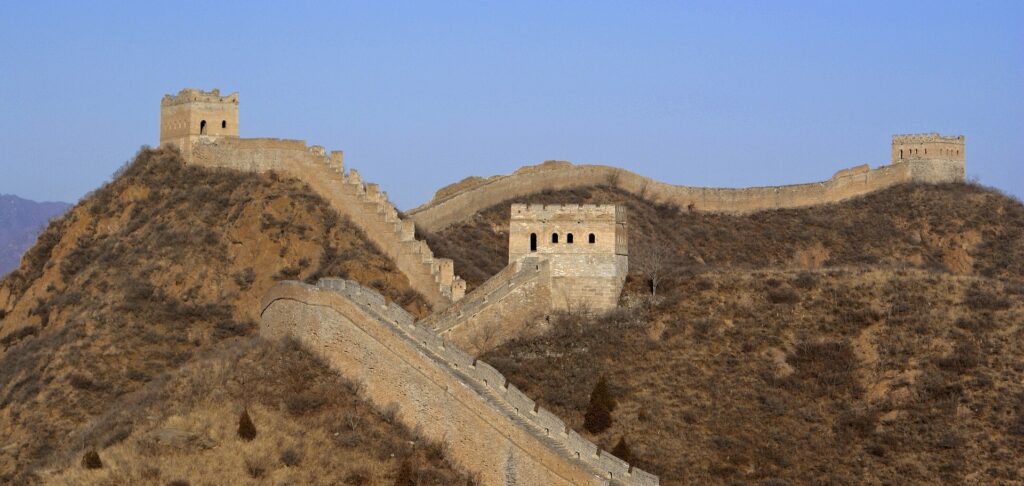
China: Where the most famous wall on earth cannot actually be seen from space because it is the same color as the ground it was built from, the writing system that unified a quarter of humanity works not because everyone speaks the same language but because the characters represent ideas rather than sounds so a person in Canton and a person in Beijing can read the same sentence without understanding a word the other says aloud, an emperor who burned every book written before his reign also standardized weights, measures, currency, and axle widths so that every cart in the empire could travel every road — and the first civil service examination was administered thirteen centuries before the West invented the concept — because China is the place that understood, earlier than anyone, that the problem is never the territory. The problem is the system.
China in 30 Seconds
The most populous civilization in continuous operation on earth — not the oldest, but the one that never stopped. Egypt is older but the pharaohs are gone. Mesopotamia preceded it but Babylon is a ruin. China’s writing system has been in continuous use since the Shang dynasty oracle bones of approximately 1200 BC — over three thousand years — and some characters carved onto those bones are still recognizable in the script used today. The system works because Chinese characters are logographic: they represent meanings, not sounds. China contains hundreds of dialects, many mutually unintelligible. A farmer in Sichuan cannot understand a merchant in Shanghai when they speak. But they can read the same newspaper, the same contract, the same poem. In 221 BC, Qin Shi Huang unified the warring states into a single empire and immediately standardized the writing system, weights, measures, currency, and the width of cart axles — because he understood that an empire is not a territory. It is a set of shared systems. The roads meant nothing if the carts could not fit them. The laws meant nothing if the characters differed between provinces. He also burned books and buried scholars alive, because the same mind that understood systems also understood that competing systems are threats. Seven centuries later, the Sui dynasty formalized the imperial examination — keju — which selected government officials through written tests open, in principle, to any male citizen regardless of birth. It was the world’s first large-scale meritocratic system. It ran for thirteen hundred years, until 1905, and its descendants include every standardized civil service exam on earth.
Evoke — Why You Visit China
You come to China because you have been trying to build something at scale — the platform, the company, the system that works across languages and regions and cultures — and you keep hitting the same wall: what works in one place does not transfer to another. China solved this problem three thousand years ago, and the solution was not uniformity. It was compatibility. The writing system did not require everyone to speak the same language. It required everyone to read the same symbols. The imperial examination did not require everyone to be from the same class. It required everyone to master the same texts. The standardized axle width did not require everyone to build the same cart. It required every cart to fit the same road. This is the deepest insight in the history of governance: you do not need people to be the same. You need the interfaces between them to be shared. China’s scale — a billion people, fifty-six ethnic groups, hundreds of dialects, a landmass stretching from Siberian tundra to tropical jungle — was not managed by erasing difference. It was managed by building layers of compatibility on top of difference. The writing system is the original API. You come because you have been trying to make everything the same. China will show you that the goal is not sameness. It is interoperability.
Explore — How You Experience China
Stand before the Terracotta Warriors in Xi’an — eight thousand life-sized soldiers buried with Emperor Qin Shi Huang in 210 BC, each face individually sculpted, no two alike, arranged in military formation in underground pits that were not discovered until 1974 when a farmer digging a well struck a clay head. The emperor who standardized everything built an army of individuals. Walk the Great Wall at Mutianyu or Jinshanling, where the structure snakes across mountain ridges in a way that photographs cannot prepare you for — not one wall but many, built across two thousand years by successive dynasties, each section reflecting the technology and threat of its era. China’s first astronaut, Yang Liwei, confirmed in 2003 what scientists had long suspected: the wall is not visible from space. It is the same color as the earth from which it was made. The greatest wall in history is camouflaged by its own material. Visit the Forbidden City in Beijing — nine thousand nine hundred and ninety-nine rooms of imperial architecture, because the number ten thousand was reserved for heaven — where emperors ruled from behind walls within walls, visible only to those granted access, governing an empire they rarely saw in person. Sit in a teahouse in Chengdu, where the Sichuanese tradition of spending entire afternoons over tea and conversation persists as it has for centuries — because China is not only its monuments. It is also its rituals of ordinary life, refined through repetition until the ordinary becomes architecture.
Evolve — Who You Become in China
You leave China understanding that scale is not a problem of size — it is a problem of interface. The writing system did not make China big. It made China readable. The examination did not make China fair. It made China navigable. The axle width did not make China uniform. It made China traversable. Each solution addressed not the content of what people did but the format in which they exchanged it. You come home and look at the system you are trying to scale — the platform, the content library, the organization — and you stop trying to make every part identical. You build the shared layer instead. You standardize the interface and let everything behind it remain different. The Terracotta Army has eight thousand faces and one formation. The empire had hundreds of dialects and one script. The wall is invisible from space but every cart that ever traveled along it fit the road. China did not solve the problem of difference. It solved the problem of connection across difference. That is the only problem of scale that has ever actually mattered.
Your practical guide to China starts bellow 👇
🕰️ China Historical Backdrop
China’s history is a 5,000-year “Multi-Millennial Conglomerate” of dynastic cycles and intellectual enlightenment. As one of the world’s few continuous civilizations, it functions as a “Historical Vault” for Eastern philosophy, medicine, and governance. Its story is told in the rhythmic precision of the Great Wall, the subterranean “Silent Army” of the Terracotta Warriors, and the grand “Forbidden” halls of the Ming and Qing emperors. Having navigated a “High-Volatility” 20th century to emerge as a global tech and economic titan, China has successfully audited its past to fund a high-margin, futuristic roadmap. It is a land where the calligraphy brush and the quantum computer reflect a nation that has mastered the art of the “Long-Term Strategic Vision.”staple of human history.]
🌟 China Local Experiences
Beyond the neon-lit skyscrapers, discover China’s soul in the ritual of the “Tea Audit”—experiencing a traditional ceremony where the “Primary Assets” are water temperature, leaf quality, and intentional silence. Experience the profound “Acoustic Stillness” of a sunrise Tai Chi session in a Beijing park, the intoxicating scent of Szechuan peppercorns in a Chengdu market, or the exhilarating “Kinetic Connection” of riding the world’s fastest Maglev train in Shanghai. Whether it’s witnessing the artisanal skill of a silk embroiderer in Suzhou or participating in a communal “Square Dance” with locals, these moments reveal a nation that finds its greatest margin in the balance of hyper-modernity and ancient grounding.
🌄 China Natural Wonders
- Zhangjiajie National Forest Park: The “Avatar Mountains,” featuring spectacular sandstone pillars that served as the inspiration for floating peaks in cinema.
- The Li River (Guilin to Yangshuo): A stunning landscape of karst limestone cones reflecting in mirror-like waters—a proven example of “Landscape Aesthetics.”
- Mount Everest (Qomolongma): The northern face of the world’s highest peak, accessible via the high-altitude plateau of Tibet.
- The Yellow Mountains (Huangshan): Famous for “Four Wonders”—peculiar pines, odd-shaped rocks, sea of clouds, and hot springs.
- Jiuzhaigou Valley: A “Tier 1 Natural Resource” featuring multi-colored lakes and multi-level waterfalls in the Sichuan highlands.
- The Yangtze River Gorges: A massive geological system navigated by cruise, showcasing the scale of China’s natural and engineered infrastructure.
🏙️ China Must-See Cities & Regions
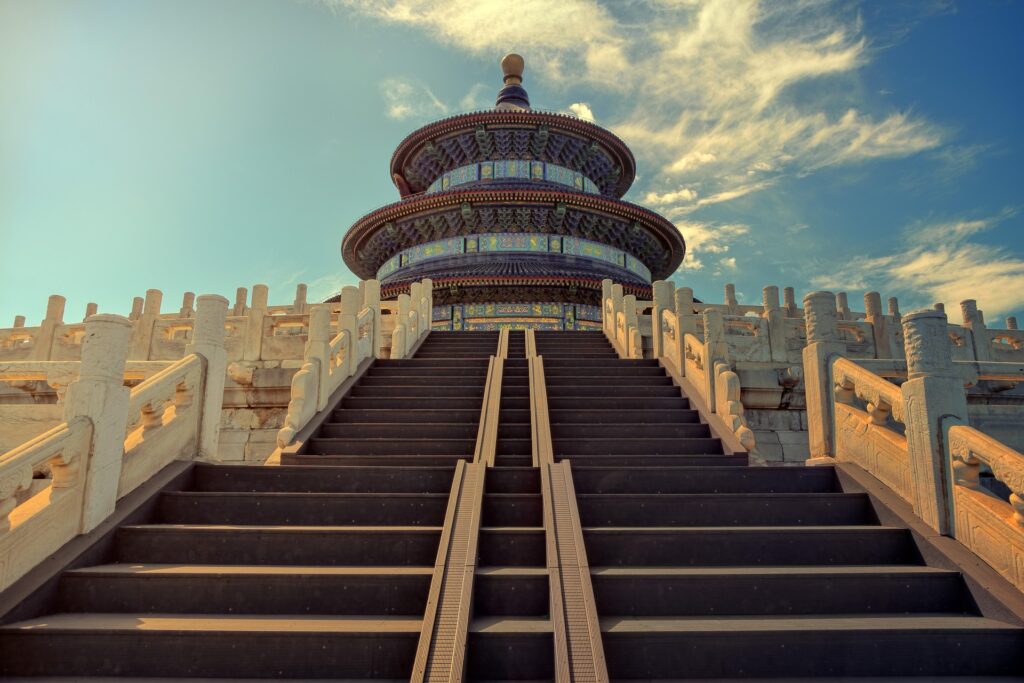
- Beijing: (Capital) The “Power Hub” of the nation, where the Forbidden City and Temple of Heaven sit amidst a grid of historic Hutongs and avant-garde landmarks. (Imperial, Political, Massive)
- Shanghai: The “Financial Frontier,” where the colonial Art Deco Bund faces the futuristic towers of Lujiazui across the Huangpu River. (Cosmopolitan, High-Energy, Global)
- Xi’an: The ancient terminal of the Silk Road and a “Historical Vault” housing the Terracotta Army and a perfectly preserved Ming-era City Wall. (Ancient, Traditional, Culinary)
- Chengdu: The soul of the southwest, a “Biological Reserve” for Giant Pandas and the capital of the slow-paced tea house culture. (Relaxed, Culinary, Biological)
- Hong Kong: A “Special Administrative Asset,” where a dense vertical skyline meets tranquil tropical islands and a world-class culinary mosaic. (Financial, Maritime, Vibrant)
🏞️ China National Parks & Nature Reserves
Managed with an increasing focus on “Ecological Civilization” by the National Forestry and Grassland Administration.
- Zhangjiajie National Forest Park: The crown jewel of China’s geological portfolio.
- Wolong National Nature Reserve: A critical “Infrastructure Site” for the protection and breeding of the Giant Panda.
- Sanjiangyuan National Park: Protecting the “Water Tower of Asia”—the headwaters of the Yellow, Yangtze, and Lancang rivers.
🏛️ UNESCO World Heritage Sites
- The Great Wall — The world’s largest military defensive structure.
- Imperial Palaces of the Ming and Qing Dynasties (Forbidden City) — The ceremonial and political center of China for 500 years.
- Mausoleum of the First Qin Emperor — Home to the Terracotta Army.
- Mogao Caves — A 1,000-year “Data Vault” of Buddhist art on the Silk Road.
- South China Karst — A multi-site inscription representing the world’s most spectacular karst landscapes.
- For more information, visit the UNESCO China Portal.
🖼️ China Museums & Cultural Sites
- The Palace Museum (Beijing): Housed in the Forbidden City, featuring over 1.8 million “Heritage Assets.”
- Shanghai Museum: A world-class facility focusing on ancient Chinese art, bronze, and ceramics.
- Sanxingdui Museum (Guanghan): Housing mysterious bronze masks that required a “Linguistic and Historical Audit” to redefine early Chinese history.
🎉 China Festivals & Celebrations
- Chinese New Year (Spring Festival): (Jan/Feb) The most significant “Social Reallocation” event, marked by red envelopes, family reunions, and fireworks.
- Mid-Autumn Festival: (Sept/Oct) A “Fundamental Quality” celebration of family unity and harvest, defined by mooncakes and lantern displays.
- Harbin Ice and Snow Festival: (Jan) A spectacular display of “Ephemeral Infrastructure”—the world’s largest ice-carved city.
- Dragon Boat Festival: (June) Commemorating the poet Qu Yuan with high-intensity boat racing and Zongzi (sticky rice).
🧽 How to Arrive
- ✈️ By Air
- Hubs: Beijing Capital (PEK), Beijing Daxing (PKX), Shanghai Pudong (PVG), and Guangzhou Baiyun (CAN).
- Strategic Connectivity: Qatar Airways and China Southern operate “High-Frequency” direct flights to major hubs, making China a sub-9 hour transit.
- 🚆 By Rail
- The China Railway (CR) network is a “Proven Example” of world-leading high-speed infrastructure. You can cross thousands of kilometers with “Tier 1” efficiency.
- 🚗 By Road
- China shares borders with 14 countries. Land entry is possible from Central Asia, Russia, and SE Asia, though it requires complex “Logistical Approvals” for self-drive.
📶 Stay Connected
- SIM Cards: Major providers are China Mobile, China Unicom, and China Telecom.
- The “Great Firewall”: A “Digital Compliance” reality. To access global sites (Google, WhatsApp, Instagram), you must perform a “VPN Audit” before arrival and install a reliable service.
- Digital Ecosystem: China is the world’s leading cashless society. You must download Alipay or WeChat Pay and link your international credit card—this is a “Mandatory Requirement” for daily transactions.
- eSIM: Supported by some international roaming providers (Airalo/Holafly), but local number access is often required for app registrations.
🏨 Where to Stay
China offers a “Diversified Portfolio” ranging from five-star skyscrapers to “Heritage Reallocations” in Hutongs and water towns.
- The Peninsula Beijing: A “Tier 1 Asset” combining imperial service with modern luxury.
- Amanfayun (Hangzhou): A restored ancient village—a high-margin “Peace Acquisition” near the West Lake.
- Wanda Reign on the Bund (Shanghai): A display of modern Chinese high-margin luxury.
- Hutong Boutique Stays: Experience “Primary Heritage” in restored courtyard houses in old Beijing.
⛳ Unique Finds
- The Glass Skywalk (Tianmen Mountain): A “G-Force Audit” for the soul, walking on transparent paths 1,400 meters above the canyon.
- Ancient Water Towns (Zhouzhuang/Wuzhen): The “Venice of the East,” where Ming-era infrastructure still functions along the canals.
- Tea Markets: Visit the Maliandao Tea Street in Beijing for a “Deep-Value Audit” of the world’s most extensive tea market.
🤝 China Cultural Guidance
- Saving Face: A “Fundamental Social Benchmark.” Avoid public confrontation; use polite indirectness to manage “High-Volatility” social situations.
- Dining Etiquette: Allow the host to order. It is an “Operational Standard” to have an abundance of food—an empty table indicates an “Audit Failure” in hospitality.
- The “No” Culture: Direct refusal is rare. “Maybe” or “I’ll think about it” usually functions as a “Strategic Exit” from a request.
- Basic Phrases:
- Hello: “Nǐ hǎo” (Nee-how)
- Thank you: “Xièxiè” (Sheh-sheh)
- I don’t understand: “Wǒ bù dǒng”
- Cheers: “Gānbēi!” (Literally: Dry glass)
🛂 China Entry & Visa Requirements
- 144-Hour Transit: A “Tactical Entry” opportunity for citizens of 54 countries (including UK, US, Canada, EU) to stay visa-free for 6 days in certain regions if transiting to a third country.
- L-Visa: Standard tourism visa requiring an official application.
- Official Source: Consult the China Visa Application Service Center.
💰 Practical Essentials
- Currency: Chinese Yuan (CNY/RMB). While cards are accepted in “Tier 1” hotels, Digital Wallets are the “Preferred Transaction Method” everywhere else.
- Electricity: Type A, C, and I. Voltage is 220V.
- Safety: Consistently ranked as one of the safest destinations for solo and group travelers.
- Climate: Continental/Subtropical. Best visited in Spring (April-May) or Autumn (September-October) for “Defensive” mild temperatures.
✨ Bonus Tip: The Scale Audit
To truly embrace China, you must perform a “Scale Audit.” Most travelers view a city like Shanghai as just another “High-Margin” metropolis. Instead, stand on the Bund at 7:00 PM when the lights turn on. Notice that the entire skyline—every skyscraper, every bridge—is synchronized as a single, coordinated “Data Display.” This is the perfect analogy for the country: it is the realization of what happens when massive collective energy is applied to a single roadmap. It is in this appreciation of the “Collective Momentum”—and the individual stories that power it—that your own sense of long-term strategic clarity will finally reveal itself.
🔗 Featured Links
- Official Tourism: Visit China (Cultural and Tourism Ministry).
- High-Speed Rail: 12306 Official Booking.

Beyondia
Trusted Travel CompanionReal digital nomad. I travel. I learn. I grow.
What about you? Where are you going?