🌐 Around the World with Beyondia 🧵 Nordic & Western Europe Region 🪡 Episode 58: London
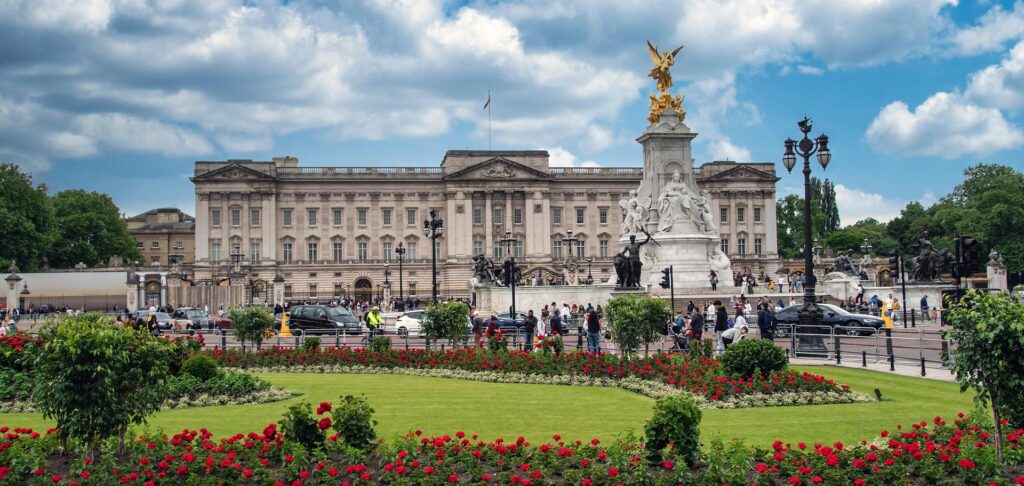
London is the capital of England and the United Kingdom, the seat of the British monarchy, the location of the Palace of Westminster (the meeting place of the British Parliament since the 11th century), and one of the largest, most economically significant, and most demographically diverse cities in Europe. The Greater London metropolitan area has a population of approximately 9.75 million; the wider London metropolitan region approaches 15 million; the historic City of London (the small central district enclosed by the medieval walls, one of the two “cities” that give London its official designation as the City of London and the City of Westminster) has a population of approximately 8,000. London is genuinely one of the most-visited cities in the world — approximately 30 million international visitors per year in the per-covid period, with substantial recovery since — and it is also one of the most extensively documented cities in human history. Every foreign visitor arrives with a substantial mental model of London. The article does not attempt to summarize Buckingham Palace, Big Ben, the Tower, and Westminster Abbey again — those places are extensively covered elsewhere. Instead, the article installs a single fact that reorganizes what most foreign readers carry: London as we see it today was fundamentally reshaped by a single specific event that took place across four days in September 1666, and everything visible in central London postdates that event, but approximately two thousand years of continuous inhabited layers lie underneath.
The Great Fire of London
The Great Fire of London began at approximately 1:00 AM on Sunday, 2 September 1666, in the bakery of Thomas Farriner on Pudding Lane, a narrow street immediately east of Old London Bridge in the medieval City. The precise circumstances of the initial ignition are documented from Farriner’s later testimony: he had banked the oven fires on Saturday evening before going to bed, and the fires apparently escaped confinement during the night. By the time the bakery family discovered the fire (approximately 2:00 AM), it had already spread to the surrounding buildings. The specific weather conditions of that autumn had been unusually dry — London had experienced approximately three months of drought preceding September — and the wooden buildings of the medieval City, packed together in narrow winding streets with substantial jettied upper storeys extending over the streets below, were essentially perfect fuel. A strong easterly wind, unusual for London in September, drove the fire westward through the tightly-packed medieval city. The Lord Mayor of London, Sir Thomas Bloodworth, was awakened around 3:00 AM and initially refused to authorize the demolition of houses to create firebreaks (which was the standard 17th-century fire-fighting technique), reportedly dismissing the fire as inconsequential — a decision he would spend the rest of his life defending. By the time systematic firebreak demolitions began under the direction of Charles II and his brother the Duke of York (later James II), the fire had spread too far to contain.
The fire burned for approximately four days, from 2 September through 6 September 1666. The specific pattern of destruction is documented in detail through contemporary accounts, particularly the diary of Samuel Pepys (a naval administrator who lived through the fire and whose diary is one of the most important English-language primary sources of the 17th century) and the diary of John Evelyn (another contemporary diarist). The fire destroyed approximately 13,200 houses, 87 parish churches, 44 Livery Company halls, the Royal Exchange, the Guildhall (partially), the medieval Custom House, St Paul’s Cathedral, the Old London Bridge (partially — the bridge itself survived, but the buildings on top of it were destroyed), and most of the commercial and administrative infrastructure of the medieval City. The total area destroyed was approximately 436 acres — roughly 80% of the walled City of London. Approximately 70,000 to 80,000 of London’s estimated pre-fire population of 500,000 were made homeless. The documented death toll was six people, though modern historians estimate the true toll was substantially higher, particularly among the urban poor whose deaths in fire-collapsed buildings, in the panic of evacuation, and in the subsequent exposure and destitution were not systematically recorded. The Royal Society of London, established just six years earlier in 1660, is documented as having temporarily moved its meetings and archives during the fire — Robert Hooke and other Fellows evacuated instruments and documents that would become part of the subsequent scientific reconstruction of England’s institutional infrastructure.
The Reconstruction of London
The reconstruction of London after 1666 is the article’s most substantive urban-planning claim, and it established the fundamental character of modern central London. Within a week of the fire’s end, Sir Christopher Wren — then a rising 34-year-old architect and mathematician who would become one of the most consequential figures in English architectural history — submitted to Charles II a comprehensive master-plan for the systematic reconstruction of the destroyed City. Wren’s plan proposed a fundamental redesign: a grid of wide straight avenues radiating from central squares, systematic replacement of the medieval street pattern with modern geometric planning, and specific placement of the new St Paul’s Cathedral and other major buildings on ceremonial axial positions. The plan was one of the most ambitious urban redesigns proposed in 17th-century Europe. It was rejected. The reason was straightforward: the property-rights complications of the medieval City were too complex to systematically restructure. Individual property owners held title to specific plots along the medieval streets, and the legal and financial infrastructure necessary to expropriate and re-plot the entire City did not exist in 17th-century English law. Instead, the reconstruction followed the medieval street pattern with substantial improvements in building quality, fire safety, and architectural standardization. The 1667 Rebuilding of London Act mandated brick-and-stone construction rather than wood, standardized building heights along different classes of street, widened certain critical routes for fire access, and required specific fire-safety features. The reconstruction of the City took approximately fifty years and produced the fundamentally 17th-and-18th-century urban character of central London that persists today.
Wren himself directed the reconstruction of approximately 52 of the destroyed parish churches, including some of the most architecturally significant Baroque and Anglican churches in England. St Bride’s Fleet Street (the “wedding cake” church whose distinctive tiered spire inspired the tiered wedding cake tradition). St Stephen Walbrook (with its Baroque dome that Wren used as a model for the larger dome of St Paul’s). St Mary-le-Bow (whose bells traditionally define the geographical boundary of “Cockney” London — a true Cockney is born within earshot of the Bow bells). St Magnus-the-Martyr. St Michael Paternoster Royal. Christ Church Newgate Street (destroyed again in the Blitz of 1940 and now preserved as a small ruined garden). The 52 rebuilt churches (some destroyed in subsequent centuries) collectively represent one of the largest single-architect reconstructions of religious buildings in European history. Wren was assisted by his close colleague Robert Hooke (a polymath who is credited with substantial contributions to the City reconstruction, though his specific individual buildings are harder to identify because of the collaborative nature of the work), by Nicholas Hawksmoor (a younger architect who worked with Wren and would later design several major London churches in his own right), and by John Vanbrugh. The specific 17th-century English Baroque architectural style that emerged from this work — combining Palladian Renaissance influences, Continental European Baroque elements, and specifically English classical restraint — became the defining architectural language of what was called the “Age of Reason” reconstruction and shaped subsequent British architecture through the 18th century.
The centerpiece of Wren’s reconstruction was St Paul’s Cathedral, built between 1675 and 1710 on the site of the medieval St Paul’s that had been destroyed in the fire. The cathedral is genuinely one of the most architecturally significant Baroque buildings in northern Europe. The dome, at 111.3 meters to the top of the cross, was the tallest structure in London until 1962 (when it was exceeded by the BT Tower). The cathedral’s specific structural engineering — the three-layer dome (an inner masonry dome, a middle brick support cone, and an outer lead-covered wooden dome), the whispering gallery inside the dome (where a whisper against one wall is audible against the wall on the opposite side, 32 meters away, due to the dome’s specific acoustic geometry), and the specific classical proportional system that Wren developed for the whole structure — represents one of the most significant architectural achievements of the 17th century. St Paul’s remains one of the most-visited buildings in the United Kingdom, and its silhouette (particularly the specific view from the Millennium Bridge across the Thames from Tate Modern) is one of the most photographed London landmarks. Wren’s tomb is in the crypt of the cathedral, with the famous Latin inscription: “Lector, si monumentum requiris, circumspice” — “Reader, if you seek his monument, look around you.” It is one of the more powerful architectural epitaphs in Europe.
London – The Roman city of Londinium
Underneath the 17th-century and later urban fabric of London, however, lie approximately 2,000 years of continuous inhabited layers that are visible in specific preserved locations if the visitor knows where to look. The Roman city of Londinium was founded around 47 AD, just a few years after the Roman conquest of Britain under Claudius. It grew rapidly to become one of the largest cities of Roman Britain, with a peak population of approximately 50,000-60,000 in the 2nd century AD. The Romans built the London Wall — a defensive circuit approximately 3.2 kilometers in length, enclosing an area of approximately 132 hectares, constructed between approximately 200-230 AD to defend the city against increasing barbarian raids. Substantial sections of the Roman wall are still preserved and visible today: the largest section at Tower Hill Gardens (immediately north of the Tower of London, a preserved section approximately 100 meters long standing 4-6 meters high), sections at Cooper’s Row (where a Roman wall fragment is visible in the courtyard of a modern hotel), Noble Street (a section preserved as part of the Museum of London’s outdoor archaeological display), and various smaller fragments across the eastern City. The Roman amphitheater of Londinium — built around 70 AD, one of the largest in Roman Britain — was discovered in 1988 beneath the Guildhall Yard and is now preserved as a permanent underground exhibit with the amphitheater’s foundations visible through the modern floor. The London Stone — a Roman-era limestone marker that may have been used as a distance-measuring point for the Roman road system — is still preserved in a small niche on Cannon Street. Roman-era street patterns are still visible in the modern City in the specific alignments of certain streets (Cheapside, for example, follows the alignment of the Roman decumanus — the east-west main street). The Romans left London around 410 AD when Rome withdrew its legions from Britain, and the city was substantially abandoned for approximately 400 years — the Anglo-Saxons who arrived in the 5th-6th centuries established a separate settlement (Lundenwic) approximately 1 kilometre west of the Roman city, near modern Aldwych (the name preserves the Anglo-Saxon Aldwic — “the old settlement”). The area is now marked by street names — Aldwych itself, Kingsway, and others.
The re-establishment of the Roman-walled city dates to approximately 886 AD, when King Alfred the Great of Wessex — during the Anglo-Saxon reconquest of England from the Norse Danelaw — moved the Anglo-Saxon population back inside the Roman walls for defensive purposes. This is the beginning of the specific medieval City of London that would continue for the next 800 years. Alfred’s reconstruction reoccupied the Roman street pattern (which is why the modern City of London street layout is still fundamentally Roman-medieval, with Cheapside, Cornhill, Threadneedle Street, Poultry, and dozens of other streets following essentially the same paths they followed in the Roman period). Norman-era London begins with William the Conqueror’s arrival in 1066, and the specific inheritance of the Norman period is architectural — the Tower of London (started 1066 and expanded across the following two centuries, one of the most substantial Norman fortresses anywhere in Europe), the medieval Palace of Westminster (started 1097, the seat of English royal government for approximately 900 years), the medieval Westminster Abbey (started 1245 in its current form, though the site was religious since Anglo-Saxon times). The medieval City of London within the walls developed as the commercial and municipal centre, with the Guildhall (built approximately 1411, one of the very few pre-1666 buildings that substantially survived the Great Fire), the medieval livery companies, the medieval churches (most destroyed in 1666 and rebuilt by Wren), and the specific medieval commercial infrastructure that made London one of the most important trading cities in Northern Europe from approximately the 12th century onwards.
All these layers — Roman Londinium, Anglo-Saxon Lundenwic, Alfredian re-established City, Norman fortifications, medieval commercial city — are visible in modern London in specific preserved locations. The Roman wall at Tower Hill. The amphitheater foundations beneath Guildhall. The London Stone. The medieval Guildhall itself (its Great Hall, dating to 1411, still functions as a ceremonial venue for the City of London Corporation). The Norman Tower of London (still standing, still one of the most-visited monuments in Britain). The medieval Westminster Abbey (still the coronation church of British monarchs, most recently used for the coronation of King Charles III in May 2023). The Cheapside street pattern (still Roman-medieval). The various small parish churches that survived the fire or were rebuilt on their original medieval foundations. The visitor who spends a day walking the City of London with these specific layers in mind — starting at Tower Hill (Roman wall + Norman fortress), through the Guildhall (medieval + Roman amphitheater underneath), to St Paul’s (Wren + medieval site) — is walking through approximately 2,000 years of continuous urban inhabitation compressed into approximately 1 square mile. This is one of the most concentrated single areas of European urban archaeology in any modern city, and it is essentially invisible to visitors who focus only on Buckingham Palace, Big Ben, and the London Eye.
The post-fire London extended beyond the medieval City through the 17th, 18th, 19th, and 20th centuries, and the specific district characters of the modern city reflect this extension. Westminster developed as the political and royal centre through the medieval period and expanded substantially in the 17th-18th centuries — the Palace of Westminster (rebuilt in its current Neo-Gothic form after the 1834 fire, containing the famous Big Ben clock tower which is technically named the Elizabeth Tower since 2012), Buckingham Palace (the primary residence of the British monarch since 1837), Whitehall (the historic administrative centre with 10 Downing Street and other government offices). The West End developed as a residential and theatre district in the 17th-18th centuries — Covent Garden (the fruit and vegetable market until 1974, now redeveloped), Soho (the specific historic bohemian district), Piccadilly Circus, Theatreland. The 18th-century Georgian expansion produced the elegant terraced squares of Mayfair, Marylebone, and Bloomsbury, with the specific Georgian architectural language (uniform brick facades, sash windows, iron railings, stucco ornamentation) that shaped subsequent British urban aesthetics. The 19th-century Victorian expansion added the railway suburbs — Islington, Camden, Hampstead, Kensington, Chelsea, Notting Hill — that pushed London’s residential districts far beyond the medieval walls. The 20th and 21st-century expansions have added the outer suburbs (population now approximately 60% of Greater London), the modern financial district at Canary Wharf, and the specific technology and creative districts (Shoreditch, King’s Cross, Stratford after the 2012 Olympics) that shape contemporary London.
The Thames is genuinely central to London in ways that most Continental European rivers are not central to their cities. The river runs approximately 346 kilometers from source in Gloucestershire to the North Sea, and the London stretch (approximately 68 kilometers through Greater London) has been continuously navigable since Roman times. The Thames’s specific tidal character (tidal at London and up to 65 kilometers upstream, with tidal ranges of approximately 7 meters between low and high tide) has shaped every aspect of the city’s development. The historical Port of London — once the largest port in the world — was located along the tidal stretches from the Pool of London (immediately east of the medieval City) through the East End docks (West India Docks, Millwall Dock, Royal Docks, and others). The port’s specific role in British imperial commerce made London one of the most economically significant cities in the world through the 18th and 19th centuries, and the working-class communities of the East End (Whitechapel, Bethnal Green, Stepney, Poplar) developed around the docks in specific patterns of poverty and periodic redevelopment. The modern Port of London has moved substantially downstream to Tilbury, but the specific working-class East End cultural heritage persists in the contemporary districts. The Thames Barrier at Woolwich — completed in 1982, one of the largest movable flood barriers in the world — protects central London from tidal surge flooding, and rises approximately 1-2 times per year on average to close the river during major tidal surges.
The specific pub culture of London is one of the most distinctive institutional continuities in the city. The traditional English pub — a licensed premises serving beer, wine, spirits, and food, functioning as a neighbourhood gathering place with specific regulatory frameworks that trace to medieval alehouse traditions — is a genuinely unique institutional form that has continued in London for approximately 800 years. Some London pubs occupy sites with continuous alehouse operation dating to the medieval period — Ye Olde Cheshire Cheese on Fleet Street (rebuilt after the 1666 fire on the site of a pre-fire alehouse), The George Inn in Southwark (a 17th-century coaching inn, the last surviving galleried coaching inn in London), The Prospect of Whitby in Wapping (dating to approximately 1520), The Anchor in Southwark (with medieval foundations). The specific institutional pattern — the neighbourhood pub as gathering place, the specific hours and licensing traditions, the specific food traditions (Sunday roast, fish and chips, pie and mash, the “pub grub” repertoire), and the specific role of the pub in British social life — has continued substantially unchanged through centuries, and remains one of the specific cultural continuities that most distinguishes London from other major European capitals. Approximately 3,000 pubs currently operate in London, though the number has declined substantially in the past two decades due to changing drinking habits, regulatory pressures, and property-development pressures on smaller establishments.
The contemporary London is one of the most demographically diverse cities in Europe. Approximately 44% of London residents are of non-White ethnic backgrounds according to the 2021 UK Census, with substantial Bangladeshi (particularly concentrated in Tower Hamlets), Indian (concentrated in Wembley, Southall, Harrow), Pakistani, Nigerian, Jamaican, and other Caribbean, African, and Middle Eastern communities. Approximately 37% of London residents were born outside the United Kingdom. Approximately 300 different languages are actively spoken in London, according to educational surveys. This demographic diversity is the specific product of British imperial history — the migration flows from the Caribbean (particularly the Windrush generation of 1948 onwards), from South Asia (particularly the Bangladeshi migration in the 1970s onwards), from Africa, and — since the 1970s — from continental Europe under EEC and EU frameworks (with substantial Polish, Romanian, and other Eastern European communities established in the 2004-2007 accession waves). The specific cultural production that emerges from this diversity — the specific London English of the multicultural East End (sometimes called Multicultural London English, an emerging dialect that combines Cockney with substantial Caribbean and South Asian linguistic inputs), the specific music production (grime, drill, and other London-originated genres that emerged from Caribbean, African, and Bangladeshi communities), the specific food scene (Bangladeshi curry houses in Brick Lane, Caribbean food in Brixton, Nigerian food in Peckham, and dozens of other specific communities) — is genuinely one of the defining features of contemporary London.
The specific post-Brexit London is worth naming as contemporary reality. The United Kingdom’s departure from the European Union (formally completed 31 January 2020, with transition arrangements until 31 December 2020) has produced substantial ongoing changes to London’s specific role as a European financial and creative capital. Some substantial European financial activity has shifted to Frankfurt, Amsterdam, Paris, and Dublin (approximately €1.4 trillion in assets moved from London to EU cities between 2016 and 2024). London’s specific role as one of the two largest global financial centres (competing with New York) has continued, but with substantial adjustments. The specific cultural and creative sectors have negotiated the changes with mixed results — some substantial European creative talent has left, but London remains one of the more culturally productive cities in Europe. Housing prices in central London have declined slightly from the 2015 peak (adjusted for inflation) but remain among the highest in Europe. The specific tensions of post-Brexit London — the negotiations around European integration, the ongoing changes to migration patterns, the specific challenges of London’s role as a global city within a country that has partially withdrawn from continental European integration — are the ongoing contemporary reality that the article names honestly.
This is the deeper character of London, and the article proposes to close on it. The city was fundamentally reshaped by the Great Fire of 1666, and the specific 17th-and-18th-century urban character of central London — the widened streets on the medieval street pattern, the brick-and-stone reconstruction, the 52 Wren churches, St Paul’s Cathedral — is the direct result of the reconstruction directed by Sir Christopher Wren and the other 17th-century architects. Underneath this modern urban fabric are approximately 2,000 years of continuous inhabited layers — Roman Londinium, Anglo-Saxon Lundenwic, the Alfred-re-established medieval City, the Norman fortifications, the medieval commercial and religious infrastructure — all visible in specific preserved locations for the visitor who knows where to look. The specific extension of London beyond the medieval City through the 17th-21st centuries produced the specific district characters of the modern metropolis — Westminster (political), West End (theatrical and shopping), Georgian squares of Mayfair and Bloomsbury (residential elegance), Victorian railway suburbs, contemporary Canary Wharf and Shoreditch. The Thames — tidal, continuously navigable since Roman times, protected by the Thames Barrier since 1982 — provides the geographical foundation for the entire urban form. The specific pub culture, continuous for approximately 800 years, remains one of the specific institutional continuities that distinguishes London from other major European capitals. The contemporary London is one of the most demographically diverse cities in Europe, shaped by specific migration flows from the British imperial and post-imperial periods, and negotiating the specific tensions of the post-Brexit period. This is a city that most foreign readers arrive with substantial mental models about. The article’s job is to install a single reorganising fact — that everything visible is post-1666 and 2,000 years is underneath — and let the reader carry that reframing into their own subsequent experience of London.
Some cities exist in one layer. This one exists in twenty — Roman walls and Norman keeps and medieval streets and Wren’s churches and Georgian squares and Victorian railways and Edwardian department stores and post-war council estates and post-modern glass towers and contemporary Shoreditch coffee shops — and every layer is visible somewhere if you know where to look. The postcard is the top layer. The city is what continues underneath.
Nine regions. One hundred and twenty destinations. Three hundred and three weeks remaining.
The journey continues north. The next stop is Scotland’s historic capital — a city built on volcanic bedrock, split between an ancient royal fortress on a rock and an 18th-century planned New Town that predated most systematic Enlightenment urban planning in Europe.
Where are you going?

Beyondia
Trusted Travel CompanionReal digital nomad. I travel. I learn. I grow.
What about you? Where are you going?