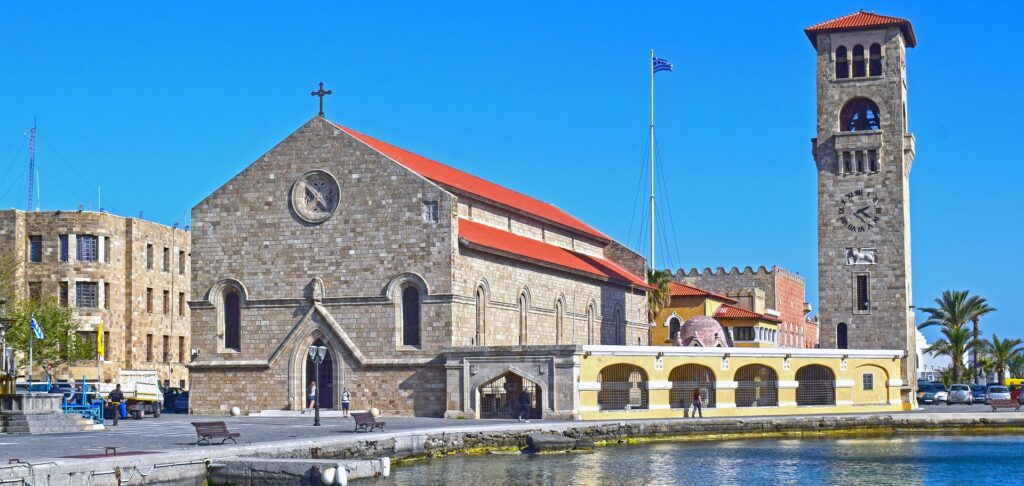
Around the World with Beyondia 🧵 Mediterranean Region 🪡 Journal 6
Santorini. Rhodes. Crete. The postcard, the fortress, and the island that doesn’t need a category.
Santorini
Everyone has seen Santorini before they arrive. The white domes, the blue roofs, the caldera at sunset. I stepped off the ferry already knowing what it would look like, and that’s the problem — Santorini has been so photographed that standing in front of it feels like remembering something instead of experiencing it.
I walked through Oia in the late afternoon, along the narrow path that traces the cliff edge, and every door, every wall, every staircase was composed. Not naturally beautiful — deliberately beautiful. Santorini knows exactly what it’s doing. The blue-domed churches of Anastasis and the three bells of Fira aren’t accidents of faith — they’re the most photographed structures in the Mediterranean, and they’re positioned as if someone considered the angle before laying the first stone.
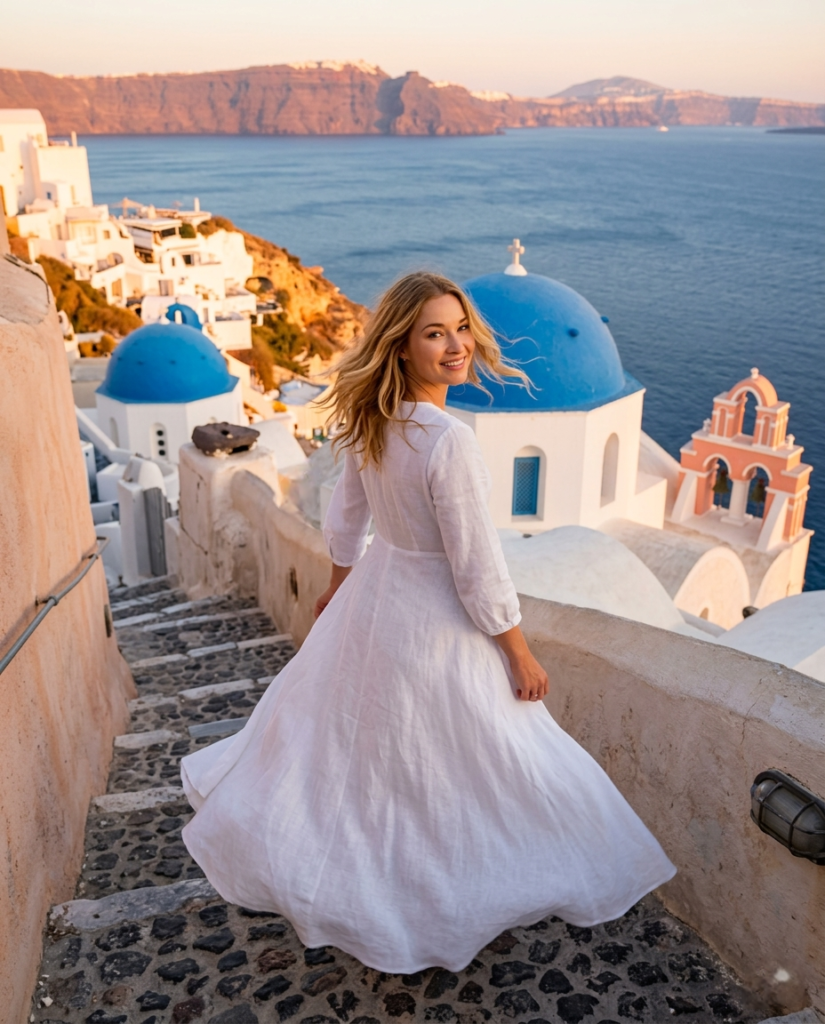
But the island has a secret underneath the performance. I took a boat into the caldera and swam in water heated by volcanic vents — warm patches rising through cold Aegean blue, a reminder that this island is what’s left of an explosion. Around 1600 BC, a volcanic eruption blew the centre of the island into the sea, generated tsunamis that reached Crete, and possibly contributed to the collapse of the Minoan civilisation. The caldera I was floating in is the wound. Santorini built its most famous views on the rim of a catastrophe.
I hiked from Fira to Oia along the caldera path — ten kilometres of switchbacks, donkey trails, and views that keep escalating until you stop trusting your own eyes. Away from the villages, the island is barren. Volcanic rock. Dry brush. Wind. The beauty everyone comes for exists only on the edges, clinging to the cliff face. The interior is empty and honest about it.
At sunset, I stood where everyone stands — the tip of Oia, surrounded by hundreds of people holding phones above their heads. The sun dropped into the sea and the sky turned colours that I’d seen in a thousand photographs and not one of them was accurate. The crowd applauded. I’m not sure who they were clapping for — the sun, the island, or themselves for being there. Santorini is the only place I’ve been where the audience thanks the stage.
Rhodes
Rhodes hit me in the chest.
The medieval Old Town is the largest inhabited medieval town in Europe — not a museum, not a reconstruction, a place where people still live inside walls built by the Knights of St. John in the 14th century. I walked through the Gate of d’Amboise and the century changed. Cobblestone streets wide enough for a horse but not a car. Stone arches connecting buildings overhead like the city was holding itself together. The Street of the Knights — the actual street where the Knights Hospitaller lived in their langue houses — is 600 metres of medieval stone so intact it feels staged. It isn’t. It’s just never been torn down.
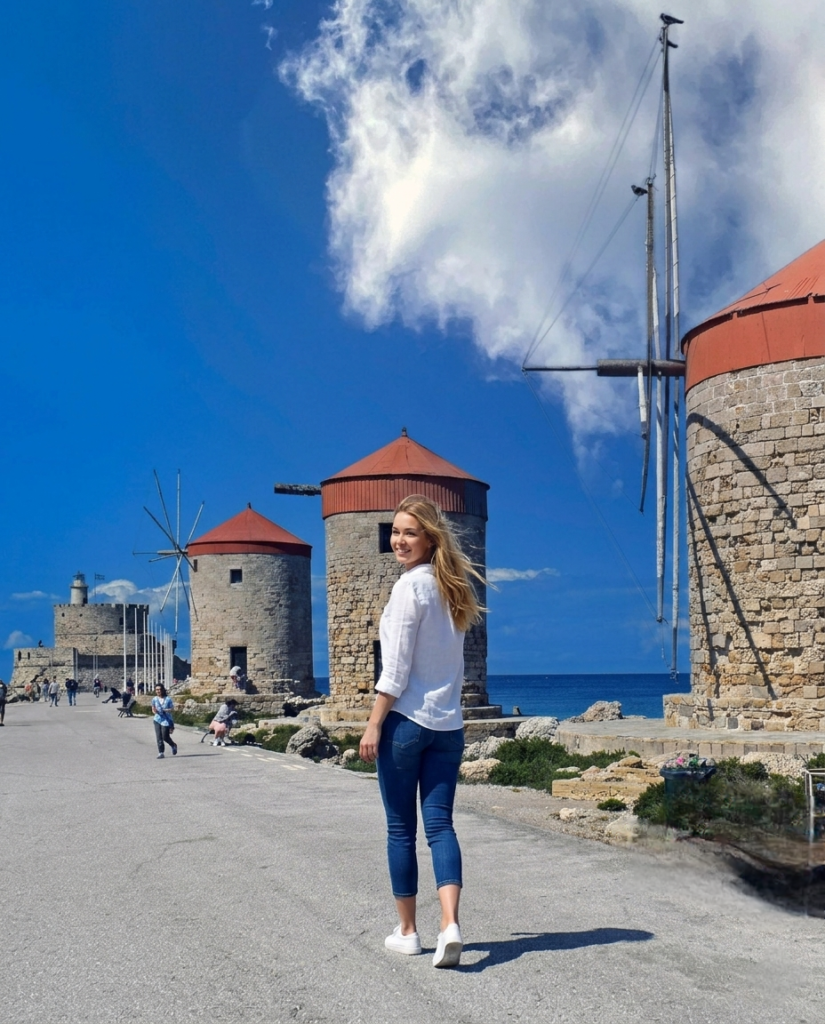
The Palace of the Grand Master sits at the top like a fist. The Ottomans took it in 1522 after a siege that lasted six months, and the Knights were allowed to leave with honour because even the conquerors respected what they’d built. I stood in the courtyard and looked at walls designed to hold against cannon fire, built by men who came from France, England, Germany, Spain, and Italy to defend an island most of them had never seen before arriving. Rhodes was never about geography. It was about principle.
Outside the Old Town, I climbed the hill to the Acropolis of Lindos — a site that stacks history like geological layers. A Doric temple from the 4th century BC. A Byzantine church. A Crusader fortress. Each civilisation built on top of the last one without erasing it. Below, the bay curved in a perfect arc, and the village of Lindos spilled white down the hillside. Rhodes holds everything — Greek, Roman, Byzantine, Crusader, Ottoman — and doesn’t privilege any of it. The whole island is a timeline that refuses to edit itself.
Crete
Then Crete. And Crete is where the trip changed.
I arrived in Heraklion expecting a stop. What I walked into was a continent disguised as an island. Crete is the fifth largest island in the Mediterranean but it behaves like a country that forgot to declare independence. Its own dialect. Its own music. Its own stubborn, generous, argumentative identity that doesn’t reference Athens unless it has to.
I went to Knossos first — the Minoan palace complex that Arthur Evans excavated starting in 1900 and partially reconstructed in ways that archaeologists still argue about. The site is controversial, the concrete restorations heavy-handed, but standing in the throne room — the oldest throne room in Europe, with a stone seat that a Minoan ruler sat in 3,500 years ago — none of that mattered. The Minoans built a civilisation with running water, multi-storey buildings, and a written language a thousand years before classical Athens. Crete didn’t follow Greece. Greece followed Crete.
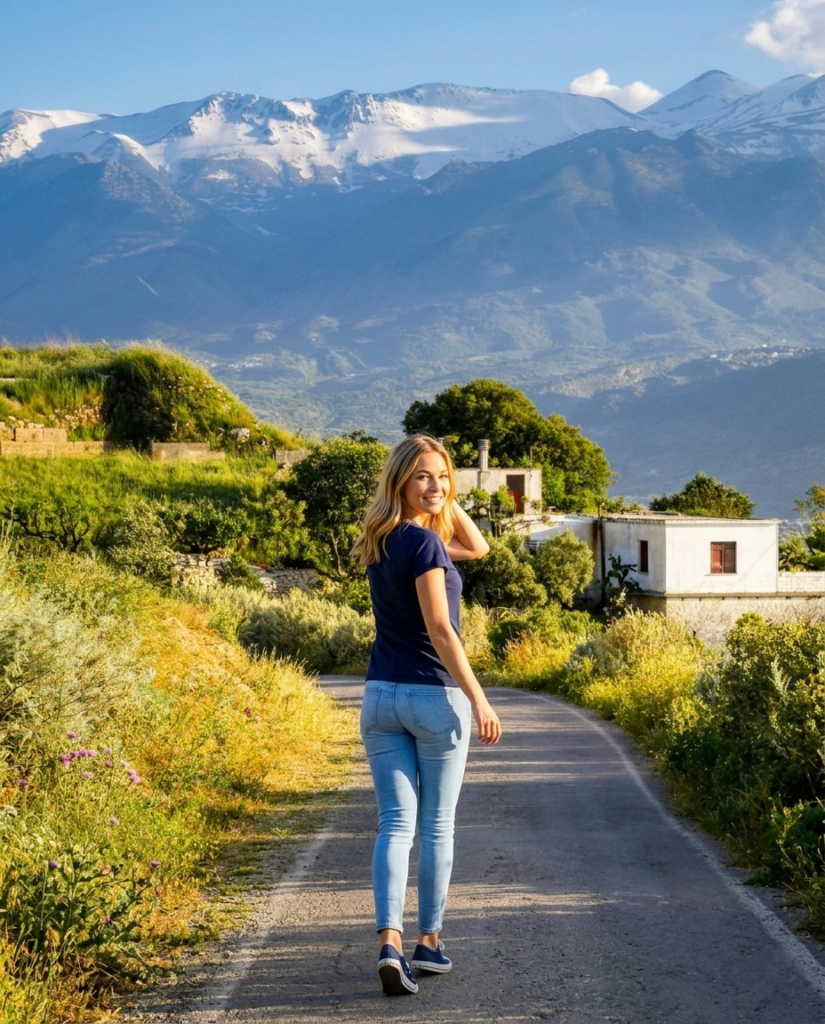
I drove south across the island and the landscape swallowed me. The mountains rose without warning — Crete has peaks over 2,400 metres — and the road carved through gorges where the rock walls were close enough to touch from both windows. I reached the Samariá Gorge and stood at the top looking down eighteen kilometres of canyon that drops 1,250 metres to the Libyan Sea. I didn’t hike it that day. I just stood at the edge and understood that Crete has a spine, literally, and it runs the full length of the island like a clenched jaw.
In Chania, the old Venetian harbour bent around water so still it doubled every building. The lighthouse at the end of the harbour wall has been standing since the 16th century, rebuilt by the Egyptians, maintained by the Greeks, and now it just stands there doing its job while tourists eat seafood ten metres away without knowing any of that history. I ate dakos — dried bread soaked in tomato, topped with mizithra cheese and olive oil from trees older than most European nations — and listened to a man play Cretan lyra in a side street. The music sounded like something between a violin and a human voice deciding whether to cry or fight.
Crete doesn’t perform like Santorini. It doesn’t defend like Rhodes. It just continues. It’s been invaded by the Venetians, the Ottomans, the Nazis, and every single time it absorbed the blow, kept its language, kept its music, kept its food, and waited. The Cretan resistance during World War II was so fierce that the German occupiers called the island ungovernable. That word — ungovernable — might be the most accurate single description of anything I’ve encountered on this trip.
Three islands. One is the most photographed place in Greece and it earns it by knowing exactly what it is. One is a fortress that held Europe’s frontline for two centuries. One is an island that has been a civilisation longer than most countries have been ideas.
Greece doesn’t end. It just keeps adding layers.
Closing Greece, next week North Africa. But Crete stays in my chest like that lyra.

Beyondia
Trusted Travel CompanionReal digital nomad. I travel. I learn. I grow.
What about you? Where are you going?