GoBeyondia Atlas 🗺️ Africa Region 🗾
Namibia: Where the word Namib means “an area where there is nothing” in the Nàmá language, and the desert it describes has been arid for fifty-five million years — the oldest desert on earth, older than the Sahara by at least fifty million years — and where the country that took its name from this emptiness gained independence from apartheid South Africa in 1990 and wrote environmental protection into its constitution on day one, the first African nation to do so, and then gave communities the legal right to manage and benefit from the wildlife on their own land — and desert lions that had been reduced to fewer than twenty-five animals rebounded to over one hundred and fifty, elephants tripled, black rhinos recovered to the largest free-roaming population on the continent, and forty-five percent of the country’s land is now under conservation management — because Namibia understood that the thing that looks like nothing is everything, and that what you protect is what comes back.
Namibia in 30 Seconds
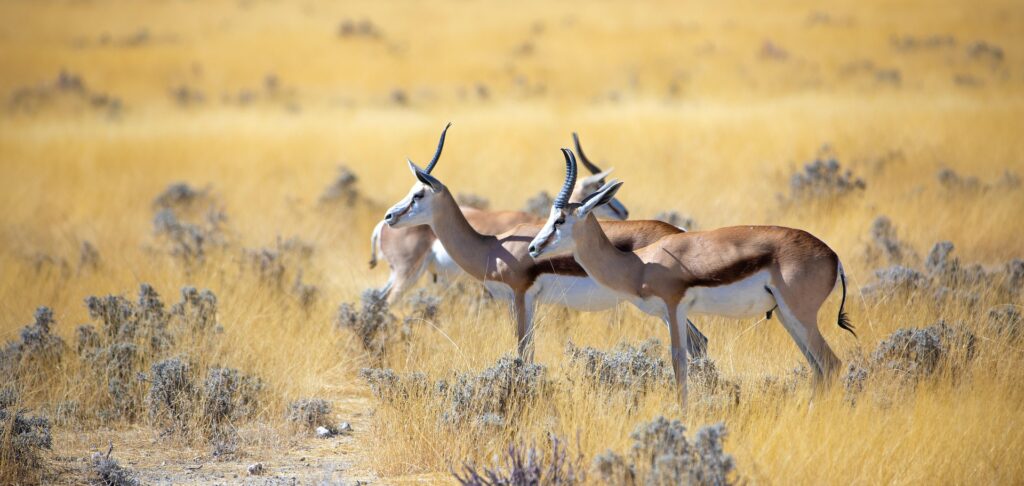
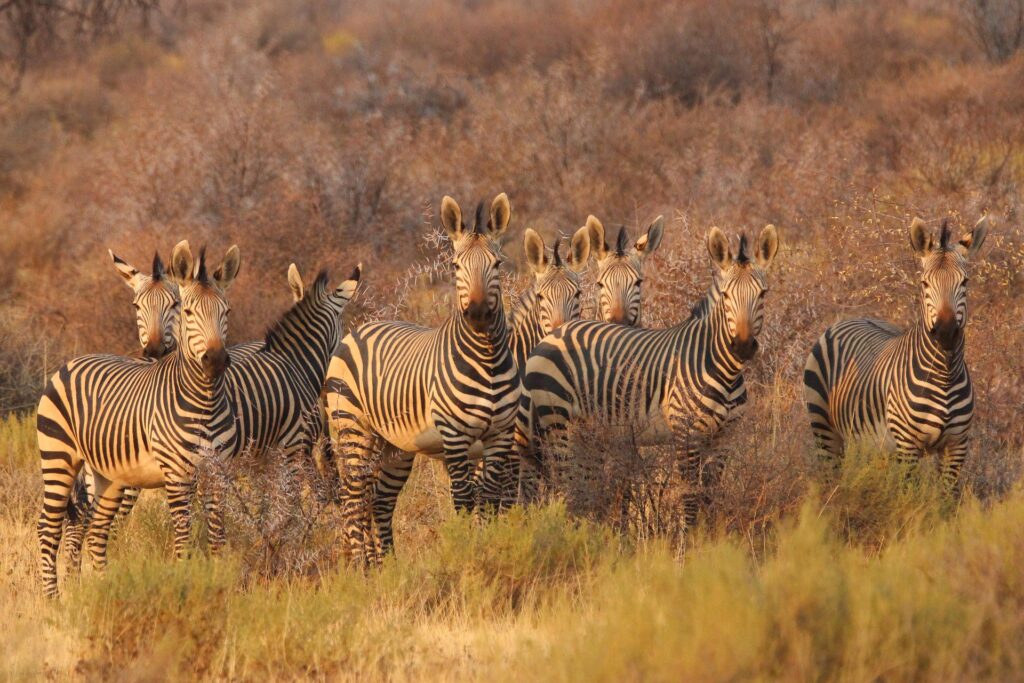
A country on the southwestern coast of Africa, larger than France and Germany combined, with a population of roughly two and a half million people — one of the lowest population densities on earth. The Namib Desert stretches nineteen hundred kilometers along the Atlantic coast, some of its dunes reaching over three hundred meters — among the tallest on the planet. At Sossusvlei, the dunes are star-shaped, sculpted by winds from all directions over millions of years, their color deepening from apricot to blood red with age as the iron in the sand oxidizes. Deeper in, at Deadvlei — the dead marsh — nine-hundred-year-old camel thorn trees stand black and skeletal against a white clay pan surrounded by orange dunes. The trees died when the climate shifted and the river that fed them dried up. But without moisture, they cannot decompose. They have stood unchanged for nearly a millennium. They are not alive. They are not rotting. They are simply there. Along the coast, the Skeleton Coast earns its name from the over one thousand shipwrecks that litter its shore — the result of Atlantic fog so dense that sailors lost all navigation, wrecking on sandbanks and reefs in water they could not see. Some of these ships now sit four hundred meters inland, because the desert is slowly moving west, reclaiming land from the sea. The San people called this coastline “the land God made in anger.” Portuguese explorers called it “the gates of hell.” But the desert is not dead. The fog that kills the sailors feeds the life. One hundred and eighty days of fog per year roll inland from the cold Benguela Current, and every organism in the Namib has evolved to harvest it. The fog-basking beetle tilts its body into the mist at a precise angle so that water condenses on its back and runs into its mouth. Welwitschia plants — some over a thousand years old, looking like a tangle of leather straps — survive on fog moisture alone. Desert-adapted elephants walk two hundred kilometers through sand to find water, their feet wider than their savannah relatives’, evolved for traction on dunes. Desert lions hunt along the beaches. This is what fifty-five million years of nothing produces: everything that can survive nothing. Then, in 1990, Namibia gained independence. The constitution — Article 95 — committed the state to maintaining ecosystems, biological diversity, and the sustainable use of natural resources “for the benefit of all Namibians, both present and future.” In 1996, the government passed legislation enabling communities to establish communal conservancies — self-governing, democratically run areas where local people manage and benefit from wildlife on their own land. Before independence, wildlife in Namibia’s communal areas had been devastated — poaching, drought, and military conflict during the liberation struggle had emptied the landscape. In the northwest, there were fewer than four hundred oryx, six hundred springbok, four hundred fifty zebra. Desert lions numbered fewer than twenty-five. By giving communities legal ownership of their wildlife, the government transformed the calculus. The animals were no longer the government’s to protect and the poacher’s to take. They belonged to the people who lived with them. The people chose to keep them. Eighty-six communal conservancies now cover more than twenty percent of Namibia’s land. The elephant population has tripled. Oryx went from four hundred to twenty-nine thousand. Springbok from six hundred to one hundred seventy-five thousand. Zebra from four hundred fifty to nearly nineteen thousand. Desert lions from fewer than twenty-five to over one hundred fifty. Namibia holds the world’s largest free-roaming populations of both black rhinos and cheetahs. Over forty-five percent of the country’s total land area is now under some form of conservation management. One in five rural Namibians lives within a conservancy. And above it all, at night, the NamibRand Nature Reserve holds certification as an International Dark Sky Reserve — one of the least light-polluted places on the planet, where the Milky Way stretches from horizon to horizon in a sky that has looked exactly this way for fifty-five million years.
Evoke — Why You Visit Namibia
You come to Namibia because something you neglected — a talent, a relationship, a part of yourself — has been empty so long you assumed it was dead, and you need a country that will show you what emptiness becomes when you stop taking from it and start protecting it. The Namib Desert is not a wasteland. It is a fifty-five-million-year experiment in what happens when you leave something alone. Every organism in it has evolved a solution to scarcity that no engineer could design: a beetle that drinks fog; a plant that lives a thousand years on mist; an elephant that walks two hundred kilometers for water. These are not survival stories. They are design stories. Each one is an answer to the question: what is possible when there is almost nothing to work with? Namibia’s communal conservancy program asked the same question about people. After independence, the wildlife was nearly gone. The communities were impoverished. The land was damaged. The conventional response would have been government enforcement — rangers, fences, penalties. Namibia did the opposite. It gave the communities the wildlife. Not rhetorically. Legally. The animals on your land are yours. You decide how to manage them. You receive the benefits — tourism income, hunting quotas, jobs, meat. The result was the greatest wildlife recovery story in Africa. Not because the government protected the animals from the people. Because the government made the people the protectors. The calculus reversed: a live elephant walking through your conservancy brings tourists. A dead elephant brings nothing. A live lion is a lodge booking. A dead lion is a carcass. The math did the work that enforcement could not.
Explore — How You Experience Namibia
Fly into Windhoek and drive west toward the coast. Watch the landscape empty. The last trees give way to gravel plains that give way to sand that has been here since before the Himalayas existed. At Sossusvlei, climb Big Daddy — a three-hundred-meter dune — at sunrise and look down into Deadvlei, where the nine-hundred-year-old trees stand in their white clay pan like a photograph that was taken before photography existed. The colors are not enhanced. They are the result of iron oxidation measured in millions of years. Drive to the Skeleton Coast and see the fog roll in — a wall of moisture advancing from the Atlantic into a desert that receives two millimeters of rain per year, the collision of the cold Benguela Current with the hot interior air producing a phenomenon that kills ships and feeds beetles simultaneously. Find a shipwreck — some are barely visible now, half-buried in sand four hundred meters from the surf, being slowly consumed by the desert that is expanding into the ocean. Then go north into Kunene and enter a communal conservancy. See the desert-adapted elephants walking through a dry riverbed, their feet impossibly wide, their route a memory passed down through generations of matriarchs who know where the water is even when the riverbeds show nothing. See the oryx — those twenty-nine thousand that were four hundred thirty years ago. See the springbok, the zebra, the cheetahs. Understand that these animals are here because the people who live in this landscape chose to keep them. Not out of sentiment. Out of the same logic the fog beetle uses: when you live in a place where there is almost nothing, what little you have must be managed with precision or it disappears forever. Then, at night, lie on your back and look up. No light pollution. No haze. The Milky Way in full resolution, stretching from one horizon to the other across a sky that has looked exactly this way since before there were human eyes to see it. You are looking at the same emptiness the desert has held for fifty-five million years. It is not empty. It never was.
Evolve — Who You Become in Namibia
You leave Namibia understanding that emptiness is not absence. It is potential waiting for the right conditions. The Namib has been “nothing” for fifty-five million years and has produced organisms so perfectly adapted to scarcity that scientists study them to design water-collection systems, thermal management technologies, and survival strategies for extreme environments. The communal conservancies were “nothing” — impoverished communities on depleted land — and became the substrate for Africa’s most successful wildlife recovery by a single constitutional change: ownership. The Deadvlei trees have been “dead” for nine hundred years but cannot decompose because the conditions that would erase them are the same conditions that preserve them — the very dryness that killed the river stopped the decay. You come home and look at the thing in your life that you have written off as empty — the career that stalled, the project that went silent, the part of yourself you stopped investing in — and you ask a different question. Not: what went wrong? But: what would happen if I protected this instead of abandoning it? If I gave it ownership instead of enforcement? If I stopped extracting and started letting it recover? The desert is fifty-five million years old. The constitution is thirty-five years old. The conservancies are less than thirty years old. The elephants tripled. The lions came back. The oryx went from four hundred to twenty-nine thousand. The land God made in anger became the greatest conservation story ever told. The emptiness was never empty. It was waiting.
Your practical guide to Namibia starts bellow 👇
🕰️ Namibia Historical Backdrop
Namibia’s history is a narrative of resilience carved into a rugged landscape. Originally home to the San (Bushmen) and later the Damara, Nama, and Herero peoples, the region’s coastline was long feared by explorers as the “Gates of Hell.” In the late 19th century, it became the colony of German South West Africa, leaving behind a distinct architectural and culinary legacy in towns like Swakopmund and Lüderitz. Following World War I, the territory was administered by South Africa, leading to a decades-long struggle for independence. In 1990, Namibia finally emerged as a sovereign nation, pioneering a constitution that explicitly protects the environment. Today, it is a global leader in community-based natural resource management, a land where ancient petroglyphs and modern conservation efforts tell a story of a people deeply connected to the survival of their extraordinary wilderness.
🌟 Namibia Local Experiences
Beyond the iconic dunes, discover Namibia’s soul in the absolute silence of the Namibrand Nature Reserve, one of the world’s few Gold Tier Dark Sky Reserves. Experience the profound stillness of tracking desert-adapted elephants through a dry riverbed in Damaraland, the exhilarating rush of sandboarding down a coastal dune, or the simple joy of sharing a traditional Braai (barbecue) under a canopy of a billion stars. Whether it’s witnessing the nomadic traditions of the Himba people in the remote Kunene region or exploring the ghostly, sand-filled rooms of the abandoned mining town of Kolmanskop, these moments reveal a nation that finds richness in its vast open spaces and the enduring strength of its natural heritage.
🌄 Namibia Natural Wonders
- Sossusvlei & Deadvlei: Iconic red sand dunes—some of the highest in the world—surrounding ancient white clay pans.
- Fish River Canyon: The second largest canyon on Earth, offering dramatic geological vistas and a challenging multi-day hiking trail.
- The Skeleton Coast: A hauntingly beautiful stretch of coastline where the desert dunes meet the Atlantic, littered with historic shipwrecks and whale bones.
- Etosha Pan: A vast, white salt pan visible from space, which transforms into a life-giving oasis for thousands of animals during the rains.
- Spitzkoppe: Known as the “Matterhorn of Namibia,” featuring dramatic granite peaks and ancient rock art.
- Epupa Falls: A series of waterfalls on the Kunene River, surrounded by baobab trees and colorful rock formations on the border with Angola.
🏙️ Namibia Must-See Cities & Regions
- Windhoek: (Capital) A high-altitude city where German colonial architecture meets modern African urbanism, home to the iconic Christuskirche. (Gateway, Cultural, Clean)
- Swakopmund: A charming coastal town that feels like a piece of Germany on the edge of the desert, famous for adventure sports and seafood. (Adventurous, Picturesque, Coastal)
- Lüderitz: A historic harbor town known for its Art Nouveau architecture and the nearby ghost town of Kolmanskop. (Atmospheric, Historic, Remote)
- Damaraland: A rugged, mountainous region home to desert-adapted wildlife and the UNESCO-listed Twyfelfontein rock carvings. (Wild, Geological, Ancient)
- Walvis Bay: A major port city known for its lagoon teeming with thousands of flamingos and the dramatic Sandwich Harbour. (Maritime, Wildlife-centric, Scenic)
🏞️ Namibia National Parks & Nature Reserves
Managed with a focus on high-yield conservation and community involvement by the Ministry of Environment, Forestry and Tourism.
- Etosha National Park: Namibia’s flagship wildlife sanctuary, centered around a massive salt pan.
- Namib-Naukluft National Park: One of the largest conservation areas in the world, encompassing the Sossusvlei dunes and the Naukluft mountains.
- Bwabwata National Park: A lush corridor in the Zambezi region (Caprivi Strip), offering a completely different, riverine ecosystem.
- Waterberg Plateau Park: A massive sandstone plateau acting as a sanctuary for endangered species like the black and white rhino.
🏛️ UNESCO World Heritage Sites
- Twyfelfontein or /Ui-//aes — One of the largest concentrations of rock petroglyphs in Africa, dating back over 2,000 years.
- Namib Sand Sea — The only coastal desert in the world that includes extensive dune fields influenced by fog.
- For a complete list of heritage initiatives, visit the UNESCO Namibia Portal.
🖼️ Namibia Museums & Cultural Sites
- Independence Memorial Museum (Windhoek): A prominent landmark detailing the country’s struggle against colonial rule.
- National Museum of Namibia: Housing historical and ethnographic collections in the Alte Feste (Old Fortress).
- Kolmanskop Ghost Town: An abandoned diamond-mining town being slowly reclaimed by the desert sands.
🎉 Namibia Festivals & Celebrations
- Windhoek Karneval (WIKA): (April) A high-energy celebration of German-Namibian culture with parades, balls, and music.
- Oktoberfest Windhoek: (October) One of the largest beer festivals in Africa, celebrating the country’s world-class brewing heritage.
- Independence Day: (March 21) A nationwide celebration of pride with military parades and cultural performances.
- Küska (Swakopmund Carnival): (June/July) A week of festivities in the coastal “summer” capital.
🧽 How to Arrive
- ✈️ By Air
- Hosea Kutako International (WDH) in Windhoek is the primary gateway. Walvis Bay International (WVB) serves coastal and regional routes.
- Airlines: Eurowings Discover (direct from Europe), Ethiopian Airlines, and Airlink (connecting via Johannesburg/Cape Town) are the main carriers.
- 🚗 By Road
- Namibia is a premier self-drive destination. It shares borders with South Africa, Botswana, Zambia, and Angola. Driving is on the left. Well-maintained gravel roads (C and D roads) are the standard for reaching remote areas.
- 🚆 By Rail
- The Desert Express is a luxury tourist train offering a unique multi-day journey between Windhoek and Swakopmund.
📶 Stay Connected
- SIM Cards: The primary providers are MTC (best coverage) and Telecom Namibia (TN Mobile).
- Where to buy: Kiosks are available at WDH airport arrivals and in every shopping mall (Maerua Mall/The Grove). Passport registration is standard.
- eSIM: Supported by MTC; international data platforms like Airalo also offer regional packages.
- Connectivity: 4G/5G is excellent in towns; expect “Zero-Signal” status in the deep desert—the ultimate digital audit for the mind.
🏨 Where to Stay
Namibia offers a range from world-class architectural luxury lodges to community-run campsites.
- Shipwreck Lodge (Skeleton Coast): Innovative cabins designed to look like shipwrecks, set amidst the dunes.
- Wolwedans (NamibRand): A collection of high-end camps focused on sustainability and “The Art of Being.”
- Zannier Hotels Sonop: A 1920s-style luxury tented camp nestled among granite boulders.
- NWR (Namibia Wildlife Resorts): The government-run provider for accommodation inside the national parks (e.g., Okaukuejo in Etosha).
⛳ Unique Finds
- Hoba Meteorite: Visit the world’s largest known meteorite, located near Grootfontein.
- Welwitschia Mirabilis: Seek out these “living fossils”—unique desert plants that can live for over 1,500 years.
- Desert-Adapted Lions: Learn about the unique pride of lions that hunt along the Skeleton Coast.
- Craft Beer: Namibia follows the Reinheitsgebot (German Purity Law); taste the local Windhoek Lager or Hansa Draught.
🤝 Namibia Cultural Guidance
- Greetings: Manners are highly valued. Always start a conversation with a polite greeting. A handshake is common.
- Environmental Care: Namibia is water-scarce. Be mindful of consumption and never litter; the landscape is pristine and fragile.
- Photography: Always ask for permission before taking photos of people, especially in traditional communities like the Himba.
- Basic Phrases:
- Hello: “Hello” / “Goeiedag” (Afrikaans) / “Moro” (Oshiwambo)
- Thank you: “Dankie” / “Baie dankie” (Afrikaans) / “Tangi” (Oshiwambo)
- How are you?: “Hoe gaan dit?” (Afrikaans)
- Everything is good: “Sharp” / “Everything is fine”
🛂 Namibia Entry & Visa Requirements
- Visa-Free: Citizens of the UK, US, Canada, EU, and many GCC nations generally do not require a visa for tourism for up to 90 days.
- Official Source: Consult the Ministry of Home Affairs, Immigration, Safety and Security.
💰 Practical Essentials
- Currency: Namibian Dollar (NAD), pegged 1:1 to the South African Rand (ZAR). Both are used interchangeably. Credit cards are widely accepted in towns and lodges.
- Electricity: Type M (Large three-round pins) and sometimes Type D. Voltage is 230V.
- Safety: One of the safest countries in Africa. Standard urban vigilance is advised in Windhoek at night.
- Climate: Arid. Best visited May to October (Dry Season) for wildlife viewing and pleasant temperatures.
✨ Bonus Tip: The Scale of Silence
To truly embrace Namibia, you must learn to “Listen to the Nothing.” Most travelers focus on the photography, but the country’s true power is acoustic. Spend an hour sitting on top of a dune or in a rocky outcrop in Damaraland in total silence. It is in this absolute lack of human-made noise—where you can hear the wind moving individual grains of sand—that your own sense of scale and internal clarity will finally reveal themselves. Namibia is a lesson in how a vast emptiness can be completely fulfilling.
🔗 Featured Links
- Official Tourism: Visit Namibia.
- National Parks Booking: Namibia Wildlife Resorts.

Beyondia
Trusted Travel CompanionReal digital nomad. I travel. I learn. I grow.
What about you? Where are you going?