
GoBeyondia Atlas 🗺️ East-Asia Oceania 🗾
Palau: Where an archipelago of more than three hundred islands in the western Pacific with a population of roughly eighteen thousand people created the world’s first shark sanctuary in 2009, banned reef-toxic sunscreen before any other nation, protected eighty percent of its exclusive economic zone — an area the size of France — as a no-take marine reserve where all commercial fishing, mining, and extraction is prohibited, and then in 2017 became the first country on earth to change its immigration law so that every visitor must sign a pledge stamped directly into their passport, addressed to the children of Palau, promising to tread lightly, act kindly, and explore mindfully — a pledge co-written by those children — because Palau understood that protecting the ocean is not a policy problem but a permission problem, and the answer is to make every person who enters the country ask the future for consent.
Palau in 30 Seconds
A collection of more than three hundred islands between the Philippines and Papua New Guinea, colonized in succession by Spain, Germany, Japan, and the United States before gaining independence in 1994. Population roughly eighteen thousand. More than seven hundred species of coral. More than thirteen hundred species of reef fish. Hawksbill and leatherback turtles nesting on its shores. Manta rays in its channels. Blue whales passing through its deep water. And in one lake on a limestone island, millions of golden jellyfish — stingless, harmless, pulsing in the filtered sunlight — that exist nowhere else on earth. The Palauans have a traditional concept called bul — a moratorium declared by village chiefs when they observed fish stocks declining off their shores. An immediate halt to all fishing. A pause built into the culture. Not punishment. Not regulation. A pause. The reef needed to regenerate, so the village stopped taking. When the fish returned, the fishing resumed. Bul has been practiced for centuries. It is the oldest fisheries management system in the Pacific, and it is the philosophical foundation of everything Palau has done since. In 2009, Palau declared its entire exclusive economic zone a shark sanctuary — the first in the world. The argument was economic as well as ecological: a live shark brings in an estimated 1.9 million dollars to Palau’s economy through dive tourism over its lifetime; a dead shark, sold for its fins, is worth approximately ten thousand eight hundred dollars. The math was unambiguous. The sharks were worth more alive. In 2015, the Palau National Marine Sanctuary Act closed eighty percent of the nation’s waters to all extractive activity — an area of roughly five hundred thousand square kilometers, larger than California. The remaining twenty percent was designated as a domestic fishing zone for local food security only. Ninety-eight percent of Palau’s tuna had previously been sold abroad. The sanctuary redirected the nation’s relationship with its own ocean: the sea feeds Palau first, and what Palau does not need, the sea keeps. Then, in December 2017, the Palau Pledge launched. Every international visitor, upon arrival, receives not a standard entry stamp but a pledge — a five-stanza declaration addressed to the children of Palau, stamped into the passport and requiring a signature. The text, co-written by Palauan schoolchildren, reads in part: “Children of Palau, I take this pledge as your guest, to preserve and protect your beautiful and unique island home. I vow to tread lightly, act kindly, and explore mindfully.” To enter Palau, you must sign it. There is no alternative stamp. Violators of the pledge can be fined up to one million dollars. More than two million people have signed it. It is the first immigration policy in history that conditions entry on a promise to the future.
Evoke — Why You Visit Palau
You come to Palau because you have been consuming something — a resource, a relationship, an environment — without asking whether the thing you are consuming has agreed to be consumed. Palau is the country that asks. The bul is not a ban. It is a question: has the reef had enough time? Have the fish come back? Is the system ready to give again? If not, you wait. You do not take. You pause. The Palau Pledge extends this question from the reef to the visitor. Before you can stand on Palauan ground, you must agree to terms written by children — the people who will inherit whatever you leave behind. This is not a waiver. It is a contract with the future, witnessed by immigration, stamped into the document that defines your international identity. No other country does this. No other country has made conservation a condition of entry. The world is aiming to protect thirty percent of the ocean by 2030. Palau has already protected eighty percent. A nation of eighteen thousand people is doing more for the global ocean than nations of hundreds of millions — and doing it at economic cost to itself, because closing the waters to commercial fishing meant losing the foreign license fees and the processing plant jobs and the cheap protein that tuna provided. Palau paid the price and closed the waters anyway, because the children who wrote the pledge will need the reef longer than they will need the revenue. You come because you have been taking without asking. Palau will require you to ask — in writing, in your passport, to the children — before you take anything at all.
Explore — How You Experience Palau
Fly in and sign the pledge. Feel the weight of it — this is not a click-through terms of service. This is your handwriting, in your passport, addressed to people who are not yet old enough to enforce it. Then go to the water. Dive Blue Corner, one of the most famous dive sites on earth, where reef sharks patrol a wall dropping into blue darkness and the current is strong enough that divers clip themselves to the rock to watch the show. Drift through German Channel, where manta rays — wingspans exceeding four meters — glide through nutrient-rich water in feeding formations. Snorkel Jellyfish Lake on Eil Malk island, where millions of golden jellyfish that lost their sting over millennia of predator-free isolation pulse gently through stratified water in a daily migration that follows the sun across the lake. They are harmless. They are luminous. They exist only here. Kayak through the Rock Islands, a labyrinth of limestone mushroom-shaped islets covered in forest and undercut by the ocean, their reflections creating the illusion of floating trees. Understand that this entire landscape — the walls, the channels, the jellyfish, the mantas, the sharks, the coral — is inside the protected zone. It is not being fished. It is not being mined. It is not being extracted. It is being left. And the leaving is the hardest thing Palau does, because the ocean is right there, full of tuna that other nations would pay to take, and Palau says no. Not because it doesn’t need the money. Because the reef needs the pause.
Evolve — Who You Become in Palau
You leave Palau understanding that the most radical act of ownership is restraint. Palau owns eighty percent of an ocean the size of France and its primary policy toward that ocean is to leave it alone. The sharks are worth more alive than dead. The reef regenerates faster when you stop taking. The jellyfish exist because no predator entered their lake for millennia. The lesson is always the same: the greatest value is generated by not extracting it. Bul is the oldest insight in the library of resource management: when the system is depleted, you pause. You do not optimize your way through the depletion. You do not find a more efficient extraction method. You stop. You wait. You let the thing you depend on recover. And then — only then — you resume. The children who co-wrote the Palau Pledge understood this instinctively. They did not write a policy document. They wrote a request: preserve and protect your beautiful and unique island home. They addressed it to strangers. They stamped it into passports. They asked the world, one visitor at a time, for a promise. More than two million people have signed. The ocean is still there. The sharks are still patrolling. The jellyfish are still pulsing. The coral is still growing. Not because Palau is too small to exploit its resources, but because it is wise enough to know that the pause is the resource. Eighteen thousand people. Eighty percent of the ocean. One pledge. The children are watching. You signed.
Your practical guide to Palau starts bellow 👇
🕰️ Palau Historical Backdrop
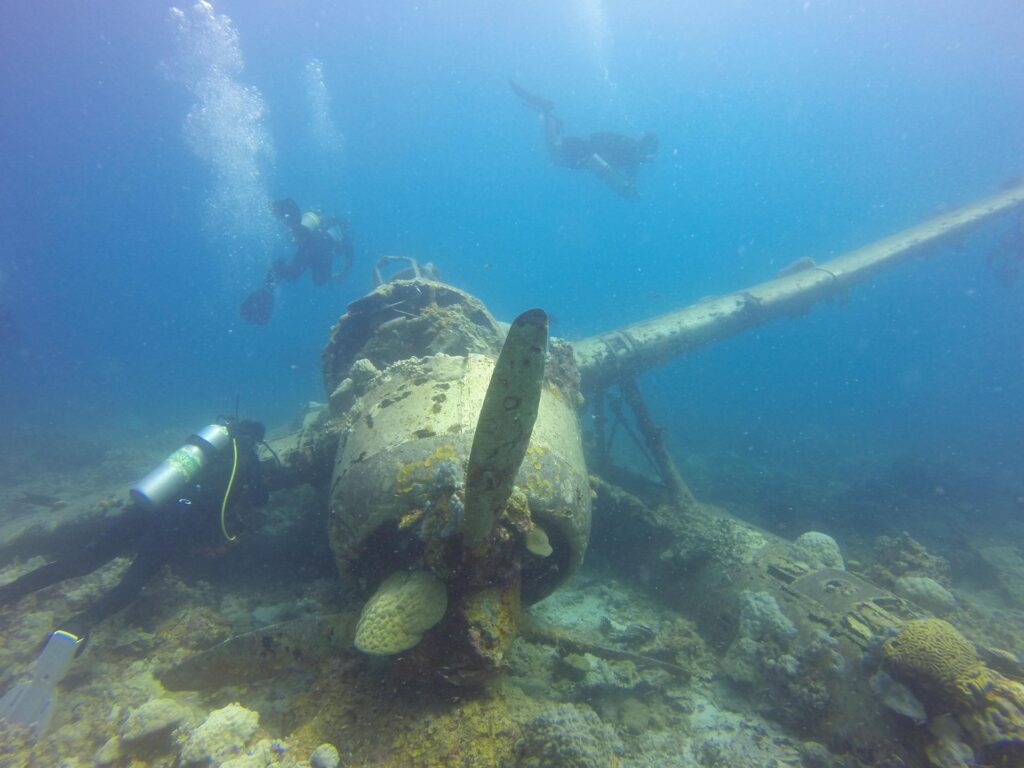
Palau’s history is a compelling narrative of oceanic isolation and strategic crossroads. Settled over 3,000 years ago by migrants from Southeast Asia, the archipelago developed a sophisticated matrilineal society centered around communal “Bai” meeting houses. Following centuries of traditional governance, Palau navigated a complex colonial era under Spanish, German, and Japanese administrations. During WWII, the islands became a fierce battlefield, most notably on Peleliu. After the war, Palau was part of the UN Trust Territory of the Pacific Islands under US administration until gaining full independence in 1994. Today, Palau is a global leader in environmental ethics, having created the world’s first shark sanctuary and the “Palau Pledge”—a mandate that every visitor must sign to protect the island’s ecological future for the children of Palau.
🌟 Palau Local Experiences
Beyond the world-class dive sites, discover Palau’s soul in the ritual of the Traditional Bai—visiting an ancient meeting house where the colorful painted gables tell the history and legends of the village. Experience the profound stillness of a kayak journey through the “Secret Lake,” the rejuvenating sensation of a white-limestone mud bath in the Milky Way, or the simple joy of sharing a meal of Ulukl (taro) and fresh reef fish. Whether it’s swimming through a golden cloud of millions of non-stinging jellyfish or exploring the overgrown jungle ruins of Peleliu, these moments reveal a nation that finds its greatest wealth in the preservation of its natural sanctuary and the resilience of its communal roots.
🌄 Palau Natural Wonders
- The Rock Islands (Chelbacheb): A UNESCO World Heritage site comprising 445 uninhabited limestone islands known for their unique mushroom shapes.
- Jellyfish Lake (Ongeim’l Tketau): A marine lake home to millions of golden jellyfish that have evolved over millennia to lose their sting, offering a surreal snorkeling experience.
- The Big Drop-off: A spectacular underwater vertical wall that plunges into the abyss, teeming with vibrant soft corals and massive schools of fish.
- The Milky Way: A secluded cove where the bed is covered in fine white volcanic mud, believed to have therapeutic properties for the skin.
- Ngardmau Waterfall: The tallest waterfall in Micronesia, accessible through a scenic jungle trek on the island of Babeldaob.
- Blue Corner: Frequently voted the world’s best dive site, where strong currents attract sharks, rays, and huge schools of barracuda.
🏙️ Palau Must-See Regions & Towns
- Koror: The primary commercial hub and former capital, where vibrant local markets meet the nation’s best museums and restaurants. (Bustling, Gateway, Cultural)
- Babeldaob: The second-largest island in Micronesia, home to the new capital and the spectacular Compact Road that circles the island. (Wild, Natural, Majestic)
- Peleliu: A small island in the south that serves as a poignant living museum of the Pacific War’s fiercest battles. (Historic, Quiet, Reflective)
- Ngerulmud (Melekeok): The national capital since 2006, featuring the impressive neoclassical Capitol building set amidst the lush hills of Babeldaob. (Political, Scenic, Quiet)
- Kayangel: The northernmost atoll, offering a glimpse into the most traditional and remote island life in Palau. (Remote, Pristine, Traditional)
🏞️ Palau National Parks & Nature Reserves
Managed with world-leading environmental oversight by the Palau Ministry of Agriculture, Fisheries, and the Environment.
- Rock Islands Southern Lagoon: A UNESCO site protecting a vast area of marine and terrestrial biodiversity.
- Ngerumekaol Spawning Channel: A critical marine protected area famous for the seasonal spawning of grouper and sharks.
- Lake Ngardok Nature Reserve: The largest freshwater lake in Micronesia and a vital sanctuary for endemic birdlife and the saltwater crocodile.
🏛️ UNESCO World Heritage Sites
- Rock Islands Southern Lagoon — Inscribed for both its exceptional marine biodiversity and the remains of ancient stone villages and burial sites.
- For more information on Palau’s heritage initiatives, visit the UNESCO Palau Portal.
🖼️ Palau Museums & Cultural Sites
- Belau National Museum (Koror): The oldest museum in Micronesia, showcasing Palauan history, art, and a traditional thatched Bai.
- Etpison Museum (Koror): A world-class private museum detailing the regional history of exploration, diving, and island crafts.
- Badrulchau Stone Monoliths: A series of 37 massive stone basalt pillars on Babeldaob, believed to be the foundation of a prehistoric temple.
- Peleliu WWII Ruins: Explore the caves, tanks, and shipwrecks that remain as silent witnesses to the 1944 campaign.
🎉 Palau Festivals & Celebrations
- Palau Constitution Day: (July 9) Celebrating the nation’s independence and democratic foundation with parades and traditional sports.
- Youth Day: (March 15) A vibrant celebration of Palauan youth featuring cultural dances, music, and community events.
- Shark Week: (Typically March) An annual event focused on marine education, conservation talks, and diving with the world’s first shark sanctuary.
- Belau Games: (Biennially) A major sporting event where athletes from all 16 states compete in traditional and modern games.
🧽 How to Arrive
- ✈️ By Air
- Roman Tmetuchl International (ROR) in Koror is the sole international gateway.
- Airlines: United Airlines (via Guam/Manila), China Airlines (via Taipei), and Air Niugini connect Palau to the world.
- 🚢 By Water
- Palau is a boutique cruise destination. Private yachts and liveaboard dive boats are the primary modes of marine entry.
- 🚗 By Road
- There is no rail network. Driving is on the right, though many cars have right-hand drive. Car rental is highly recommended for exploring the island of Babeldaob.
📶 Stay Connected
- SIM Cards: The two main providers are Palau Telecom (PNCC) and Palaucel.
- Where to buy: Kiosks are at the airport arrivals hall and in Koror city center. Registration with a passport is standard.
- eSIM: Limited local support; international roaming platforms like Airalo provide data-only “Tactical Access.”
- Connectivity: Fiber-optic internet has reached Palau, but bandwidth can still be limited during peak hours or in remote islands.
🏨 Where to Stay
Palau offers a range from high-end tropical resorts to cozy boutique hotels and liveaboard dive vessels.
- Palau Pacific Resort: The gold standard of luxury in Koror, set on a private white-sand beach.
- The Cove Resort Palau: A stylish, nautically-themed resort located near the Rock Islands departure docks.
- Palau Royal Resort: A high-quality Nikko Hotel offering spectacular views and a private lagoon.
- Liveaboards: For dedicated divers, staying on a vessel like the Palau Siren provides 24/7 access to remote reefs.
⛳ Unique Finds
- The Palau Pledge: The first visa entry stamp in the world that is an environmental contract you sign directly into your passport.
- Palauan Storyboards: Intricately carved wooden boards that depict island legends—an essential artisanal acquisition.
- Tapioca Desserts: Taste local sweets made from the island’s primary root crops, often steamed in banana leaves.
- Taro Fields: Visit the ancient irrigated taro patches (mesei) that have been cultivated by Palauan women for centuries.
🤝 Palau Cultural Guidance
- Matrilineal Respect: Palauan culture is matrilineal; women hold significant authority and ownership of land—respect the protocols of female elders (Rubaks and Mechesil).
- Modesty: While casual island wear is normal, dress modestly (shoulders and knees covered) when visiting traditional villages or government buildings.
- Greetings: A warm “Alii” (Hello) is the standard greeting. Palauans are soft-spoken and value quiet dignity.
- Environmental Law: Following the Palau Pledge is a legal requirement. Do not touch wildlife, collection shells, or litter.
- Basic Phrases:
- Hello: “Alii” (Ah-lee)
- Thank you: “Sulang” (Soo-lahng)
- Everything is good: “Ungil” (Oong-il)
- Goodbye: “Mechikung” (Me-chee-koong)
🛂 Palau Entry & Visa Requirements
- Visa on Arrival: Most nationalities (including UK, US, Canada, EU, and Gulf nations) are granted a 30-day visa on arrival for free.
- The Palau Pledge: Every visitor must sign the pledge in their passport upon entry.
- Palau Entry Form: Must be completed digitally within 72 hours before arrival at Palau Entry Form Portal.
- Official Source: Consult the Palau Bureau of Immigration.
💰 Practical Essentials
- Currency: United States Dollar (USD). Cards are accepted in major resorts and Koror shops, but cash is essential for smaller islands and local markets.
- Electricity: Type A and B (Flat pins—same as North America). Voltage is 110V/120V.
- Safety: One of the safest and most welcoming destinations in the Pacific.
- Health: Sun protection and hydration are critical. Tap water is generally not potable; drink bottled or filtered water.
- Climate: Tropical. Best visited November to April (Dry Season) for the best diving visibility.
✨ Bonus Tip: The Stewardship Recalibration
To truly embrace Palau, you must view yourself as a “Temporary Custodian” rather than a tourist. Most travelers look at the Rock Islands as a backdrop for a photo. Instead, take a moment to read the Palau Pledge again after your first day. When you swim in Jellyfish Lake, you are a guest in a prehistoric sanctuary that has survived in isolation for twelve thousand years. It is in this shift—from consumer to protector—that your own sense of environmental perspective and internal clarity will finally reveal itself. Palau is a lesson in how a tiny nation can lead the world in defending the sacred.
🔗 Featured Links
- Official Tourism: Pristine Paradise Palau.
- Environmental Action: Palau Pledge Official.

Beyondia
Trusted Travel CompanionReal digital nomad. I travel. I learn. I grow.
What about you? Where are you going?