
GoBeyondia Atlas 🗺️ Africa Region 🗾
Senegal: Where the national character is defined by a single Wolof word — teranga — that is translated as hospitality but actually means making a stranger into family, sharing your best even when you have little, and treating every encounter as if the person in front of you is the most important event in your day — and where the tea ceremony called attaya is served in three rounds that take up to three hours, each round sweeter than the last, poured from glass to glass at great height to produce a thick foam, because the point of the ceremony is not the tea but the time it takes to drink it — and where the first president was a poet who had survived a Nazi prison camp, the griots who keep the nation’s oral history are buried in baobab trees that live for thousands of years, and the country has never had a successful military coup — because Senegal understood that the most powerful technology for holding a society together is not a constitution or an army but the willingness to sit with a stranger long enough for the stranger to become family.
Senegal in 30 Seconds
A West African country at the westernmost point of the African continent — Cap-Vert, a peninsula near Dakar, is where Africa reaches farthest into the Atlantic. Population roughly seventeen million. Over thirty languages spoken. More than ninety-five percent Muslim, yet the first president was Catholic, and Christians and followers of indigenous beliefs live in a coexistence so unremarkable that Senegalese people rarely comment on it. Gorée Island, three kilometers off the coast of Dakar, was one of the largest slave-trading centers on the West African coast from the fifteenth to the nineteenth century. The House of Slaves still stands, its Door of No Return opening to the Atlantic — the passage through which enslaved Africans were led to boats that would carry them to the Americas. The island is now a UNESCO World Heritage Site and a place of pilgrimage. Senegal gained independence from France on April 4, 1960, and its first president was Léopold Sédar Senghor — a poet, philosopher, and veteran who had fought in the all-African unit of the French Army, been captured by the Germans, and spent two years in a Nazi prison camp, where he wrote poetry. He became the first African elected to the Académie française. He led the Négritude movement, which asserted the value of Black African culture against the colonial narrative that African civilization was inferior. He then governed Senegal for twenty years and, in 1980, did something almost no African leader of his generation did: he voluntarily stepped down from power and transferred it peacefully to his chosen successor. Since then, Senegal has had five democratically elected presidents and has never experienced a military coup — one of the rarest records of continuous civilian governance on the continent. The social fabric that makes this stability possible has a name: teranga. The word translates roughly as hospitality, but that translation misses everything. Teranga is a social protocol that predates the state. If a stranger arrives in a Senegalese village — or a house in Dakar — they are not perceived as an unknown person but as a guest to be honored. They are offered food, tea, a place to rest. Refusing is considered a rejection of the extended hand. The meal is eaten communally, by hand, from a single large dish in the center. Before eating, the host pours water over the guest’s hands from a teapot above a basin. This is not performance. This is the infrastructure. And the instrument that maintains teranga in daily life is the attaya — the tea ceremony. Green tea is boiled over charcoal in a small metal teapot, then poured from glass to glass at increasing height to create foam. Three rounds are served, each progressively sweeter. The whole process takes between one and three hours. More than eighty percent of the Senegalese population between fifteen and sixty drinks attaya. It is served after meals, during work, in the streets, at home, wherever people gather. The ceremony is the social operating system’s maintenance cycle — a structured pause in which relationships are tended through the only technology that works: unhurried time. The griots — the oral historians, poets, musicians, and genealogists of West African culture — have been the keepers of this tradition for centuries. When a griot dies, the community buries them in the hollow trunk of a baobab tree, the national symbol of Senegal. A baobab can live for thousands of years. The memory is placed inside the thing that outlasts everything. The story is stored in the tree.
Evoke — Why You Visit Senegal
You come to Senegal because everything in your life has been optimized for speed — the meetings shortened, the messages compressed, the meals reduced to fuel — and the optimization has produced efficiency at the cost of connection, and you need a country that treats slowness not as a failure of productivity but as the primary technology of social cohesion. Attaya takes three hours because three hours is what a relationship requires. The first round is strong and bitter — like the beginning of any encounter, before trust has formed. The second round adds mint and more sugar — the relationship is opening, the conversation deepening, the defenses lowering. The third round is the sweetest — the intimacy that only time can produce. You cannot compress this. There is no shortcut to the third cup. The foam does not form if you pour from too low. The tea does not sweeten if you skip a round. The technology is the duration. Senghor understood this in a different register. He could have governed through military force — most of his contemporaries did. Instead, he governed through poetry, through language, through the assertion that African culture had a value the colonial world had refused to recognize. Négritude was not a political strategy. It was a cultural patience — the willingness to say something that would take decades to be heard and to keep saying it until the world’s ear adjusted. He stepped down voluntarily because he understood that the transfer of power, like the transfer of tea from glass to glass, must be performed at the right height, at the right moment, with the right foam. You come because everything in your world is moving too fast for connection to form. Senegal will slow you down. Not because it is behind. Because it arrived first at the understanding that the speed you are optimizing for is destroying the thing the speed was supposed to serve.
Explore — How You Experience Senegal
Fly into Dakar — the westernmost city in mainland Africa, perched on a peninsula where the continent reaches toward the Americas it was once connected to by a trade in human beings — and take the twenty-minute ferry to Gorée Island. Walk through the House of Slaves. Stand at the Door of No Return and look out at the Atlantic. Understand that this passage, like the one in Ghana’s Cape Coast Castle, was the last ground enslaved Africans touched before the ships. Then turn around and see the island as it is now: pastel colonial buildings, bougainvillea, art galleries, children playing, the sea sparkling. The beauty and the horror occupy the same three kilometers of land and neither cancels the other. Return to Dakar and sit for attaya. You will not be asked if you want tea. You will be given tea. Watch the pouring — the theatricality of height, the foam forming, the small glasses filled and refilled, the conversation unfolding at the pace of charcoal. Accept that you are not going anywhere for the next hour. This is the point. Walk through the markets and notice the greetings — Senegalese social interaction begins with an extended exchange of pleasantries that can last several minutes. “How are you? How is your family? How is your health? How is your work?” Each question requires an answer. Each answer requires a reciprocal question. The greeting is not a formality. It is a diagnostic — a system check confirming that the social bonds are intact before any transaction begins. Visit the Museum of Black Civilizations in Dakar — Senghor’s dream, realized decades after his presidency — a repository of African art, history, and intellectual achievement housed in a building whose circular design echoes the shape of a baobab. Then travel outside Dakar to the baobabs themselves — trees that can grow thirty meters in circumference, store thousands of liters of water, live for millennia, and serve as pharmacy, pantry, meeting hall, and burial vault for the griots whose memories they hold. The baobab does not grow fast. It grows wide. It stores what the ecosystem needs. It outlasts the things that grow around it by not competing with them for height. It is the tree of teranga.
Evolve — Who You Become in Senegal
You leave Senegal understanding that the technology you were looking for was never faster. It was slower. Teranga is not a cultural artifact. It is a social technology — a protocol for converting strangers into family through the application of unhurried time, shared food, and the refusal to treat any human encounter as transactional. The attaya ceremony is the maintenance cycle. The griot is the long-term storage. The baobab is the hardware — a tree that can live for six thousand years, older than the Great Pyramids, holding the memory of the people who told the stories inside it. And the political system that teranga produces is the most stable on the continent — five presidents, zero coups, a peaceful transfer of power initiated by a poet who understood that stepping down is the highest form of leadership because it proves the system works without you. Senghor could have stayed. He chose to leave. That choice — made in 1980, replicated by successors, never broken — is the political equivalent of the third cup of attaya: the sweetest, because it comes only after time has proven the relationship can hold. You come home and look at the thing you have been trying to speed up — the team, the project, the partnership — and you ask the Senegalese question: have you sat with it long enough for trust to form? Have you poured from high enough for the foam to develop? Have you stayed through all three rounds? The first round is bitter. The second adds sweetness. The third is where the relationship lives. You cannot skip to the third. There is no shortcut. The slowness is the technology. The baobab does not grow fast. It grows for six thousand years. The griot is inside it, still telling the story. The tea is still being poured. The stranger is becoming family. Sit down. Stay for all three rounds.
Your practical guide to Senegal starts bellow 👇
🕰️ Senegal Historical Backdrop
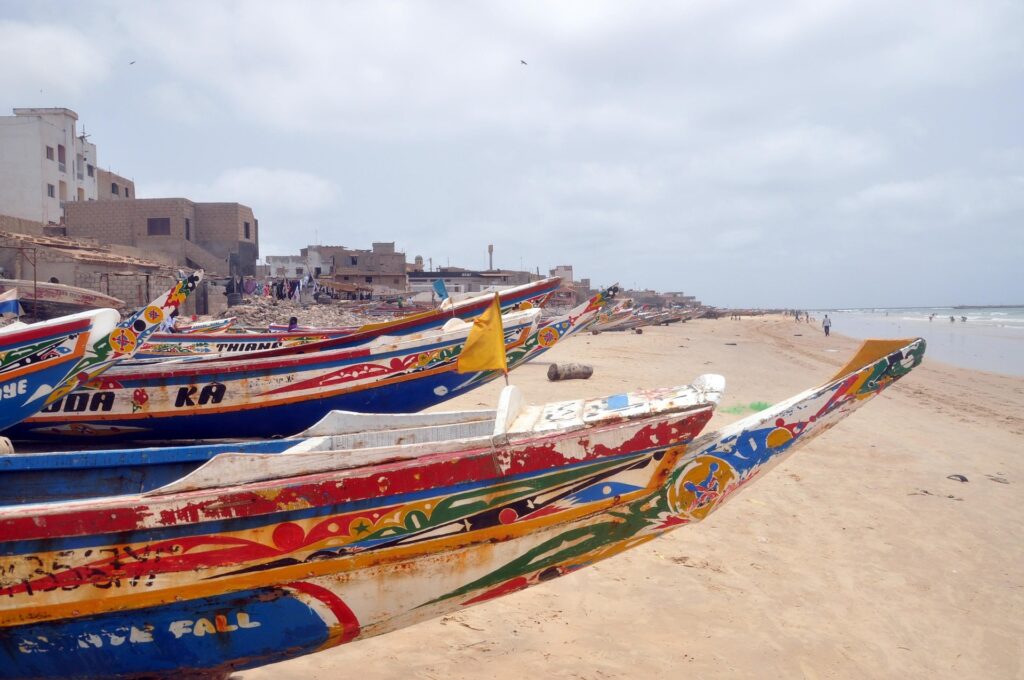
Senegal’s history is a compelling narrative of powerful empires and significant maritime influence. From the 9th-century Tekrur and later Jolof Empires to its status as the administrative heart of French West Africa, Senegal has long been a center for intellectual and political thought. Its story is most poignantly told at Gorée Island, a silent witness to the transatlantic slave trade, and in the colonial architecture of Saint-Louis, the first French settlement in Africa. Since gaining independence in 1960 under the leadership of the poet-president Léopold Sédar Senghor, Senegal has remained one of Africa’s most stable democracies. Today, it stands as a cultural powerhouse, blending deep-rooted Sufi traditions with a modern, cosmopolitan outlook that celebrates its heritage while leading the continent in contemporary art and fashion.
🌟 Senegal Local Experiences
Beyond the coastal resorts, discover Senegal’s soul in the philosophy of Teranga—a Wolof word for hospitality that is the bedrock of national identity. Experience the vibrant sensory immersion of a Dakar market, where the scent of smoked fish and the bright patterns of wax-print fabrics fill the air. Feel the profound stillness of the Saloum Delta by dugout canoe, the intoxicating rhythm of a live Mbalax music session in a neighborhood club, or the simple joy of sharing a communal bowl of Thieboudienne (the national fish and rice dish). These moments reveal a nation that finds richness in connection, storytelling, and an unshakeable sense of community.
🌄 Senegal Natural Wonders
- Lac Rose (Lake Retba): Famous for its pink-hued waters caused by unique algae, where salt harvesters work amidst a surreal, crystalline landscape.
- The Saloum Delta: A UNESCO-listed labyrinth of mangroves, islands, and salt marshes where the river meets the Atlantic.
- The Lompoul Desert: A stunning patch of orange sand dunes located between Dakar and Saint-Louis, offering an authentic desert experience.
- Casamance River: A lush, tropical region in the south known for its dense forests, traditional Jola villages, and pristine white-sand beaches.
- Djoudj National Bird Sanctuary: One of the world’s most important bird sanctuaries, hosting millions of migratory birds in a vast wetland.
- Niokolo-Koba: A massive savanna park in the southeast, home to lions, elephants, and the rare giant eland.
🏙️ Senegal Must-See Cities & Regions
- Dakar: (Capital) A high-energy peninsula city where modern skyscrapers meet historic markets, world-class surf breaks, and the towering African Renaissance Monument. (Dynamic, Urban, Cultural)
- Saint-Louis (Ndar): A UNESCO World Heritage town on an island, famous for its colonial architecture, the Faidherbe Bridge, and its legendary annual jazz festival. (Historic, Atmospheric, Artistic)
- Gorée Island: A car-free sanctuary of narrow alleys and bougainvillea, home to the “House of Slaves,” offering a profound historical journey. (Poignant, Silent, Picturesque)
- Touba: The holy city of the Mouride brotherhood, centered around one of Africa’s largest and most spectacular mosques. (Spiritual, Traditional, Grand)
- Cap Skirring: Home to some of the finest beaches in West Africa, set in the lush, river-carved south. (Tropical, Relaxed, Coastal)
🏞️ Senegal National Parks & Nature Reserves
Managed with an increasing focus on community-led conservation and habitat restoration.
- Djoudj National Bird Sanctuary: A UNESCO site essential for the survival of millions of migratory waterbirds.
- Bandia Reserve: An accessible private reserve near Saly, home to rhinos, giraffes, and massive baobab trees.
- Niokolo-Koba National Park: A vast wilderness in the southeast protecting West African savanna biodiversity.
🏛️ UNESCO World Heritage Sites
- Island of Gorée — A memorial to the slave trade and human resilience.
- Island of Saint-Louis — A historic colonial city on the Senegal River.
- Saloum Delta — A unique landscape where fishing and gathering have sustained life for millennia.
- Bassari Country: Bassari, Fula and Bedik Cultural Landscapes — Witnessing the traditional ways of life in the foothills of the Fouta Djallon.
- For a complete list, visit the UNESCO Senegal Portal.
🖼️ Senegal Museums & Cultural Sites
- Museum of Black Civilizations (Dakar): A world-class architectural landmark exploring the contributions of African civilizations to world history.
- IFAN Museum of African Arts (Dakar): One of the oldest and most respected art museums in West Africa.
- African Renaissance Monument: The tallest statue in Africa, offering panoramic views of the peninsula.
🎉 Senegal Festivals & Celebrations
- Saint-Louis Jazz Festival: (May) One of the world’s premier jazz events, held in the heart of the historic island.
- Dak’Art (Dakar Biennale): (Every two years) A major contemporary art exhibition that turns the capital into a global gallery.
- The Grand Magal of Touba: (Variable) A massive religious pilgrimage attracting millions to celebrate the life of Sheikh Amadou Bamba.
- Senegal Independence Day: (April 4) Celebrated with parades and vibrant street festivals nationwide.
🧽 How to Arrive
- ✈️ By Air
- Blaise Diagne International (DSS) is the primary gateway, located about 50km from Dakar.
- Airlines: Air Senegal (Flag carrier) and major international airlines (Emirates, Qatar Airways, Delta, Air France, Turkish Airlines) connect Senegal to the world.
- 🚗 By Road
- Senegal shares borders with Mauritania, Mali, Guinea, Guinea-Bissau, and completely surrounds The Gambia. Driving is on the right.
- 🚢 By Sea
- The Aline Sitoe Diatta Ferry connects Dakar to Ziguinchor in the south—an iconic overnight journey along the coast.
📶 Stay Connected
- SIM Cards: Major providers include Orange, Free, and Expresso.
- Where to buy: Kiosks are abundant at the airport arrival hall and in every town square. Passport registration is required.
- eSIM: Supported by Orange; also available via global platforms like Airalo.
- Digital Infrastructure: 4G/5G is widespread in Dakar and tourist hubs, but expect limited signal in remote river regions.
🏨 Where to Stay
Senegal offers a range from high-end urban luxury in Dakar to boutique desert camps and traditional Casamance lodges.
- Terrou-Bi Resort (Dakar): A premiere luxury hotel on the capital’s corniche with a private beach.
- Lodge de la Palmeraie (Saly): A boutique experience on the Petite Côte.
- Lompoul Desert Camp: Stay in traditional Mauritanian-style tents amidst the dunes for a starry night experience.
- Eco-lodges (Casamance): Stay in traditional impluvium-style houses in the south for total cultural immersion.
⛳ Unique Finds
- Baobab Adventure: Visit the “Seven Baobabs” or explore a hollowed-out baobab tree used as a historic meeting place.
- Surf Dakar: Catch world-class waves at Les Almadies—the westernmost tip of the African continent.
- Mboro Handicrafts: Purchase hand-woven baskets and intricate silver filigree jewelry from village cooperatives.
🤝 Senegal Cultural Guidance
- Hospitality: Understand that “Teranga” is more than a slogan; it is a social contract. Be prepared for spontaneous kindness and sharing.
- Manners: Always use your right hand for eating and greeting.
- Dress Code: Senegal is predominantly Muslim and traditional. While Dakar is fashionable, modest dress (shoulders and knees covered) is respected, especially in Touba and rural areas.
- Basic Phrases:
- Hello: “Salam Alaikum” (Traditional) / “Nanga Def” (Wolof)
- Thank you: “Dieureudieuf” (Wolof)
- Please: “S’il vous plaît” (French)
- No problem: “Amul Solo” (Wolof)
🛂 Senegal Entry & Visa Requirements
- Visa-Free: Citizens of the UK, US, Canada, EU, and many African nations generally do not require a visa for tourism stays up to 90 days.
- Official Source: Consult the Senegalese Ministry of the Interior.
💰 Practical Essentials
- Currency: West African CFA Franc (XOF). It is pegged to the Euro. Cash is essential for markets and rural areas; cards are accepted in major city hotels.
- Electricity: Type C, D, E, and K. Voltage is 230V.
- Safety: Senegal is considered one of the safest and most stable countries in West Africa. Exercise standard urban vigilance in Dakar.
- Climate: Best visited from November to May (Dry Season) to avoid the humid rainy window.
✨ Bonus Tip: The Island Stillness
To truly embrace Senegal, you must visit Gorée Island early in the morning before the day-trippers arrive. Walk through the silent, sandy alleys between the ochre-colored houses. It is in this profound stillness—away from the noise of the capital—that the true, transformative weight of history and the incredible resilience of the human spirit will finally reveal themselves. You will realize that Senegal is not just a place to see, but a lesson in how beauty and memory can walk hand-in-hand.
🔗 Featured Links
- Official Tourism: Visit Senegal.
- Maritime Logistics: Groupement Interdépartemental des Transports Maritimes (Ferry).

Beyondia
Trusted Travel CompanionReal digital nomad. I travel. I learn. I grow.
What about you? Where are you going?