GoBeyondia Atlas 🗺️ East-Asia Oceania 🗾
Tonga: Where a Polynesian archipelago of one hundred and seventy-one islands scattered across seven hundred thousand square kilometers of the South Pacific has maintained continuous indigenous sovereignty for over three thousand years — the only Pacific nation never colonized, the last Polynesian kingdom on earth.
Tonga in 30 Seconds
The Kingdom of Tonga sits in the South Pacific, surrounded by Fiji to the northwest, Samoa to the northeast, and vast ocean in every other direction. One hundred and seventy-one islands, forty-five of them inhabited, a total land area of seven hundred and fifty square kilometers — roughly the size of a large city — scattered across an ocean territory nearly a thousand times larger. Evoke — Why You Visit Tonga
Evoke — Why You Visit Tonga
You come to Tonga because something has been trying to take what is yours — your authority, your identity, your ground — and you need a country that has held its throne through empire, colonization of every neighbor, cyclone, and the largest atmospheric explosion recorded by modern science. Every other kingdom in the Pacific fell. Samoa was partitioned. Fiji was colonized. Hawaii was annexed. Tahiti was absorbed. Tonga endured — not by military superiority, not by geographic isolation, not by luck, but by strategic intelligence. When European powers arrived with legal frameworks designed to categorize indigenous societies as subjects, Tonga wrote its own constitution first. When they arrived with treaties designed to annex, Tonga negotiated a protectorate that preserved domestic governance. When they arrived with missionaries, Tonga’s king converted on his own terms and made Christianity a tool of national unity rather than colonial submission. The sovereignty was never given. It was architected. You come because someone has been trying to take your ground and you need to see a country that kept its ground for three thousand years by understanding that the most powerful defense is not a wall but a structure — a legal, cultural, and political architecture so complete that the forces that conquered every neighbor could find no crack in this one. The throne was never taken because the throne was never just a chair. It was a system.
Explore — How You Experience Tonga
Fly into Fuaʻamotu International Airport on Tongatapu and drive to Nukuʻalofa, the capital — small, quiet, the Royal Palace visible from the waterfront, a Victorian-era wooden structure that looks modest until you remember that the family inside it has held continuous power longer than most European monarchies have existed. Visit the Haʻamonga ʻa Maui — the Stonehenge of the Pacific — a trilithon built in the thirteenth century by King Tuʻitātui, two coral limestone pillars supporting a massive lintel, weighing approximately forty tons total. Oral tradition says the monument represents the king’s two sons and their duty to support each other. Near it sits a stone throne, the esi maka faʻakinanga — the “stone to lean against” — where a security-conscious king could sit with his back protected from assassination. The stones have stood for eight hundred years. Take a boat to the Vavaʻu island group in the north, where from July to October humpback whales arrive from Antarctica to breed and calve in the warm waters, and Tonga is one of the few places on earth where you can swim legally alongside them in open water. The whales come to Tongan waters to give birth because the water is warm, shallow enough for calves, and protected — they come, in other words, for the same reason the kingdom survived: the conditions are right for something vulnerable to be kept safe. Attend a Sunday church service — the hymns sung in Tongan harmonies that Cook himself noted as extraordinary, voices filling a church in a kingdom where the Sabbath is constitutional law. On Sunday in Tonga, the country stops. It does not pause. It stops. The rest is not negotiable. It is written into the architecture.
Evolve — Who You Become in Tonga
You leave Tonga understanding that sovereignty is not a status conferred by others — it is a structure maintained from within. Every neighbor was colonized. Tonga was not. The difference was not geography. The difference was architecture. Tupou I did not resist colonization through force. He outmaneuvered it through law. He wrote a constitution that made the kingdom recognizable to European legal systems while embedding protections that prevented European ownership of Tongan land. He converted to Christianity before missionaries could use conversion as a lever. He unified the islands before colonial powers could divide them. He turned every tool of colonization into a tool of sovereignty. The Tuʻi Tonga built a maritime empire. Tupou I built a legal one. Queen Sālote sat in the rain at another monarch’s coronation and showed the world what confidence looks like when it does not need a roof. Hunga Tonga exploded with a force that circled the earth and generated eighty percent of the planet’s lightning. The kingdom buried four people, rebuilt its villages, and broke ground on a new parliament. You come home and look at whatever has been trying to take your sovereignty — your authority over your own decisions, your right to define yourself, your ground — and you do what Tonga did. You do not build a wall. You build a structure. You write the constitution before someone else writes one for you. You make yourself legible on your own terms. You architect the sovereignty so completely that the forces arrayed against you find no crack, no ambiguity, no space to insert their claim. The throne was never taken. The volcano was the largest explosion modern instruments have ever recorded. The throne was not taken. Three thousand years. One hundred and seventy-one islands. One hundred thousand people. The last Polynesian kingdom on earth. The throne remains.
Your practical guide to Tonga starts bellow
🕰️ Tonga Historical Backdrop
Tonga’s history is a unique narrative of maritime power and enduring sovereignty. Settled over 3,000 years ago by the Lapita people, the archipelago eventually became the center of the Tu’i Tonga Empire, which at its peak exerted influence across a vast area of Oceania. Famously dubbed the “Friendly Islands” by Captain Cook in 1773, Tonga is the only South Pacific nation that was never formally colonized, maintaining its own monarchy and cultural integrity through centuries of global shift. Its story is told in the massive trilithon stones of Ha’amonga ‘a Maui—often called the “Stonehenge of the Pacific”—and the regal traditions of the current Royal House of Tupou. Today, Tonga remains a deeply traditional Christian society where the Sabbath is sacred and the preservation of communal values and land rights remains the bedrock of national identity.
🌟 Tonga Local Experiences
Beyond the secluded beaches, discover Tonga’s soul in the ritual of the Sunday Feast, where families gather for a bounty of food cooked in an umu (earth oven). Experience the profound stillness of an early morning walk along the rugged cliffs of ‘Eua, the exhilarating grace of swimming with wild humpback whales, or the simple joy of sharing a cup of kava at a village meeting house. Witness the rhythmic artistry of traditional mat-weaving, listen to the powerful harmonies of a church choir on Sunday, or explore the “Mapu ‘a Vaea” blowholes where the ocean breathes through volcanic rock. These moments reveal a nation that finds richness in its faith, its family bonds, and its unshakeable connection to the sea.
🌄 Tonga Natural Wonders
- Humpback Whale Sanctuaries (Vava’u & Ha’apai): Tonga is one of the few places on Earth where you can legally swim with these majestic giants as they arrive to breed and calve (July–October).
- Mapu ‘a Vaea Blowholes: A spectacular stretch of coastline on Tongatapu where the sea creates geyser-like plumes of water through natural coral vents.
- Anahulu Cave: A stunning underground limestone cavern featuring stalactites, stalagmites, and a natural freshwater swimming pool.
- Mount Talau: Located in Vava’u, offering a panoramic overview of the Port of Refuge and the surrounding island chains.
- ‘Eua Island Cliffs: Dramatic limestone cliffs and ancient rainforests offering some of the best hiking and birdwatching in the South Pacific.
- Mariner’s Cave & Swallows Cave: Mysterious sea caves accessible only by boat, known for their ethereal lighting and snorkeling opportunities.
🏙️ Tonga Must-See Towns & Regions
- Nuku’alofa (Tongatapu): (Capital) A seaside city home to the Royal Palace, vibrant markets like Talamahu, and the historic tombs of ancient kings. (Historic, Cultural, Gateway)
- Neiafu (Vava’u): A picturesque harbor town and the primary hub for yachting, whale watching, and exploring the northern island group. (Nautical, Adventurous, Scenic)
- Pangai (Ha’apai): A collection of low-lying coral atolls offering ultimate seclusion, pristine reefs, and a glimpse into traditional island life. (Quiet, Pristine, Secluded)
- ‘Eua: The oldest and highest island in Tonga, offering a wilder, more mountainous landscape far from the tourist track. (Rugged, Natural, Untouched)
🏞️ Tonga National Parks & Nature Reserves
Managed with a focus on preserving the unique island biodiversity and marine life.
- ‘Eua National Park: Protecting the largest remaining area of primary tropical rainforest in the kingdom.
- Fafa Island Marine Reserve: A sanctuary for giant clams and vibrant coral gardens just a short boat ride from the capital.
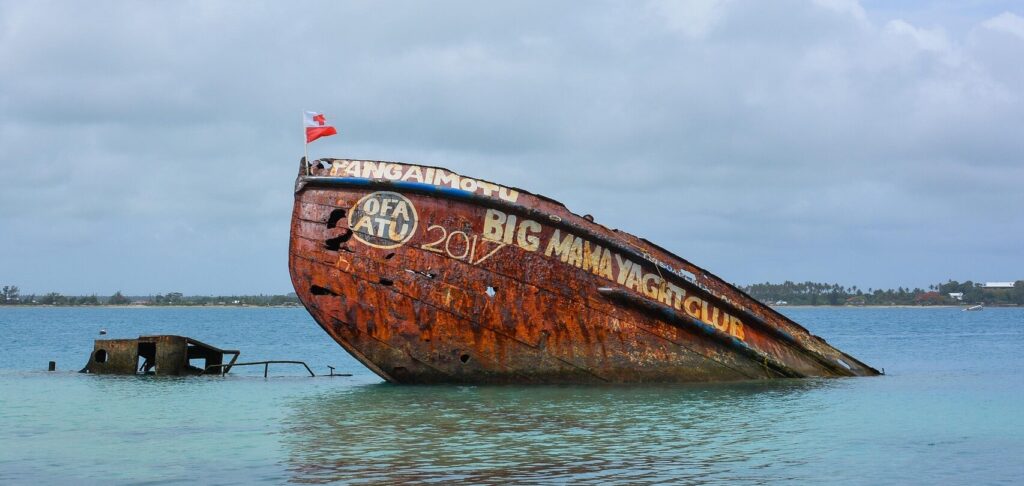
- Pangaimotu Island: A popular marine day-trip destination known for its shipwreck and reef protection efforts.
🏛️ Historical & Heritage Sites
Tonga maintains several sites on the UNESCO Tentative List, reflecting its ancient imperial history:
- The Ancient Capitals of the Kingdom of Tonga: Including the Heketā and Mu’a archaeological sites with royal tombs (langi).
- Ha’amonga ‘a Maui Trilithon: A massive 13th-century stone gate that serves as an ancient seasonal calendar.
- For more information on heritage preservation, visit the UNESCO Tonga Portal.
🖼️ Tonga Cultural Sites
- Talamahu Market (Nuku’alofa): The cultural heart of the capital, where traditional handicrafts and local produce are the primary focus.
- Royal Palace: An iconic white wooden Victorian structure on the waterfront (viewable from the exterior).
- Ancient Burial Mounds (Mu’a): Significant stone-faced tombs representing the height of the Tu’i Tonga empire.
🎉 Tonga Festivals & Celebrations
- Heilala Festival: (July) The largest national festival, celebrating the King’s birthday with parades, cultural competitions, and the Miss Heilala pageant.
- Vava’u Festival & Regatta: (September) A celebration of the island’s maritime heritage, attracting sailors and travelers from across the globe.
- Sabbath Sunday: Not a festival, but a weekly cultural observance where the entire nation shuts down for rest and worship—an essential Tongan experience.
🧽 How to Arrive
- ✈️ By Air
- Fua’amotu International (TBU) on Tongatapu is the primary gateway.
- Lupepau’u International (VAV) in Vava’u serves regional flights.
- Airlines: Fiji Airways, Air New Zealand, and Qantas connect Tonga to Fiji, New Zealand, and Australia.
- Domestic: Lulutai Airlines is the essential domestic carrier connecting the various island groups.
- 🚢 By Water
- Inter-island ferries (Friendly Island Shipping) provide transport between Nuku’alofa, Ha’apai, and Vava’u (Note: Journeys can be long and subject to weather).
- 🚗 By Road
- Driving is on the left. Car rental is available on Tongatapu and Vava’u. Local buses are colorful and operate on an unhurried, informal schedule.
📶 Stay Connected
- SIM Cards: The two main providers are Digicel and TCC (Tonga Communications Corporation).
- Where to buy: Kiosks are available at Fua’amotu Airport and in city centers. Registration with a passport is standard.
- eSIM: Supported by Digicel; also available via international roaming apps like Airalo for data.
- Digital Bandwidth: High-speed 4G is common in Nuku’alofa and Neiafu, but expect “off-grid” status in the Ha’apai group.
🏨 Where to Stay
Tonga offers everything from boutique island resorts to authentic family-run guesthouses.
- Fafa Island Resort: A traditional-style eco-resort on a private island near Nuku’alofa.
- Tongan Beach Resort (Vava’u): An elegant coastal retreat perfect for whale watching and sailing access.
- Matafonua Lodge (Ha’apai): A premiere dive and whale-watching lodge on the tip of Foa Island.
- Eco-Lodges (‘Eua): Stays like Taina’s Place offer an authentic connection to the island’s rainforest and community.
⛳ Unique Finds
- Tapa Cloth: Purchase authentic Ngatu (tapa cloth) made from the bark of the paper mulberry tree, an essential piece of Tongan art.
- Sunday Silence: Experience a nation where even airplanes do not fly on Sundays; use the time to attend a choral church service.
- Natural “Spas”: Visit the coral pools of Houma to soak in the ocean spray from the blowholes.
- Whale Song: On calm days in Vava’u, you can often hear the haunting songs of humpback whales through the hull of a kayak or boat.
🤝 Tonga Cultural Guidance
- The Sabbath: Sunday is a strictly observed day of rest. Businesses, cafes, and tours are closed. It is against the law to work or engage in loud activities on Sunday.
- Dress Code: Tonga is a conservative Christian country. Swimwear should be kept for the beach/resorts. When in towns or villages, modest dress (shoulders and knees covered) is required.
- Hospitality: Tongans are famously polite. Use both hands when receiving a gift as a sign of respect.
- Basic Phrases:
- Hello: “Malo e lelei” (Mah-low-eh-leh-lay)
- Thank you: “Malo” (Mah-low)
- Good morning: “Malo e tau ma’u e pongipongi ni”
- Everything is good: “Sai pe” (Sye-peh)
🛂 Tonga Entry & Visa Requirements
- Visa-Free: Citizens of the UK, US, Canada, EU, and many GCC nations generally do not require a visa for tourism stays up to 30 or 90 days.
- Official Source: Consult the Tonga Ministry of Foreign Affairs.
💰 Practical Essentials
- Currency: Tongan Pa’anga (TOP). Cash is essential for local markets and small islands; cards are accepted in major resorts and Nuku’alofa.
- Electricity: Type I (Three flat pins—same as Australia/NZ). Voltage is 240V.
- Safety: One of the safest and most welcoming destinations in the Pacific.
- Climate: Tropical. Best visited May to October (Dry and cool season).
✨ Bonus Tip: The Rhythmic Reset
To truly embrace Tonga, you must surrender to the “Horizon Gaze.” Most travelers arrive with a high-frequency schedule. In Tonga, the ocean and the sun set the tempo. Spend an afternoon sitting on the beach in Ha’apai or a wharf in Vava’u doing nothing but watching the light change on the water. It is in this unhurried, steady stillness—away from the noise of the global economy—that your own sense of deep presence and internal clarity will finally reveal themselves. Tonga isn’t just a destination; it’s a recalibration of how you experience time.
🔗 Featured Links
- Official Tourism: Tonga Tourism.
- Conservation: Vava’u Environmental Protection Association.

Beyondia
Trusted Travel CompanionReal digital nomad. I travel. I learn. I grow.
What about you? Where are you going?