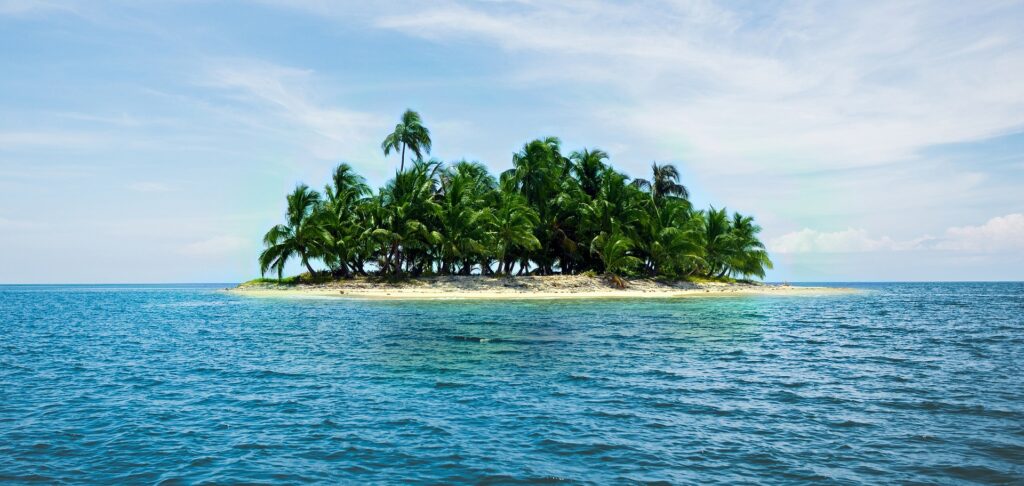
North America and the Caribbean are where the modern world was assembled under pressure — the territories that European expansion reached in 1492 and proceeded to reshape, at incalculable human cost, into the most economically consequential landmass of the subsequent five centuries. Three continental nations, one sprawling archipelago, and thirteen island cultures share this guide, connected not by geographic proximity alone but by the specific tension between the indigenous civilisations that preceded European arrival, the African cultures that the slave trade transplanted and that survived, transformed into something entirely their own, and the settler nations that built their constitutions, their railways, and their skylines on top of all of it. The food across this region is the most honest record of that history — the jerk, the jollof logic carried across the Atlantic, the mole that the Aztec civilisation gave to the world, the poutine that Canadian winters necessitated, the barbecue that the American South slow-cooked into a philosophy. The music is the compressed emotional autobiography of a hemisphere. The landscapes run from the Arctic to the equatorial, from the Rocky Mountain spine to the coral platforms of the Grenadines, and include in that range some of the most physically dramatic and biologically extraordinary territory on the surface of the planet. The Caribbean sun does not negotiate. Neither does the continent that surrounds it.
The Continental North
Canada is the second largest country in the world by land area and the one that has done the most to construct a civic identity around the fact of its own vastness — a nation of 40 million people spread across ten time zones, from the Atlantic fishing communities of Newfoundland to the Pacific rainforests of British Columbia, with the Rocky Mountains, the Great Lakes, the boreal forest, and the Arctic tundra occupying the space between. Toronto is the most ethnically diverse city on earth by the measure of foreign-born population percentage, a fact the city wears not as a statistic but as the operational reality of a place where 140 languages are spoken in a single school district. Montreal conducts its bilingual character with a Gallic assurance that makes it one of North America’s most culturally distinctive cities; Vancouver places its glass towers against a backdrop of mountains and ocean that the rest of the continent cannot replicate; and Quebec City’s 17th-century fortified upper town is the only remaining walled city north of Mexico. The Canadian Rockies at Banff and Jasper, the wilderness of the Yukon, the polar bear gathering at Churchill in Manitoba, and the tidal bore of the Bay of Fundy — the world’s highest tidal range — complete a country whose natural argument is so comprehensive that its urban one is consistently undersold. [Read the full Canada Travel Guide →]
United States is the country that the 18th century invented as a philosophical proposition and the 21st century is stress-testing as a political one — a nation of 335 million people whose constitutional framework, cultural output, scientific institutions, and economic scale have shaped the modern world to a degree that no other single nation in history has matched within a comparable timeframe, and that contains within its fifty states a geographic and cultural range that the single national identity consistently struggles to contain. New York City operates as the world’s most concentrated argument for urban density as cultural productivity — the Metropolitan Museum of Art, the jazz clubs of Harlem, the High Line, the Brooklyn food culture, and the specific energy of eight million people proceeding simultaneously in different directions with a shared understanding that this is the correct way to inhabit a city. The national parks system — Yellowstone’s geothermal landscape, the Grand Canyon’s mile-deep geological record, Yosemite’s granite valley, the Everglades’ sawgrass wilderness — represents the most consequential act of landscape preservation in the 20th century. New Orleans, Chicago, Los Angeles, San Francisco, Nashville, and New Mexico’s high desert complete a country that the rest of the world has been consuming as cultural product for a century and that still surprises the visitor who moves beyond the iconography into the actual geography. [Read the full United States Travel Guide →]
Mexico is the civilisation that the conquest buried and that kept surfacing — the country where Aztec foundations sit beneath colonial cathedrals that sit beneath contemporary cities, where the indigenous languages Nahuatl, Maya, Zapotec, and Mixtec are still spoken by millions, where the Day of the Dead is not a tourist spectacle but an annual negotiation between the living and their dead conducted with marigold altars and mezcal and a theological seriousness that the pre-Columbian world bequeathed intact. Mexico City is one of the great cities of the world — the Zócalo’s 16th-century cathedral built on Aztec foundations, the Museo Nacional de Antropología housing the most significant collection of Mesoamerican artefacts assembled in any single building on earth, the murals of Diego Rivera on the walls of the Palacio Nacional narrating the entire arc of Mexican history, and the food scene of Roma and Condesa operating at a standard that the world’s culinary press has been documenting with increasing urgency for a decade. The Maya ruins of Chichén Itzá and Palenque, the Pacific coast at Oaxaca and Puerto Escondido, the Copper Canyon deeper than the Grand Canyon, and the colonial silver cities of Guanajuato and San Miguel de Allende complete a country of four thousand years of continuous civilisational argument. [Read the full Mexico Travel Guide →]
The Greater Antilles
Cuba is the island that the 20th century used as a stage for every ideological argument the Cold War generated and that emerged, five decades after the revolution, as one of the most visually intact and culturally alive places in the Western Hemisphere — partly because of the revolution, partly despite it, and entirely because of the Cuban people’s specific capacity to make music, food, conversation, and beauty out of whatever materials the political moment provides. Havana’s Malecón seawall at sunset, the vintage American cars from the 1950s navigating streets lined with crumbling colonial magnificence that no development budget has yet been authorised to rationalise, the salsa clubs of Centro Habana, and the tobacco fields of Viñales in the Pinar del Río province producing the leaf that the world’s finest cigars are rolled from complete a Cuba that is changing faster now than at any point since 1959 and that the traveller who goes now encounters at the precise moment before that change settles into a new and less contradictory equilibrium. [Read the full Cuba Travel Guide →]
Jamaica invented several things the world cannot now imagine doing without — reggae, dancehall, the Blue Mountain coffee that connoisseurs rank among the finest in the world, and the sprint philosophy that produced Usain Bolt, the fastest human being ever measured, from a population of three million people on an island the size of Connecticut. The Blue Mountains rising to 2,256 metres above Kingston, the colonial plantation houses of the north coast, the Cockpit Country’s limestone karst interior where the Maroons — escaped enslaved Africans who fought the British to a treaty in 1739 — maintained their independence in the jungle, and the Bob Marley Museum in Kingston’s Half Way Tree neighbourhood, where the small house where Marley lived and recorded has been preserved with the specific care reserved for secular saints, complete an island whose cultural output per capita square kilometre has no parallel in the Western Hemisphere. [Read the full Jamaica Travel Guide →]
Dominican Republic occupies the eastern two-thirds of Hispaniola — the island where Columbus made his first permanent settlement in the Americas in 1493 and that the colonial encounter used so completely that the indigenous Taíno population was effectively gone within fifty years, replaced by a society of European colonisers and enslaved Africans whose descendants built, in the merengue, the bachata, and the specific Dominican warmth that greets the arriving traveller, one of the most distinctive cultural identities in the Caribbean. Santo Domingo’s Zona Colonial is the oldest continuously inhabited European settlement in the Americas, its 16th-century cathedral, monastery, and fortifications forming a UNESCO-listed urban fabric that the rest of the hemisphere cannot predate. The Samaná Peninsula’s humpback whale breeding ground, the 27 Charcos de Damajagua’s waterfall pools, and the Pico Duarte at 3,098 metres — the highest peak in the Caribbean — complete an island with far more geographic and cultural range than its all-inclusive resort reputation suggests. [Read the full Dominican Republic Travel Guide →]
Bahamas is the archipelago where the Western Hemisphere’s modern history begins — the islands where Columbus first made landfall on 12 October 1492, standing on what is now San Salvador and reporting to his patrons in Spain that he had found people of such generosity and beauty that he could not bring himself to describe them accurately without risking disbelief. The contemporary Bahamas is 700 islands and 2,400 cays spread across 260,000 square kilometres of Atlantic, the inhabited fraction of which includes Nassau’s colonial capital and the Graycliff Hotel — one of the oldest houses in the Caribbean — and the Out Islands, where Harbour Island’s pink sand beach achieves its colour from crushed coral and foraminifera shells, and the Exuma Cays Land and Sea Park protects the clearest water in the northern Caribbean. The swimming pigs of Big Major Cay have become, inexplicably and entirely justifiably, the most photographed animals in the Caribbean. [Read the full Bahamas Travel Guide →]
Trinidad and Tobago is the Caribbean twin-island nation that gave the world the steel pan, the only acoustic instrument invented in the 20th century, born from the oil drums that the American military bases left behind after World War II and that the Trinidadian yard musicians hammered, tuned, and elevated into an orchestral instrument of extraordinary range. Port of Spain’s Carnival is the hemisphere’s most musically and choreographically sophisticated street festival — the masquerade bands, the soca and calypso competitions, and the J’ouvert pre-dawn parade constitute a cultural event that Rio’s Carnival is the more famous version of and Trinidad’s is the more musically serious one. Tobago’s Buccoo Reef, the leatherback turtle nesting beaches of Grande Rivière, and the Asa Wright Nature Centre in Trinidad’s rainforest interior — one of the world’s finest bird-watching destinations, with 460 species recorded including the oilbird colony in its cave — complete two islands that the sun-and-beach Caribbean paradigm cannot adequately describe. [Read the full Trinidad and Tobago Travel Guide →]
The Lesser Antilles
Saint Lucia is the island that the volcanic geography assembled as an argument — the Pitons, the twin volcanic spires of Gros Piton and Petit Piton rising from the Caribbean Sea at the island’s southwestern coast, are the most compositionally dramatic landscape in the Lesser Antilles, the natural formation that UNESCO designated in 2004 and that every approach by sea or air delivers with the impact of something that the photograph has prepared you for and that the reality still exceeds. The drive-in volcano at Sulphur Springs, where the collapsed caldera allows the visitor to descend to the edge of the bubbling sulphuric vents, the rainforest of the interior, the Friday night fish fry at Anse La Raye, and the annual Jazz Festival that draws the island’s considerable artistic community together with international performers complete a Saint Lucia that the honeymooner and the cultural traveller arrive at by different routes and leave from the same conclusion. [Read the full Saint Lucia Travel Guide →]
Barbados is the Caribbean island that centuries of sugar trade, British colonial administration, and the resulting plantation society built into the most institutionally stable and economically developed small island state in the hemisphere — and that produced in that specific cultural crucible the flying fish, the rum punch, the crop over festival, and a cricketing culture so embedded that the Sir Garfield Sobers Sports Complex and the Kensington Oval are not merely stadiums but national monuments to the game through which Barbados made its most consistently successful argument for excellence on the world stage. The Platinum Coast’s calm west-facing beaches, the Atlantic-facing east coast’s dramatic surf at Bathsheba, Bridgetown’s UNESCO-listed historic garrison, and the Harrisons Cave crystallised limestone formations underground complete an island that manages the rare achievement of being simultaneously the most polished and the most culturally authentic of the Anglophone Caribbean. [Read the full Barbados Travel Guide →]
Jamaica — already covered in the Greater Antilles section above — but its geographical and cultural identity bridges both groupings as the largest and most influential Anglophone Caribbean nation.
Antigua is the island where 365 beaches — one for every day of the year, as the national tourism board has been noting since approximately 1965 — meet a yachting culture of such concentrated quality that English Harbour, the 18th-century British naval dockyard that Nelson commanded from 1784 and that has been restored as a working marina of extraordinary architectural integrity, attracts more serious sailing money per square harbour than anywhere in the Atlantic basin. Shirley Heights’ Sunday evening barbecue above the harbour, the pink sand of Half Moon Bay, the Devil’s Bridge limestone arch on the Atlantic coast, and Barbuda — Antigua’s sister island of frigatebird colony and pink sand lagoon, accessible by a short ferry, and operating at a pace that the main island’s yacht charter industry has not yet reached — complete an Antigua that rewards the traveller who looks beyond the beach count. [Read the full Antigua Travel Guide →]
Grenada is the Spice Isle — the island whose nutmeg, mace, cinnamon, cloves, and ginger once made it the most economically significant small territory in the Eastern Caribbean, and whose spice estates in the interior still produce aromatics of quality that the global commodity market has not managed to standardise out of their character. St. George’s is consistently cited as the most beautiful capital in the Caribbean — the Georgian and Victorian architecture climbing the hillsides above the horseshoe harbour, the carenage waterfront where the fishing boats and the small ferries operate in the same space, the Fort George above it, and the Tuesday market in the town centre where the spice vendors and the produce sellers maintain a commerce that tourism has joined rather than replaced. The underwater sculpture park at Molinière Bay, where artist Jason deCaires Taylor sank a circle of human figures in 2006 that are now encrusted with coral and inhabited by fish, complete a Grenada of quiet but consistent surprise. [Read the full Grenada Travel Guide →]
St. Kitts & Nevis is the federation that the 18th-century sugar economy built at maximum ambition and that the 21st century inherits as the most architecturally complete plantation landscape in the Lesser Antilles — the Brimstone Hill Fortress on St. Kitts, the largest and best-preserved military fortification in the Caribbean, constructed over a century of British colonial engineering on a 790-foot volcanic plug above the western coast, and earning its UNESCO designation as the Gibraltar of the West Indies not as hyperbole but as accurate engineering comparison. Nevis — connected by a thirty-minute ferry and operating with the specific unhurried quality of a two-island federation where the smaller island has had four centuries to develop its position — produced Alexander Hamilton, the Founding Father and first US Secretary of the Treasury, from the small house in Charlestown that still stands, and hosts the Four Seasons Nevis Resort in the plantation house of the Pinney’s Beach estate in an arrangement that the island’s scale makes possible and its quality makes exceptional. [Read the full St. Kitts & Nevis Travel Guide →]
When to Visit
North America and the Caribbean operates on seasonal logics that are distinct by latitude and terrain but share a single governing principle: the Atlantic hurricane season of June through November represents the primary risk variable across the Caribbean basin, and the November through April window is the regional consensus for optimal conditions across the islands, the Mexican coast, and the American south.
The Caribbean’s high season of December through April delivers the trade winds that moderate the tropical heat, the lowest rainfall of the year, and the water clarity and marine visibility that the dive sites and the coral reef snorkelling require. February and March represent the statistical peak of conditions across most of the island nations — the Pitons in dry season clarity, Barbados’s cricket season in full swing, Cuba’s festival calendar active, and the Dominican Republic’s mountain hiking in optimal condition. The shoulder months of November and May offer the island experience at meaningfully reduced prices with conditions that the high season visitor would not meaningfully distinguish.
The hurricane window demands nuance rather than blanket avoidance. Trinidad and Tobago sit south of the principal hurricane track and have historically been less exposed than the northern Antilles; Barbados similarly sits further east and south than its neighbours. September and October represent the statistical peak of hurricane activity; June and November are the transition months where the risk is present but the probability lower and the prices substantially reduced.
The United States operates on a continental calendar of considerable internal variation. The American Southwest — Arizona, Utah, New Mexico, and the national park circuit — is finest March through May and September through November, when the summer heat that closes the Grand Canyon’s inner canyon to midday hiking has retreated. The Pacific Coast is a year-round proposition with a marine layer from June through August that San Franciscans call summer and visitors from the interior call cold. New England’s autumn foliage of October runs on a calendar that the leaf-peeping industry tracks with the same meteorological precision that Japan applies to its cherry blossom forecasts. Florida and the Gulf Coast are finest November through April, before the summer humidity and hurricane season begin.
Canada compresses its national parks season into June through September with the authority of a country that spends seven months demonstrating what winter means. The Canadian Rockies are accessible by road June through October; Banff and Jasper in their full summer expression are the reward for arriving in July and accepting the crowds as the price of the wildflower meadows. The Quebec Winter Carnival in February and the Nova Scotia coastline in the golden September light make the case for the shoulder season with a persuasiveness that the peak summer visitor is too committed to acknowledge.
Mexico’s seasonal logic divides by coast and altitude. Mexico City and the colonial highland interior are excellent year-round, with October through April the dry season and the festival calendar of Day of the Dead in November and Christmas posadas making that window the most culturally layered. The Pacific coast from Oaxaca to Puerto Vallarta is finest November through April; the Yucatán Peninsula and the Caribbean coast from Tulum to Bacalar run a similar dry season calendar while the Mayan archaeological sites are most comfortably visited in the cooler morning hours of December through February.
For the full seasonal breakdown, explore the monthly travel guides by destination.

Beyondia
Trusted Travel CompanionReal digital nomad. I travel. I learn. I grow.
What about you? Where are you going?