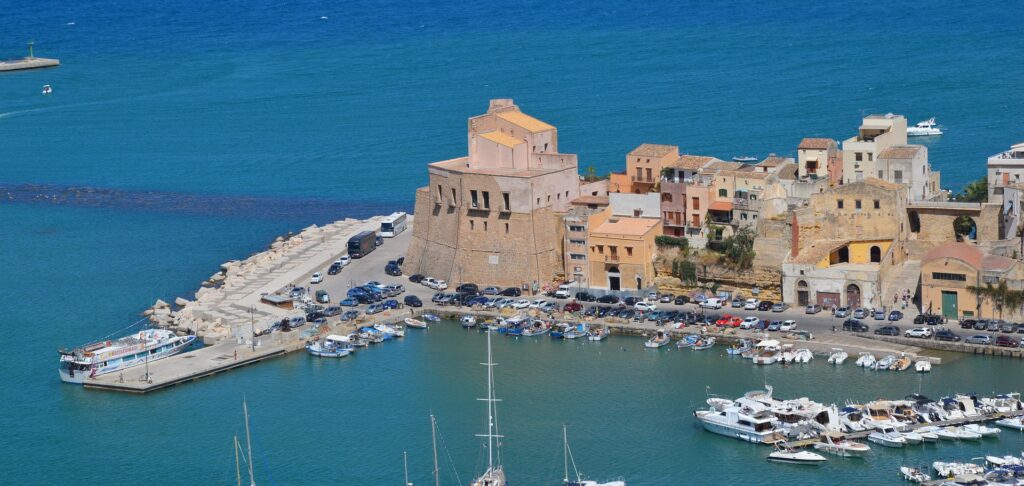
🌐 Around the World with Beyondia 🧵 Mediterranean Region 🪡 Episode 22
Sicily has been Italian for 164 years. Sicily has been Sicilian for almost three thousand
Sicily is the largest island in the Mediterranean
In 734 BC, Greek settlers from Corinth landed on the eastern coast of a large triangular island in the central Mediterranean and founded a city they called Syrakousai. Within three centuries, the city they founded would become the largest Greek city in the world — larger than Athens. The mathematician Archimedes was born there. The philosopher Plato visited three times, attempting to persuade three successive rulers to govern as philosopher-kings. The dramatist Aeschylus died there. Pindar wrote odes praising its tyrants and its volcano. The Athenians, at the peak of their imperial confidence in 415 BC, sent a vast naval expedition to conquer Syracuse and lost it so completely that the disaster effectively ended their bid for Mediterranean supremacy. Syracuse, by then, had been Greek for more than three hundred years. Rome, on the other side of the sea, was still a small republic. The Roman Empire — the civilisation most readers think of as the origin of Italy — would not arrive on Sicily for another two centuries. Sicily was already old when Rome was new. Sicily has been Italian for one hundred and sixty-four years. Sicily has been Sicilian for almost three thousand.
This is the foundational arithmetic of the island, and it is the one most casually-informed visitors do not carry. Sicily is the largest island in the Mediterranean — 25,700 square kilometres, larger than Belgium, larger than Israel — positioned exactly where every civilisation that ever sailed this sea had to cross to get anywhere else. Whoever held Sicily controlled the central Mediterranean. So everyone held Sicily, in succession, and the succession is one of the longest and most international in any one place on earth. Greeks. Carthaginians. Romans. Vandals. Ostrogoths. Byzantines. Arabs, from 827 to 1091, for two and a half centuries. Normans, from 1071 to 1198, who built one of the most extraordinary multicultural monarchies in medieval Europe out of Norman knights, Arab administrators, Byzantine artisans, and Jewish scholars working in the same court. Hohenstaufen Germans under Frederick II, the stupor mundi, the wonder of the world, who held court in Palermo in the thirteenth century and wrote treatises on falconry in Latin while his courtiers translated Arabic philosophy. French Angevins, Spanish Aragonese, Habsburgs, Bourbons. Sicily joined the Kingdom of Italy in 1861 after the army of Giuseppe Garibaldi landed at Marsala with a thousand red-shirted volunteers and walked, more or less, the length of the island while Sicilians abandoned the Bourbons and the old Spanish order collapsed. By the time the unification was confirmed by plebiscite that October, Sicily had been a separate kingdom, duchy, emirate, or province for more than 2,500 years. Italy was the new arrangement. Sicily had simply joined.
What this produces, on the ground, is a density of culture that has almost no parallel in the Mediterranean. The Greek temples of Agrigento, in the south of the island, are among the best-preserved Doric temples anywhere in the world — more intact, in some ways, than the Parthenon. The Temple of Concordia, built around 440 BC, still stands almost complete because the Christians converted it into a church in the sixth century and kept its roof on for the next thirteen hundred years. The Greek theatre of Syracuse, carved directly into a limestone hill, still stages Greek tragedies every summer in Greek — performances of Aeschylus, Sophocles, and Euripides on the same stone where their plays were first performed twenty-four centuries ago. The Norman cathedral of Monreale, built in the late twelfth century above Palermo, contains over six thousand square metres of golden Byzantine mosaics — the largest concentration of medieval mosaics anywhere in the world — installed by Byzantine craftsmen working for a Norman king on an island that was still half-Arabic in its language. The Arab-Norman cathedral of Palermo holds the tomb of Frederick II in porphyry, surrounded by Latin inscriptions and Kufic Arabic calligraphy on the same walls. None of these things contradict each other in Sicily. They simply coexist, in the same buildings, on the same streets, in the same vocabulary.
Sicilian kitchen is largely Arab
The food is the most legible record of this. The most famous Sicilian dish that tourists know — pasta alla Norma — is a relatively recent recipe. But the long deep structure of the Sicilian kitchen is largely Arab. The cassata, the colourful ricotta cake every Sicilian grandmother makes, is a direct descendant of an Arab pastry called qashshatah. The granita, the half-frozen flavoured ice that Sicilians eat for breakfast in summer, was invented when Arab settlers brought snow from Mount Etna’s slopes down to the towns in the lowlands. The arancini, the deep-fried rice balls that Sicilians eat as street food, are descendants of an Arab dish called naranj — the orange, named for the shape and colour. Pistachios came with the Arabs. Almonds came with the Arabs. Sugar cane came with the Arabs. Couscous, still eaten in the western Sicilian towns of Trapani and Marsala, came with the Arabs and never left. When a Sicilian grandmother makes Sunday lunch, she is cooking an eleven-hundred-year-old conversation between Greek olive oil, Arab spice, Norman pasta-making, and Bourbon dessert traditions. The Italian republic is the latest customer at this table. She does not always remember to wait for it.
And then there is Etna. The largest active volcano in Europe, the most consistently erupting volcano in the world, three and a half thousand metres tall on the eastern flank of the island, snow-capped in winter, smoking in summer, erupting in some form every few years for at least the last two thousand seven hundred years of recorded history. Greek mythology identified it as the forge of Hephaestus, the god of fire and metalwork. Virgil used it as a metaphor for the underworld in the Aeneid. Pindar described one of its eruptions in odes that are still studied in classics departments two and a half millennia later. Sicilians have farmed in Etna’s shadow for nearly three thousand years, because the volcanic soil on her flanks is some of the most fertile agricultural land in southern Europe — every eruption refreshes the slopes, the ash is rich in potassium and phosphorus, and the vineyards on Etna’s eastern face produce some of the most distinctive red wines in Italy. Sicilians do not fear Etna. They live on her. The first farmer who decided to plant olives on the lava fields of her lower slopes did the calculation that has defined the entire island ever since: the danger is real, the land is irreplaceable, and somewhere between the two is the place where Sicilian life happens. Beauty next to risk, indefinitely. The volcano is the island’s character compressed into one mountain.
The cliché Sicily — the one most foreign readers carry in their heads from films and television — is mostly recent, mostly nineteenth- and twentieth-century, and mostly the product of poverty and emigration and the rise of organised crime in a Bourbon-era vacuum that the new Italian state of 1861 failed to fill. None of that is untrue. It is also, in the long arithmetic of the island, very small. The Sicily underneath the cliché is two and a half thousand years older, immensely richer culturally, and considerably less interested in being explained by people who have not lived in it. Sicilians know this. They watch the foreign films with a kind of patient amusement. The films will end. Sicily will not.
Some islands belong to the country they are part of. This one belongs to itself, and lets Italy visit.
Nine regions. One hundred and twenty destinations. Three hundred and thirty-nine weeks remaining.
The next stop is north, and inland — to a city built entirely on water that has been sinking for a thousand years.

Beyondia
Trusted Travel CompanionReal digital nomad. I travel. I learn. I grow.
What about you? Where are you going?