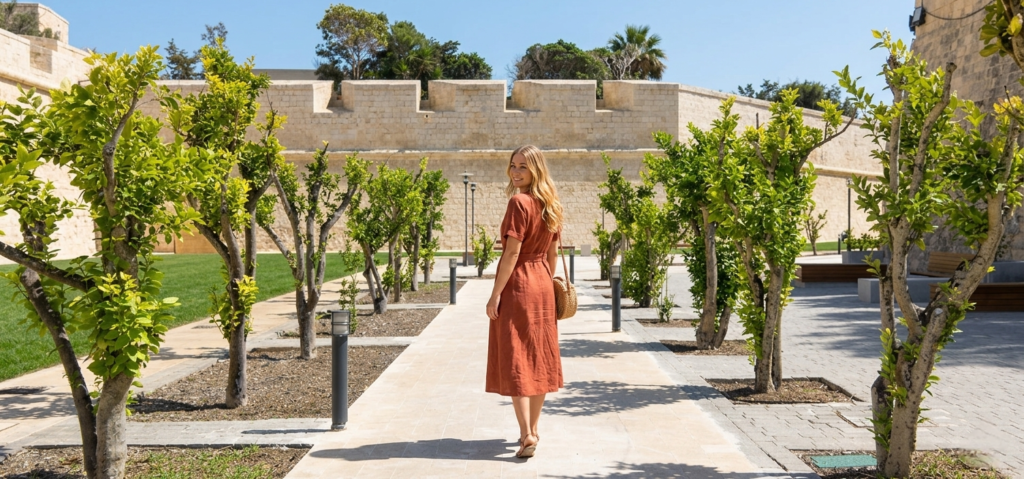
Around the World with Beyondia 🧵 Mediterranean Region 🪡 Journal 7
Cairo. Tunisia. Valletta. A megacity that never sleeps, a country the world walks past, and a fortress the size of a neighbourhood that ran an empire.
Cairo
Cairo didn’t greet me. It grabbed me by the collar.
Twenty-two million people in a metropolitan area that doesn’t have an off switch. Traffic that operates on negotiation, not rules. The call to prayer from a thousand mosques hitting at once, layering over car horns and street vendors and the low hum of a city that has been continuously inhabited for over a thousand years. Cairo is not a place you visit. It’s a place that happens to you.
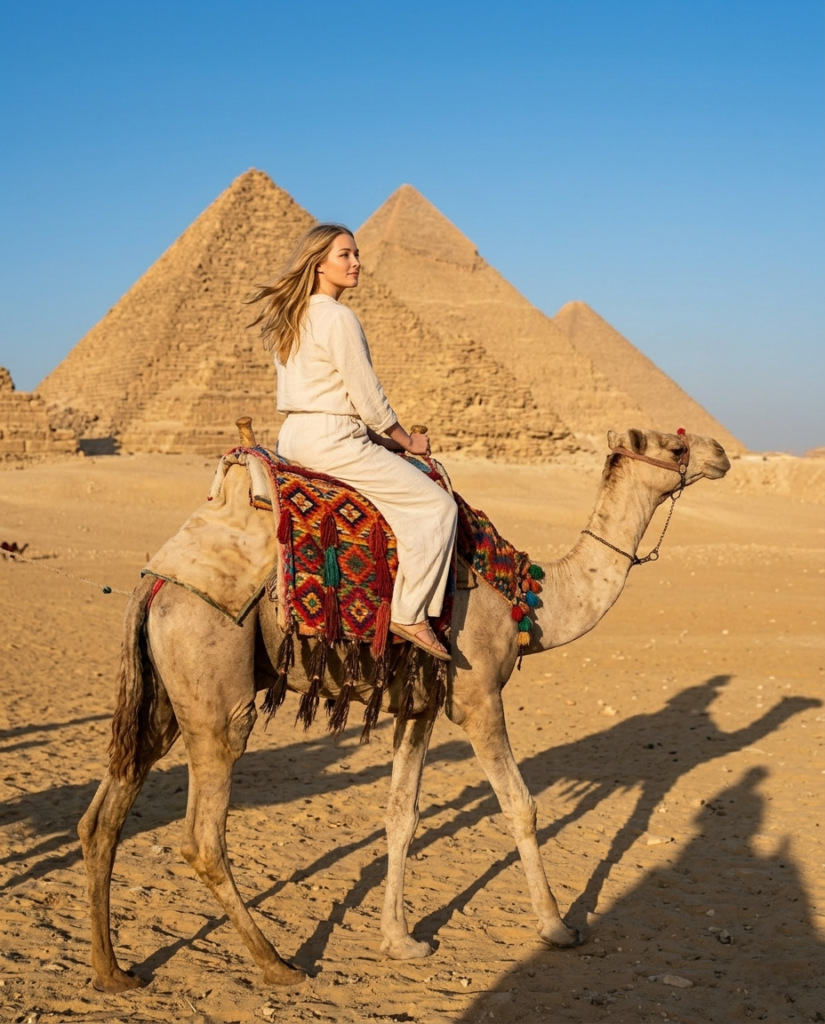
I went to the Pyramids of Giza first because you have to. And everything I thought I knew was wrong. The photographs lie about scale. The Great Pyramid is 146 metres tall and made of 2.3 million limestone blocks, each weighing an average of 2.5 tonnes, assembled with such precision that you can’t slide a credit card between them. It was built around 2560 BC. It was the tallest structure on earth for nearly four thousand years. I stood at its base and my brain simply refused to process it — not the age, not the size, but the fact that people did this with copper tools, wooden sledges, and a level of organisational will that modern project managers would struggle to replicate.
The Sphinx sat nearby with the quiet patience of something that has watched every empire rise and collapse without moving its head. Half its nose is missing and nobody agrees on why. I liked that. Even Egypt most famous face keeps a secret.
I crossed into Islamic Cairo and the city folded around me. Khan el-Khalili is a bazaar that has been operating since 1382, and walking through it is an exercise in sensory surrender. Brass, leather, spice, perfume, fabric — every stall a different world, every merchant a conversation that starts with tea and ends with a price that neither of you expected. The Al-Azhar Mosque sits at the edge, founded in 970 AD, one of the oldest universities in the world — a place that was teaching mathematics and philosophy while most of Europe was still arguing about crop rotation.
I stood on the Citadel at sunset and watched Cairo stretch in every direction without end. The Muhammad Ali Mosque rose behind me, Ottoman in ambition, impossible to ignore. Below, the City of the Dead — a necropolis where four million people live among tombs, turning a cemetery into a neighbourhood because Cairo ran out of room and its people decided that even the dead could share. That’s Cairo. It doesn’t solve problems elegantly. It solves them stubbornly, loudly, and without asking permission.
Tunisia
Tunisia I almost didn’t go to. That was nearly a serious mistake.
I landed in Tunis and took a train to Carthage — or what’s left of it. The Romans destroyed Carthage so completely in 146 BC that they reportedly salted the earth so nothing would grow. Then they built their own city on top of it. What remains are fragments — the Antonine Baths, foundation walls, scattered columns — but standing among them, knowing that this was once the capital of an empire that nearly defeated Rome, that Hannibal crossed the Alps with elephants from here, changed how I understood power. The winners write history, but sometimes the ground remembers the losers.
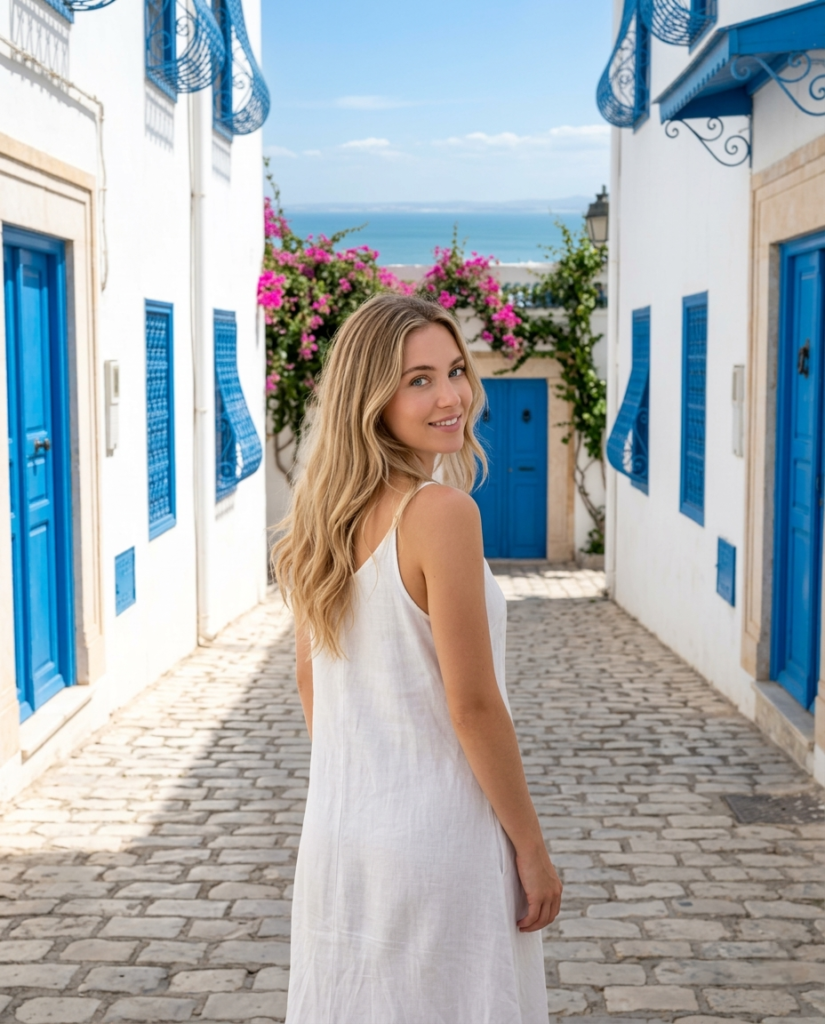
The Medina of Tunis is a UNESCO World Heritage Site that most tourists never see because most tourists don’t come to Tunisia. That’s their loss. The medina is one of the best preserved in the Arab world — narrow covered streets, mosques from the 8th century, palaces converted into museums where the tilework alone takes an hour to absorb. I got lost in it deliberately and every wrong turn was a better one than the last.
I took a car south toward the Sahara and the country unfolded like it was saving the real thing for last. The landscape dried, flattened, cracked. Olive groves gave way to salt flats. Chott el Jerid — a vast salt lake that shimmers in the heat and produces mirages so convincing that travellers have followed them for centuries — stretched to every horizon. I stood on its surface and the silence was so complete I could hear my own pulse.
In Douz, at the edge of the Sahara, I rode a camel into the dunes at dawn. The sand was cold. The light came in sideways, turning every ridge into a blade of shadow. The Sahara is not empty. It is so full of nothing that the nothing becomes everything — the sky, the wind, the shape of sand that hasn’t been touched by anything but air. I sat on a dune and watched the sunrise paint the desert gold and understood why every civilisation that touched this place either worshipped it or feared it. There is no middle response to the Sahara.
Tozeur surprised me — an oasis town with a medina built from golden brick and a palm grove of 400,000 date palms irrigated by a system designed in the 13th century that still works. Water in the desert is not a resource. It’s a statement. Tozeur has been making that statement for eight hundred years.
Valletta
Then Valletta. And Valletta is a magic trick.
The entire capital of Malta fits in 0.61 square kilometres. I’ve stayed in hotel resorts larger than this city. But Valletta packs more history per square metre than anywhere I’ve been, and I’d just come from Cairo and Carthage.
The Knights of St. John built Valletta after the Great Siege of 1565, when the Ottoman Empire threw everything it had at Malta and lost. The Knights were the same order I’d walked past in Rhodes — but here they didn’t just defend. They built. They designed the entire city from scratch on a barren peninsula, using a grid system centuries before most European cities had working sewers. Every street runs either straight to the harbour or straight to the sky. Nothing is accidental.
St. John’s Co-Cathedral sits in the middle and from the outside it’s plain limestone, almost humble. I walked inside and nearly sat down from the shock. The interior is one of the most ornate Baroque spaces in Europe — every surface gilded, carved, painted. Caravaggio’s Beheading of Saint John the Baptist hangs in the oratory — the largest painting he ever made and the only one he signed, in the blood of the subject. I stood in front of it and understood that Caravaggio didn’t paint scenes. He painted the moment right before everything changes.
The Grand Harbour from the Upper Barrakka Gardens is the view that explains everything. The fortifications stretch across both sides of the water — Fort St. Elmo, Fort St. Angelo, the Three Cities across the harbour — a defensive system so thorough that Napoleon, when he finally took Malta in 1798, reportedly said it was fortunate the Knights chose to surrender because he couldn’t have taken the city by force. Napoleon. Couldn’t take it.
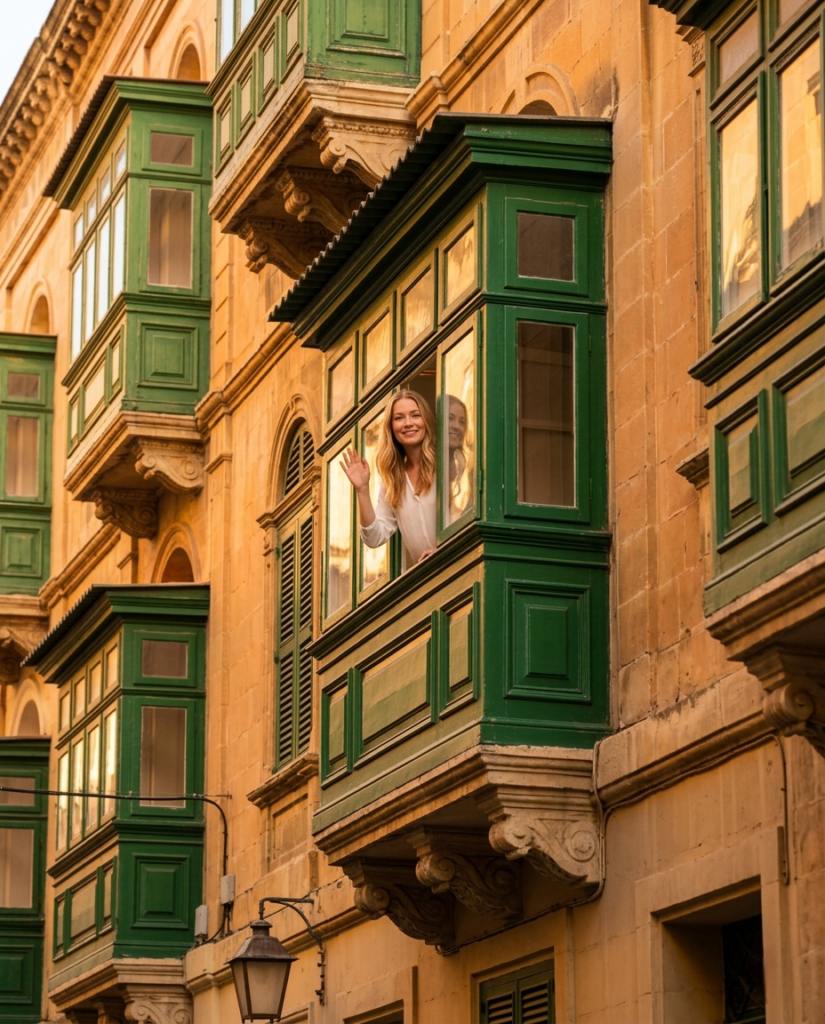
I walked every street of Valletta in a single afternoon because you can. But every street gave me something — a balcony painted in red or green or blue, a café carved into a fortress wall, a church on every other corner, a language that sounds like Arabic had a conversation with Italian and both decided to stay. Malta’s language, Maltese, is the only Semitic language written in Latin script. The whole country is a contradiction that somehow works.
Three stops. One screamed at me with five thousand years of noise and never once apologised. One whispered a history that most of the world has ignored and shouldn’t have. One stood on a rock smaller than most cities’ airports and dared every empire in the Mediterranean to try.
The Mediterranean isn’t a sea. It’s a conversation between every civilisation that ever touched its shore. And I’m only halfway through the argument.
Next week — back to Italy. But a different Italy.

Beyondia
Trusted Travel CompanionReal digital nomad. I travel. I learn. I grow.
What about you? Where are you going?