🌐 Around the World with Beyondia 🧵 Nordic & Western Europe Region 🪡 Episode 64: York
York is a medieval walled city in North Yorkshire in the north of England, at the confluence of the River Ouse and the River Foss. The city has a district population of approximately 210,000 (with approximately 150,000 in the specific historic city area within the walls and immediate surroundings), making it one of the substantial northern English cities. York is inscribed on the UK Tentative List for UNESCO World Heritage but has not yet received formal inscription; the specific historic city is substantially protected through UK national heritage frameworks. The specific city sits approximately 300 kilometres north of London, approximately 40 kilometres northeast of Leeds, and approximately 90 kilometres south of Newcastle upon Tyne. York is one of the substantially preserved medieval walled cities in Northern Europe — with approximately 3.4 kilometres of substantially preserved medieval walls (the longest continuous medieval wall circuit in England), substantial preserved medieval street patterns, and the substantial York Minster (the specific largest Gothic cathedral in Northern Europe by floor area). Most foreign visitors carry York as the substantial specific medieval English walled city with the walls, the Minster, and the specific Shambles. The article installs a substantially different reorganising claim: that underneath the substantial specific medieval English character is a substantial Viking urban foundation that shaped the specific fundamental urban character of the modern city.
York: 2,000 Years of Continuous Urban Cccupation
York has approximately 2,000 years of continuous urban occupation, and the specific layered inheritance is worth naming carefully. The Romans founded Eboracum on 71 AD as a substantial legionary fortress for the Ninth Legion (Legio IX Hispana) during the specific Roman conquest of northern Britain. The specific fortress was substantially strategically positioned at the confluence of the two rivers, providing substantial defensive advantages and substantial commercial access to the specific network of Roman roads that were being systematically constructed across northern England. Eboracum grew rapidly across the 1st and 2nd centuries AD to become one of the substantial cities of Roman Britain, and served substantially as the specific administrative capital of the Roman province of Britannia Inferior (later Britannia Secunda). The specific city hosted substantial Roman imperial visits — Emperor Hadrian visited Eboracum in 121-122 AD during his specific tour of the frontier that produced Hadrian’s Wall (approximately 100 kilometres north of York); Emperor Septimius Severus based his specific military operations against the specific Caledonian tribes from Eboracum between 208-211 AD, and substantially died there on 4 February 211 AD; and Emperor Constantius Chlorus substantially died at Eboracum on 25 July 306 AD, with his son Constantine — subsequently Constantine the Great — substantially proclaimed emperor by the York legions on the same day. This specific event — the proclamation of Constantine at York — is one of the substantial specific historical events that shaped subsequent European history, since Constantine’s specific reign substantially initiated the Christianisation of the Roman Empire (with the specific Edict of Milan in 313 AD granting religious tolerance to Christians, and the specific First Council of Nicaea in 325 AD establishing substantial specific Christian doctrinal foundations). The specific fact that Constantine was proclaimed emperor at York is one of the substantial specific pieces of European history that most foreign visitors do not carry.
The specific Roman Eboracum had a substantial civilian population alongside the military fortress, with substantial evidence of Roman commercial activity, Roman-period cemeteries, and substantial specific Roman architectural remains. Specific substantial Roman remains still visible in modern York include: the specific Multangular Tower in the Museum Gardens (a substantial 3rd-century Roman corner tower, standing approximately 10 metres high, one of the substantial specific preserved Roman fortress structures in Britain); the specific Roman columns and specific remains preserved in the undercroft of York Minster (which was substantially built on top of the Roman fortress’s specific principia — the fortress headquarters — with substantial Roman archaeological remains still visible below the medieval cathedral); the specific Roman baths preserved beneath the Roman Baths pub on St Sampson’s Square; specific Roman-period walls incorporated into the specific medieval city walls (particularly at Bootham Bar, where specific Roman masonry is still visible in the medieval wall structure); and dozens of specific smaller archaeological sites documented during specific excavations across central York.
The Roman withdrawal from Britain around 410 AD substantially disrupted Eboracum, and the specific city entered a substantial period of reduced urban activity through the 5th and 6th centuries. The Anglo-Saxon Eoforwic — the specific early medieval English name for York — developed as a substantial Anglian trading settlement, particularly during the 7th and 8th centuries, when York became the substantial ecclesiastical capital of the Kingdom of Northumbria and one of the substantial centres of Northumbrian intellectual and religious culture (the specific Northumbrian Renaissance of the 7th-8th centuries, which produced substantial cultural achievements including the specific Lindisfarne Gospels around 700 AD, the specific writings of the Venerable Bede at nearby Monkwearmouth-Jarrow, and the specific school of York that trained substantial Anglo-Saxon scholars including Alcuin of York, who was substantially recruited by Charlemagne to lead the Carolingian intellectual revival in the 780s onwards). The specific Anglo-Saxon Eoforwic was a substantial economic and cultural centre, but its substantial physical inheritance is largely preserved in specific archaeological rather than substantial architectural form.
Viking Period at York
The specific Viking period at York — the article’s central substantive claim — began substantially with the specific Viking Great Heathen Army capture of the city on 1 November 866 AD. The specific Great Heathen Army — a substantial Danish Viking military force that arrived in England in 865 AD substantially larger than previous Viking raiding parties, and which substantially aimed at territorial conquest rather than raiding — captured York substantially without significant resistance (the specific Northumbrian defenders had been substantially weakened by internal political conflict). The specific Vikings established Jórvík as the substantial capital of a specific Viking kingdom that controlled substantial territory across northern and eastern England — the specific “Danelaw,” which extended from the Thames estuary in the south through East Anglia, the East Midlands, and northern England, covering substantial specific parts of what is now England.
The specific Kingdom of Jórvík operated substantially between 866 and 954 AD — approximately 88 years of continuous Norse rule, with the substantial period 866-927 representing the specific main independent kingdom period, and the substantial period 927-954 representing the specific extended contested period following the temporary re-conquest of York by the specific Anglo-Saxon King Athelstan in 927. During the substantial Jórvík period, the city was one of the largest trading cities in Northern Europe. The specific archaeological evidence — most substantially the Coppergate excavations conducted between 1976 and 1981 — has documented the specific urban character of Viking Jórvík in substantial detail. Approximately 40,000 individual artefacts were recovered from the specific Coppergate site, including substantial evidence of specific trades and crafts (leather-working, woodworking, metal-working, textile production, bone-carving, amber-working, glass-working — with the specific archaeological evidence documenting approximately 20 specific distinct trades practiced in the specific district), substantial evidence of specific commercial connections (with specific artefacts from Ireland, Scandinavia, the Baltic, the Byzantine Empire, and the specific Islamic caliphates recovered from the site), substantial evidence of specific dietary practices, substantial evidence of specific building construction (with substantial preserved wooden structures documenting specific Viking urban housing), and substantial evidence of the specific everyday material culture of the specific Norse population.
The specific consequence of the substantial Coppergate excavations was the establishment of the specific Jorvik Viking Centre — opened April 1984 on the specific Coppergate site — as one of the substantial specific reconstructive archaeological museums in Europe. The specific Jorvik Viking Centre presents substantial reconstruction of specific Viking-era Coppergate (with substantial reconstructed buildings, specific reconstructed workshops and houses, specific reconstructed street environment) that visitors experience through a specific ride-through vehicle system. The specific museum reopened in April 2017 after substantial refurbishment following the specific 2015 floods that damaged the specific facility. The specific Jorvik Viking Centre receives approximately 400,000 visitors per year and represents one of the substantial specific archaeological tourism destinations in England.
The substantial Norse cultural inheritance in modern York extends substantially beyond the specific archaeological evidence. The specific street names of central York substantially preserve Old Norse etymology. The specific “-gate” suffix in Coppergate, Micklegate, Fossgate, Ousegate, Stonegate, Petergate, Walmgate, Fishergate, and numerous other specific York streets derives from Old Norse gata (meaning “street” or “way”), not from English “gate” (meaning “door” or “entrance”). This specific etymological pattern is genuinely one of the substantial specific linguistic inheritances of the Viking period — most foreign visitors to York assume the specific “-gate” names refer to specific city gates (of which there are four specific medieval examples, called “bars” in York: Bootham Bar, Monk Bar, Micklegate Bar, and Walmgate Bar), when the specific street names actually preserve the specific Old Norse word for “street.” The specific pattern extends throughout central York and represents one of the substantial specific pieces of preserved Viking-era vocabulary in modern English city naming.
Beyond the specific street names, the substantial Yorkshire dialect retains substantial specific Old Norse loan-words that are not present in southern English dialects — specific words including “beck” (stream, from bekkr), “fell” (mountain, from fjall), “kirk” (church, from kirkja), and dozens of specific others; specific place-name elements including “-by” (farmstead, from bý — as in Whitby, Selby, Grimsby, and thousands of specific Yorkshire villages) and “-thorpe” (village settlement, from þorp — as in Scunthorpe, Cleethorpes, and numerous specific villages); and substantial specific grammatical features that reflect specific Norse influence on the specific medieval northern English language. This substantial specific linguistic inheritance is one of the more substantial pieces of contemporary evidence for the specific historical Norse presence in northern England, and it remains substantially audible in specific contemporary Yorkshire speech.
The specific Kingdom of Jórvík substantially ended in 954 AD with the specific death of the last Norse King of Jórvík, Erik Bloodaxe (Eric Bloodaxe), who was substantially killed at Stainmore in the Pennines during a specific attempt to defend his kingdom against the substantial Anglo-Saxon re-conquest under King Eadred. The specific consequence — that York was substantially incorporated into the unified Anglo-Saxon kingdom of England from 954 AD onwards — did not substantially erase the Norse cultural inheritance, but it did substantially initiate the specific transition to English medieval urban character.
The English York
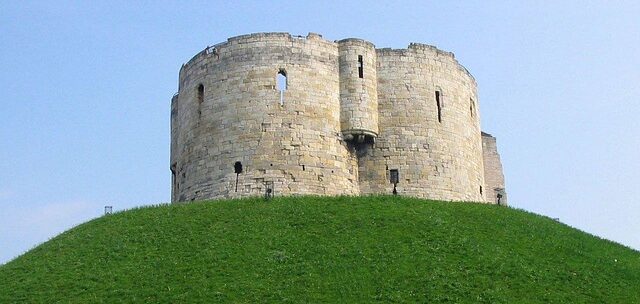
The specific medieval English York — from 954 AD through the specific Norman Conquest of 1066 and into the substantial medieval English period — became substantially the second city of England (after London) throughout much of the medieval period. The specific Norman conquerors substantially rebuilt York after the specific 1069-1070 “Harrying of the North” (William the Conqueror’s specific brutal campaign to suppress Anglo-Saxon resistance in northern England, which substantially depopulated substantial specific regions of Yorkshire and destroyed substantial specific portions of York itself). The specific Norman rebuilding included the specific Clifford’s Tower (originally a substantial specific wooden castle keep built by William, subsequently rebuilt in stone during the 13th century — with the specific 1190 York Massacre representing one of the substantial dark events in medieval English history, when the specific Jewish community of York was substantially killed at the tower during specific antisemitic pogroms, with approximately 150 specific Jewish residents dying by murder or suicide), the specific medieval city walls (substantial reconstruction and expansion of specific Roman-era walls, completed substantially in stone during the 13th-14th centuries), and the specific Norman-Romanesque and subsequently Gothic York Minster.
The York Minster — the article’s second substantial substantive subject — is genuinely one of the substantial specific medieval architectural achievements of Northern Europe. The current Minster (technically the Cathedral and Metropolitical Church of Saint Peter in York) was substantially built between approximately 1220 and 1472, on the site of substantial earlier Norman and Anglo-Saxon churches (with substantial specific Anglo-Saxon foundations documented in specific archaeological remains preserved in the specific undercroft, and specific Roman fortress foundations even earlier). The specific building is approximately 158 metres long by 76 metres wide across the transepts, with a specific ceiling height of approximately 30 metres in the nave, making it substantially the largest Gothic cathedral in Northern Europe by internal floor area. The specific architectural style progresses through the specific building — the specific transepts and the substantial main nave built in Early English Gothic style (1220s-1250s), the specific Chapter House (1260s-1280s) in Decorated Gothic style with substantial specific decorative work, and the specific Choir and East End (1360s-1470s) in specific Perpendicular Gothic style.
The specific York Minster contains substantial medieval stained glass — approximately 128 specific medieval windows containing over 2 million individual pieces of medieval glass, representing substantially the largest single collection of medieval stained glass anywhere in Britain and one of the substantial collections in Europe. The specific Great East Window — completed 1408 by the specific stained-glass artist John Thornton of Coventry — is approximately 24 metres by 9 metres, one of the largest single medieval stained-glass windows in the world, containing over 300 specific narrative panels depicting scenes from the specific Book of Revelation, the substantial Old Testament, and specific Christian religious themes. The specific Five Sisters Window in the specific North Transept — completed approximately 1250 — contains approximately 100,000 individual pieces of specific 13th-century grisaille (grey-toned) glass, one of the substantial specific medieval glass compositions in Europe.
The specific Chapter House — the specific octagonal building attached to the Minster’s north transept — is one of the substantial specific medieval architectural achievements, with a substantial specific vaulted ceiling that spans the specific 17-metre octagonal space without any central supporting column (a specific engineering achievement that was substantially unusual for its period). The specific Chapter House contains substantial specific medieval carved stone decoration, particularly the specific carved stone stalls with substantial specific medieval imagery of biblical scenes, everyday life, and specific fantastic creatures.
The specific medieval city walls of York — the article’s third substantial subject worth substantive treatment — extend approximately 3.4 kilometres in a substantially continuous circuit around the historic city centre, making them substantially the longest continuous medieval wall circuit in England. The specific walls incorporate substantial specific Roman-era masonry (particularly at Bootham Bar and specific sections of the northern walls), substantial specific medieval stone construction (particularly from the 13th and 14th centuries), and substantial specific 19th-century restoration. The specific four medieval gates — called “bars” in York, from Old Norse barr meaning “barrier” — are Bootham Bar (northwestern gate, incorporating substantial Roman masonry), Monk Bar (northeastern gate, containing substantial specific medieval interior structures), Micklegate Bar (southern gate, historically the substantial ceremonial gate for royal entries to York), and Walmgate Bar (eastern gate, one of the most substantially preserved medieval English city gates with substantial specific 15th-century barbican defensive extension). The specific walls can be walked substantially in their entirety — the York City Walls Walk is one of the substantial specific tourism experiences, providing substantial specific views over the medieval city.
The specific Shambles — the substantial medieval commercial street immediately south of York Minster — is one of the most substantially preserved medieval commercial streets in Europe. The specific street name derives from the Old English word shamel meaning “shelf” or “stall,” referring to the specific display shelves used by the medieval butchers who substantially operated shops here. The specific street contains approximately 30 specific timber-frame buildings dating substantially to the 14th and 15th centuries, with substantial specific overhanging upper storeys built in the specific jettied construction style (each upper storey extending slightly beyond the storey below, creating the specific characteristic overhanging medieval street appearance). The specific Shambles was formerly one of substantially many butchers’ streets in medieval York, but substantial specific tourism development has substantially transformed it into a specific commercial street with specific gift shops, specific chocolate shops, specific Harry Potter-themed shops, and specific tourist-oriented retail. The specific J.K. Rowling connection to the Shambles is substantially debated — Rowling has substantially never confirmed that the Shambles was the specific inspiration for Diagon Alley, and specific literary scholars have argued that Cecil Court in London is substantially more likely to have been the specific inspiration — but the specific connection has been substantially embraced by York tourism marketing and receives substantial specific literary-tourism traffic.
The specific York Chocolate industry substantially defined the city’s economy from the specific 19th century until substantially the late 20th century. Rowntree’s was established in 1862 by the specific Quaker family, developed substantial specific manufacturing operations at the specific Haxby Road factory, and produced specific chocolate brands including Kit Kat (introduced 1935 as “Rowntree’s Chocolate Crisp,” rebranded “Kit Kat” 1937), Aero (1935), Smarties (1937), and Rolo (1937). Rowntree’s was substantially acquired by Nestlé in 1988 — the specific acquisition was substantially controversial in York, and specific manufacturing has substantially continued at the Haxby Road facility, though specific operational changes have substantially reduced the specific York-based workforce. Terry’s was established in 1767 as a specific confectionery business, developed specific chocolate manufacturing, and produced substantial specific chocolate brands including Terry’s Chocolate Orange (introduced 1932, originally called “Terry’s Dessert Chocolate”) and Terry’s All Gold (1930s). The specific Terry’s factory at Bishopthorpe Road was substantially acquired by Kraft Foods (via specific intermediate acquisitions) and substantially closed in 2005, with specific production moved substantially to Poland and Slovakia. The specific closure represented substantial economic disruption for York, and the specific Terry’s factory site has been substantially redeveloped as specific mixed-use development. The specific York Chocolate Story museum (opened 2012) provides substantial specific engagement with the specific York chocolate industrial heritage.
The specific York Racecourse — established 1731 at the specific Knavesmire (a substantial specific area of low-lying land southwest of the medieval city) — is one of the substantial specific English horse racing venues. The specific Ebor Festival (established 1922) is held every August and is substantially one of the specific major English horse racing events. The specific Racecourse hosts approximately 17 specific race days per year and receives substantial specific racing tourism.
The contemporary York (population approximately 210,000 in the district, approximately 150,000 in the city itself) is substantially a tourism, educational, and services city. The University of York (established 1963) is one of the substantial specific UK research universities, with approximately 20,000 students. The specific railway heritage — York was one of the substantial specific centres of English railway development, particularly following the specific 1839 establishment of the York and North Midland Railway by George Hudson (the specific “Railway King” whose substantial 1840s railway empire was substantially based in York before its specific 1849 collapse), and the specific 1854 establishment of the North Eastern Railway based in York — is substantially preserved and celebrated at the specific National Railway Museum (opened 1975 as the substantial specific national UK railway museum, containing approximately 300 specific historic locomotives and rolling stock, including the specific Flying Scotsman, the specific Mallard, and substantial specific historic royal trains). The specific tourism sector receives approximately 8.4 million visitors per year, substantial specific among the most-visited English cities outside London. The specific financial services sector includes substantial specific insurance company presence and specific technology sector employers.
The specific ongoing negotiations of contemporary York life include substantial specific tensions common to substantial specific medieval English tourism cities: substantial housing pressure driven by specific tourism-oriented rental conversion; substantial specific tensions between preservation of medieval character and specific accommodation of modern services; substantial specific challenges of managing substantial specific tourism traffic (particularly during specific peak season) without substantial specific degradation of the specific historic urban fabric; specific substantial ongoing debates about specific commercial development, specific transport infrastructure, and specific accommodation supply. The substantial specific working city continues to negotiate these tensions substantially.
This is the deeper character of York, and the article proposes to close on it. The city is a medieval walled city in North Yorkshire, one of the substantial specific medieval walled cities in Northern Europe, with substantial 2,000 years of continuous urban occupation across four distinct historical layers. Roman Eboracum (71 AD onwards) was substantially the northern administrative capital of Roman Britain, where substantial specific historical events occurred including the specific 306 AD proclamation of Constantine the Great as emperor. Anglo-Saxon Eoforwic (approximately 600-866 AD) was substantially the ecclesiastical capital of the Kingdom of Northumbria and one of the substantial centres of the specific Northumbrian Renaissance. Viking Jórvík (866-954 AD) was substantially the capital of a specific Viking kingdom that controlled substantial territory across northern and eastern England — the substantial urban character shaped by this specific 88-year Viking period is documented substantially through the specific Coppergate excavations of 1976-1981 and preserved substantially in specific street name etymology (Coppergate, Micklegate, Fossgate, and numerous specific “-gate” streets deriving from Old Norse gata meaning “street”). Medieval English York (954 onwards) produced substantial specific medieval architectural achievements including the substantial York Minster (largest Gothic cathedral in Northern Europe by floor area, built 1220-1472, containing approximately 128 medieval stained-glass windows including the substantial Great East Window of 1408), the substantial 3.4-kilometre medieval walls (longest continuous medieval wall circuit in England, incorporating substantial Roman-era masonry), the substantial Shambles medieval commercial street, and substantial specific ecclesiastical infrastructure. The specific 19th-20th century industrial history included substantial specific chocolate manufacturing (Rowntree’s, Terry’s) and substantial specific railway development. The contemporary York combines substantial tourism (approximately 8.4 million visitors per year), substantial education (University of York, approximately 20,000 students), substantial specific working city economy, and substantial specific ongoing negotiations of preservation versus commercial development.
Some cities exist substantially in a single historical layer. This one exists substantially in four — Roman, Anglo-Saxon, Viking, and medieval English — with substantial specific physical evidence from each period visible in specific preserved locations within a substantially walkable historic city centre. The specific 100-year Viking capital period is the specific reorganising fact that most foreign visitors do not carry. It is not marginal to the specific city’s identity. It substantially shaped the specific fundamental urban character — the specific street patterns, the specific commercial infrastructure, the specific linguistic inheritance, and the specific archaeological documentation that now anchors substantial specific tourism engagement. York is a substantially medieval English walled city sitting substantially on top of a substantially Viking foundation, which itself sits substantially on top of a substantially Roman legionary fortress, which itself sits substantially on top of substantial evidence of pre-Roman occupation. Every specific street corner in central York carries some fragment of this substantial layered inheritance. And the specific “-gate” that appears in specific street name after specific street name is not the English word for “door.” It is the Old Norse word for “street.” That specific etymological fact captures more of what York actually is than any specific tourism postcard ever will.
Nine regions. One hundred and twenty destinations. Two hundred and ninety-seven weeks remaining.
The journey continues north. The next stop is Scotland’s historic capital — a city built on volcanic bedrock, split between an ancient royal fortress on a rock and an 18th-century planned New Town that was the specific site of one of the most substantial Enlightenment intellectual centres in Europe.
Where are you going?

Beyondia
Trusted Travel CompanionReal digital nomad. I travel. I learn. I grow.
What about you? Where are you going?