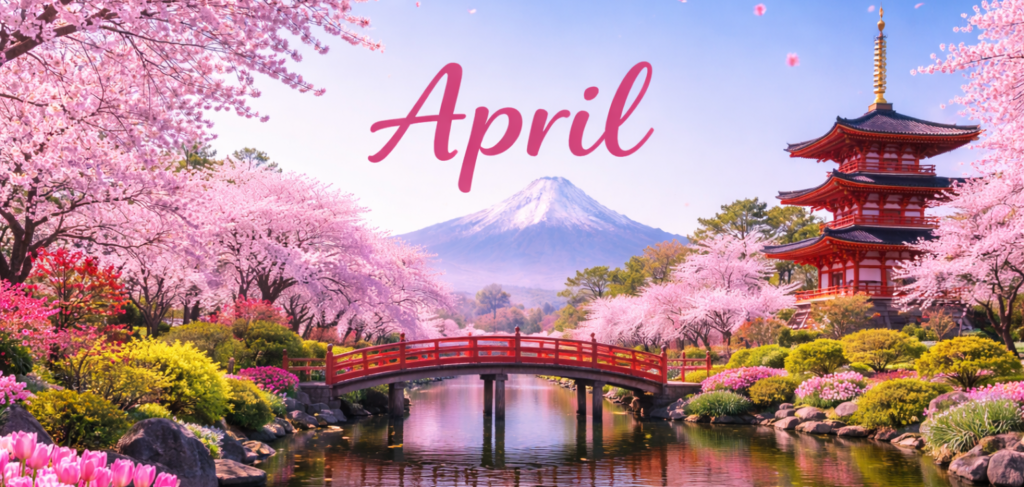
April is the month travel stops being a plan and starts being an inevitability. The northern hemisphere has fully turned — the light is back, the temperatures are rising, and the destinations that spent winter waiting are ready. Europe opens properly. The Himalayas enter their finest trekking window. The southern hemisphere’s summer crowds have thinned while the warmth holds. Cherry blossoms peak and fall and the world that gathered to watch them disperses, leaving the destinations briefly to themselves again.
April sits at the precise intersection of accessible and uncrowded — a window that closes quickly as the summer machinery starts up in May. The traveller who moves in April arrives just ahead of the crowd, just inside the best weather, and just before the prices remember what season is coming.
Twelve destinations. Twelve arguments for booking now.
Choose your April:
- Blossom + culture: Japan, Italy, Spain
- Ancient + dramatic: Greece, Turkey, Azerbaijan
- Mountain + spiritual: Nepal, Bhutan, Georgia
- Wild + southern: South Africa, Colombia, Portugal
Japan: The Peak of Everything
Best for: cherry blossoms at full bloom, spring festivals, food, temple gardens Go to: Kyoto · Tokyo · Yoshino Why April: sakura reaches full bloom across central and northern Japan — the most celebrated natural event in the country’s calendar
Japan in April is the country at its annual crescendo. The cherry blossom front that began in Kyushu in late March reaches Tokyo in the first week of April and Kyoto shortly after — the two cities that define Japan’s cultural identity for most international visitors blooming simultaneously in a window that lasts approximately two weeks before the petals fall. The Japanese have a word for the moment the blossoms fall: hanafubuki, flower blizzard, the pink snow that covers the parks and temple gardens in the days after peak bloom. It is considered as beautiful as the bloom itself. That is a country with a sophisticated relationship with impermanence.
Kyoto in early April — Maruyama Park, the Philosopher’s Path, the temple gardens of Daitoku-ji — operates at the intersection of extraordinary and overwhelmed. The crowds are real and should be accounted for. The strategy: arrive before 7am at the major sites, which is not a hardship when the dawn light on blossoms is the finest version of what you came to see. The afternoon belongs to the covered shopping streets of Nishiki Market, the tofu restaurants of Arashiyama, the kaiseki dinner that Kyoto’s culinary tradition has been refining for centuries.
Yoshino in Nara Prefecture — 30,000 cherry trees covering an entire mountain in concentric bands of white and pink — is the April destination that the Tokyo and Kyoto crowds haven’t fully claimed. The mountain village has been celebrated for its blossoms since the 7th century. April is the only month that fully explains why.
Temperatures: 10–18°C in Tokyo · 9–17°C in Kyoto
Read the full Japan Travel Guide →
Spain: The Country Before It Remembers It’s Famous
Best for: Semana Santa, spring festivals, city culture, wine regions Go to: Seville · Granada · San Sebastián Why April: Semana Santa processions fill the south, spring light on the Alhambra, Rioja wine country in blossom
Spain in April operates at the specific energy of a country that has just emerged from a winter it spent mostly indoors and is now celebrating the fact loudly and publicly. Semana Santa — Holy Week, the week before Easter — transforms Andalusia in a way that no other event in Europe replicates. Seville’s Semana Santa processions are among the most extraordinary spectacles in the Catholic world: the pasos — elaborate floats carrying religious statues — carried through the narrow streets by costaleros who bear the weight on their necks and shoulders, invisible beneath the float, navigating by the voice of a single guide. The processions run from Sunday to Sunday, all day and through the night, the incense and the candlelight and the saetas — spontaneous flamenco prayers sung from balconies — producing an atmosphere that photography approaches but cannot contain.
Granada’s Alhambra in April sits in the specific spring condition the Nasrid kings designed it for — the water channels and reflecting pools fed by the Sierra Nevada snowmelt, the gardens of the Generalife in flower, the views from the palace walls across the city to the mountains still carrying snow. Book tickets months in advance; the daily visitor limit fills far ahead of April dates.
San Sebastián in the Basque Country in April — the pintxos bars of the old town, the surfing beach of La Concha at its spring capacity, the culinary culture that has produced more Michelin stars per square kilometre than anywhere else on earth — is the Spain that the summer crowds discover and the April traveller experiences at its most local.
Temperatures: 14–22°C in Seville · 11–18°C in San Sebastián
Read the full Spain Travel Guide →
Portugal: Spring’s First Proper Arrival
Best for: Lisbon and Porto, Douro Valley, Alentejo plains, Atlantic coast Go to: Lisbon · Porto · Alentejo Why April: wildflowers blanket the Alentejo, Douro Valley in blossom, Lisbon at its most liveable before summer heat
Portugal in April is the country fully awake — the almond blossoms that defined February have given way to the wildflowers that cover the Alentejo plains in a carpet of colour that the summer heat will burn away by June. The cork oak forests, the whitewashed villages, the prehistoric standing stones of the Cromlech of the Almendres standing in fields of yellow and purple wildflowers — the Alentejo in April is the Portugal that the Lisbon and Algarve tourists consistently miss and that the people who find it consistently return to.
Lisbon in April sits at 16–20°C — the city at its most comfortable, the seven hills fully walkable, the viewpoints uncrowded enough to occupy for the duration of a sunset. The Alfama neighbourhood in April, the fado music drifting from restaurant doorways in the evenings, the azulejo tilework catching the spring light in the afternoons — this is the city at the pace that its architecture was built for rather than the pace that August’s 40°C and tourist volumes impose.
The Douro Valley in April carries the vineyard blossom that the harvest season obscures — the terraced hillsides above the river in the specific green of early spring growth, the quintas opening their cellars to visitors who arrive before the summer tour groups book the tasting rooms solid. The train from Porto to Pinhão, following the river through the valley, is the finest rail journey in Iberia and in April runs through a landscape that the autumn harvest photos have been underselling for decades.
Temperatures: 12–20°C in Lisbon · 11–19°C in Porto
Read the full Portugal Travel Guide →
Greece: Before the Crowds and After the Rain
Best for: ancient ruins, island villages, Aegean sailing, spring hiking Go to: Athens · Santorini · Peloponnese Why April: wildflowers on the hills, ruins without summer crowds, Easter celebrations the most dramatic in the Orthodox world
Greece in April is the version that the August visitors are paying to experience but arriving too late to find. The Acropolis in April — temperatures between 15 and 20°C, the surrounding hills green from the winter rains, the tourist density at a fraction of the summer peak — is the ancient site operating closest to the conditions of considered contemplation rather than managed crowd flow. The light in April, lower and less harsh than the summer bleach, treats the Parthenon’s marble with a specificity that the midday July sun flattens into postcard uniformity.
Greek Easter — falling in April in most years, a week or two after the Western Easter — is the most important event in the Orthodox calendar and the most dramatically celebrated in the Greek world. The midnight Resurrection service, the candles lit from the Holy Fire and carried through the streets, the Christos Anesti greeting exchanged across the country simultaneously, the lamb on the spit that follows — Easter in Greece is the event that Greek diaspora communities fly home for and that the traveller who happens to be present receives as an unrepeatable gift.
The Peloponnese in April — Mycenae, Epidaurus, the Byzantine ghost city of Mystras, the Mani Peninsula’s tower houses — is the Greece beneath the Greece that the island-hopping season has made canonical. The ancient sites receive April visitors in the spring wildflowers that the archaeological photographs crop out, the ruins embedded in a living landscape that the summer’s dry brown conceals.
Temperatures: 14–20°C in Athens · 12–19°C on the islands
Read the full Greece Travel Guide →
Georgia: The Caucasus in Its Finest Season
Best for: Tbilisi old city, wine country, mountain villages, ancient churches Go to: Tbilisi · Kakheti · Kazbegi Why April: Kakheti wine region in blossom, Kazbegi mountains emerging from winter, Tbilisi in spring at its most beautiful
Georgia in April is the Caucasus remembering what it looks like without snow. The Alazani Valley in Kakheti — the wine region where 8,000 years of qvevri winemaking has produced a tradition that UNESCO added to its Intangible Cultural Heritage list in 2013 — carries the spring blossom of the vineyards in April: the vines pushing their first growth from the clay vessels buried in the earth below, the valley floor green between the monasteries of Bodbe and Alaverdi that have anchored the winemaking culture for fifteen centuries.
Tbilisi in April operates at the temperature where the old city’s outdoor culture — the carved wooden balconies, the sulfur bathhouses of Abanotubani, the wine bars of the Fabrika complex, the rooftop restaurants above the Mtkvari River — becomes the dominant social reality rather than the indoor alternative. The city’s particular architecture — Soviet modernism beside medieval fortress walls beside art nouveau beside Persian-influenced bathhouses — makes more sense in the spring light than in any other season.
Kazbegi in April is the mountain proposition at its most dramatic — the road from Tbilisi through the Caucasus Military Highway climbing through landscapes that the winter closes and the summer crowds, the Gergeti Trinity Church at 2,170 metres emerging from the last of the snow above the village. April in Kazbegi means the passes are opening, the roads are clear, and the mountains are carrying the specific clarity of high altitude in early spring that the summer haze reduces. The church above the clouds in morning fog is the image that defines Georgia for the international traveller. April is the month it is most reliably true.
Temperatures: 10–20°C in Tbilisi · Significantly colder in the mountains
Read the full Georgia Travel Guide →
Turkey: Tulips, Ruins, and the Aegean Opening
Best for: Istanbul tulip festival, Aegean ruins, Cappadocia, Bosphorus in spring Go to: Istanbul · Ephesus · Cappadocia Why April: tulip season peaks in Istanbul, Aegean coast at its finest before summer heat, Cappadocia in spring colour
Turkey in April reaches the moment the country has been building toward since the tulip bulbs went into the ground in autumn. Istanbul’s parks and gardens — Emirgan, Gülhane, the grounds of the Dolmabahçe Palace — fill with the 30 million tulips that the Istanbul Metropolitan Municipality plants annually in a tradition that reclaims the flower’s Ottoman origins from the Dutch monopoly that global flower commerce has long assumed. The tulip arrived in Europe via Istanbul in the 16th century; it was always Turkish before it was Dutch, and April in Istanbul makes that argument in 30 million simultaneous exhibits.
The Aegean coast in April — Ephesus, Pamukkale, the turquoise coast south of Bodrum — sits in the specific spring window that the summer tourist season hasn’t yet opened. Ephesus in April, the Library of Celsus in morning light, the marble streets without the July crowds, the House of the Virgin Mary in the hills above the ancient city — these are the experiences that the summer visitor is technically having but the April visitor is actually receiving.
Cappadocia in April exchanges the winter snow uncertainty of March for the spring green that fills the valleys between the fairy chimneys — the Göreme Open Air Museum, the underground cities of Derinkuyu and Kaymaklı, the balloon launches at dawn over a landscape that still carries the cool clarity of early spring rather than the summer dust. April is the month Cappadocia’s colours are at their most varied and its prices at their most reasonable before the peak season premium arrives in May.
Temperatures: 10–17°C in Istanbul · 11–20°C in Cappadocia · 14–22°C on the Aegean coast
Read the full Turkey Travel Guide →
South Africa: The Cape in Autumn Gold and Kruger in Prime Season
Best for: Kruger game viewing, Cape Town autumn, Garden Route, whale coast Go to: Kruger · Cape Town · Garden Route Why April: Kruger enters its prime game viewing season as the dry season establishes, Cape Town in its finest autumn light
South Africa in April undergoes the seasonal transition that produces the country’s finest game viewing and its most photogenic urban landscape simultaneously. Kruger National Park in April sits at the beginning of the dry season proper — the summer rains that ended in March have left the vegetation full enough to be beautiful but the waterholes are beginning to concentrate game as the dry months establish themselves. The buffalo herds, the elephant families, the lion prides that Kruger’s 20,000 km² of protected savanna contains — all of them moving toward water in April patterns that experienced guides read with the confidence of a language they have been speaking for decades.
Cape Town in April experiences the southern hemisphere autumn that the city wears more elegantly than most — the vineyards of Stellenbosch and Franschhoek turning gold and red, the mountain still accessible before the winter rains begin in June, the city’s beaches clearing of the summer density while the water retains enough warmth for swimming. The Cape Winelands in April harvest season — the grapes have been picked, the cellar doors are open, the estates are processing their vintage — offer the wine experience that the tourist season sometimes rushes: time to sit in the tasting room rather than move through it.
The Garden Route in April — the coastal road between Mossel Bay and Storms River — operates in the autumn conditions that the Western Cape delivers before winter: warm days, cooler evenings, the fynbos in late bloom, the whale watching beginning on the southern coast as the whales begin their northward migration. Hermanus, east of Cape Town, records the first whale sightings of the southern right whale season in late April — the official whale crier still operates the kelp horn that announces sightings from the cliffs above Walker Bay.
Temperatures: 16–24°C in Cape Town · 22–32°C in Kruger
Read the full South Africa Travel Guide →
Colombia: The Green Season That Isn’t a Problem
Best for: coffee region, Amazon, Pacific coast humpback whales begin, Bogotá museums Go to: Bogotá · Leticia · Pacific coast Why April: Amazon accessible and green, Pacific coast whale season approaching, Coffee Region lush after rains
Colombia in April sits in the beginning of the rainy season for some regions and the continued dry season for others — a geography so vertical and varied that the country’s weather operates on multiple simultaneous systems. The Amazon region around Leticia, at its most accessible by boat during the high water season that peaks in April and May, delivers the jungle experience that the dry season’s lower rivers make physically harder: the flooded forest, the pink river dolphins surfacing alongside the boat, the canopy accessed at a level that the land-based dry season doesn’t provide.
Bogotá in April — the capital at 2,600 metres where the temperature rarely exceeds 20°C regardless of season — offers the cultural Colombia that Cartagena’s colonial glamour and Medellín’s transformation story can obscure. The Gold Museum, containing the largest collection of pre-Columbian gold in the world, the Botero Museum adjacent to the Plaza de Bolívar, the Saturday market of the Usaquén neighbourhood, the street art of La Candelaria — Bogotá in April is the museum city that rewards the rain day with an interior life that the coastal cities don’t offer in the same density.
The Pacific coast — Nuquí, Bahía Solano — in April sits at the beginning of the humpback whale season that will peak from June through October. The first arrivals from Antarctic waters appear in late April, the detection of their presence by local whale guides who have been reading the Pacific for generations as much as by sonar. The Pacific coast is the Colombia that the Caribbean coast’s accessibility has kept as a genuine discovery.
Temperatures: 14–19°C in Bogotá · 25–32°C in the Amazon · 26–30°C on the Pacific coast
Read the full Colombia Travel Guide →
Italy: Before the Crowds Claim It
Best for: spring in Rome and Florence, Amalfi Coast opening, Tuscany in flower, Easter celebrations Go to: Rome · Florence · Sicily Why April: Easter in Rome, Tuscany in its spring flowering, Amalfi Coast before the summer density
Italy in April is the country before it belongs entirely to tourism — the version that Italians themselves inhabit rather than the version that July and August deliver to the world. Rome in April sits at 14–20°C, the Colosseum and the Forum receiving the spring light at the angle that the architects who designed the surrounding landscape, consciously or not, built them to receive. The Vatican Museums in April — still requiring advance booking but not the summer queue that begins forming before dawn — allow the Sistine Chapel the contemplative silence that Michelangelo’s ceiling deserves and that the August crowd prevents.
Florence in April carries the Florentine spring that the Renaissance painters used as their outdoor studio — the Arno reflecting the bridges in the clear morning light, the Boboli Gardens opening their seasonal gates, the Uffizi operating at the pace where the Botticellis and Leonardos can be properly looked at rather than photographed past. The olive groves in the Chianti hills south of the city are pushing new growth in April, the cypress trees maintaining their year-round architecture against the spring sky.
Sicily in April — Palermo’s markets, the Valley of the Temples at Agrigento in wildflower season, the baroque towns of the Val di Noto — delivers the island before the heat that July makes definitive. The almond blossoms that define the Agrigento landscape in February have gone, but the wildflowers that replace them through the ancient temple ruins — poppies among the Greek columns, asphodels in the archaeological park — produce an April landscape that the summer visitor arriving to hard brown earth and blazing sky finds difficult to imagine they missed.
Temperatures: 12–20°C in Rome · 11–19°C in Florence · 14–22°C in Sicily
Read the full Italy Travel Guide →
Bhutan: Festival Season at Its Peak
Best for: Paro Tsechu festival, Tiger’s Nest, Punakha valley, Himalayan spring Go to: Paro · Punakha · Thimphu Why April: Paro Tsechu festival peaks in late March or early April — the most important cultural event in the Bhutanese calendar
Bhutan in April carries the Paro Tsechu into its final days — the five-day festival of masked dances, thangka unfurlings, and religious performance that transforms the Paro Dzong courtyard into the most vivid cultural event in the Himalayan world. The final day of Tsechu, when the giant thangka — a silk appliqué religious painting the size of a building — is unfurled on the hillside above the dzong at dawn and displayed for two hours before being rolled away for another year, draws Bhutanese from across the country in traditional dress of gho and kira. It is among the most beautiful and most specifically Bhutanese experiences that the country offers to the visitor who arrives at the right moment.
Punakha in April — the former winter capital in the lower, warmer valley below Thimphu — delivers the spring flowers that the higher altitudes won’t see for another month. The Punakha Dzong, the most beautiful fortress-monastery in Bhutan, sits at the confluence of two rivers — the Mo Chhu and the Pho Chhu — with the jacaranda trees in full purple bloom against the white-and-red dzong walls, a combination of colour and architecture that defines the Bhutanese aesthetic at its most complete.
The Tiger’s Nest hike in April operates in spring conditions — the rhododendron forests below the cliff face in bloom, the air cool enough for a comfortable two-hour ascent, the monastery at 3,120 metres accessible on the clearest days with views extending across the Paro valley to the peaks beyond. The Sustainable Development Fee applies: currently $100 per night, reduced 50% until August 2027. The cost is the conservation mechanism. What it protects is visible from every point on the hike.
Temperatures: 8–20°C in Paro · Warmer in Punakha
Read the full Bhutan Travel Guide →
Azerbaijan: The Caucasus Country Nobody Has Found Yet
Best for: Baku old city, mud volcanoes, fire temples, wine country, mountain villages Go to: Baku · Sheki · Gobustan Why April: spring wildflowers in the Caucasus foothills, mild temperatures across the country, Novruz spring festival energy still present
Azerbaijan in April is the Caucasus destination that the Georgia and Armenia conversation has consistently overlooked — a country of such geographical and cultural variety that its omission from most conscious travel itineraries says more about travel media’s editorial habits than about the country’s merit. Baku’s UNESCO old city — the Icheri Sheher, a walled medieval city within the modern capital — contains the 12th-century Maiden Tower and the Palace of the Shirvanshahs, both of them accessible in April without the summer heat that the Caspian coastal city generates from June onward.
Gobustan National Park, 60 kilometres south of Baku, contains the largest and most significant collection of ancient rock carvings in the Caucasus — 6,000 petroglyphs spanning 40,000 years of human presence on the Absheron Peninsula — alongside the mud volcanoes that Azerbaijan contains in greater number than anywhere else on earth. The mud volcanoes erupt cold mud rather than lava, the landscape around them a grey moonscape that the April green of the surrounding steppe makes more dramatic by contrast.
Sheki in the foothills of the Greater Caucasus in April — the caravanserai that once served the Silk Road trade, the Khan’s Palace with its shebeke stained glass windows assembled without a single nail, the surrounding hazelnut orchards in spring blossom — is the Azerbaijan that the Baku-only itinerary misses entirely. The country in April is carrying the energy of Novruz, the spring new year festival that Azerbaijan celebrates with a thoroughness that the entire Caucasus region shares but that each country expresses in its own register.
Temperatures: 10–18°C in Baku · Cooler in the mountains
Read the full Azerbaijan Travel Guide →
Nepal: Rhododendrons and the Himalayan Spring at Full Power
Best for: Annapurna trekking, Everest approaches, Kathmandu festivals, rhododendron forests Go to: Annapurna Circuit · Everest Base Camp · Pokhara Why April: rhododendron forests at peak bloom, clearest pre-monsoon skies, spring trekking season fully open
Nepal in April is the Himalayas operating at their spring maximum — the rhododendron forests that cover the middle elevations of the Annapurna and Everest regions in full bloom from 2,000 to 4,000 metres, the skies at their pre-monsoon clarity, and the trekking infrastructure fully operational after the winter quiet. Experienced Himalayan trekkers consistently choose April over October — the autumn season is more famous, but April’s rhododendron colour, the spring light on the peaks, and the slightly lower crowd levels on the major trails produce a trekking experience that many find superior.
The Annapurna Circuit in April passes through the rhododendron forests above Ghorepani at peak bloom — the Poon Hill viewpoint at 3,210 metres, famous for its sunrise view of Dhaulagiri and Annapurna I, surrounded by the tree rhododendrons that grow here to eight metres in height and bloom simultaneously in red, pink, and white. Arriving at Poon Hill at 5:30am in April, the peaks illuminated in alpenglow above the flower forest — this is the image that Nepal’s trekking culture is built around, and April delivers it more reliably than any other month.
Kathmandu in April celebrates Bisket Jatra in Bhaktapur — the nine-day chariot festival marking the Nepali New Year in mid-April, the largest chariot in the valley pulled through the streets of the medieval city in a tradition that has continued since the 15th century. The Durbar Squares of Kathmandu, Patan, and Bhaktapur in April operate in the spring temperatures that make the outdoor cultural heritage accessible all day without the rain that the monsoon will bring by June.
Temperatures: 15–25°C in Kathmandu · Significantly colder at altitude
Read the full Nepal Travel Guide →

Beyondia
Trusted Travel CompanionReal digital nomad. I travel. I learn. I grow.
What about you? Where are you going?