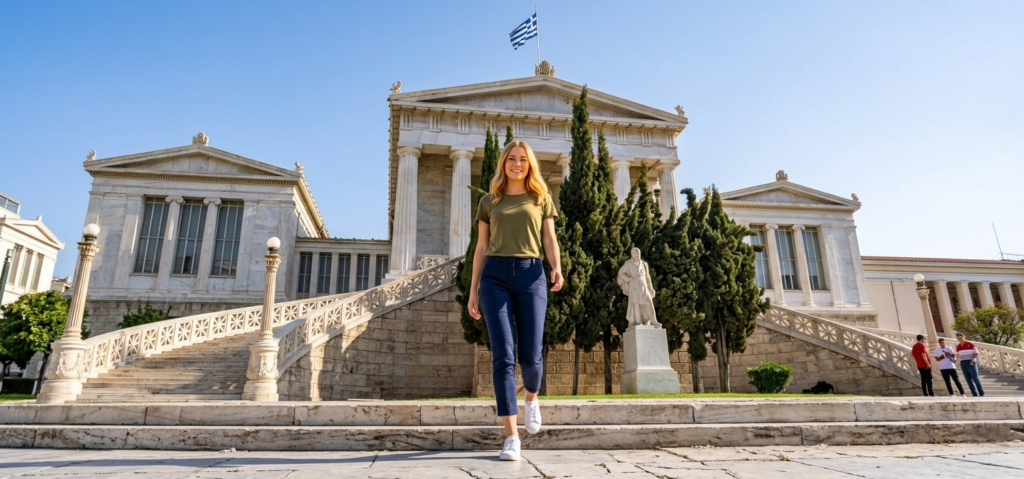
Around the World with Beyondia 🧵 Mediterranean Region 🪡 Journal 4
Athens. Meteora. Mykonos. Philosophy, gravity, and the complete absence of both.
Athens
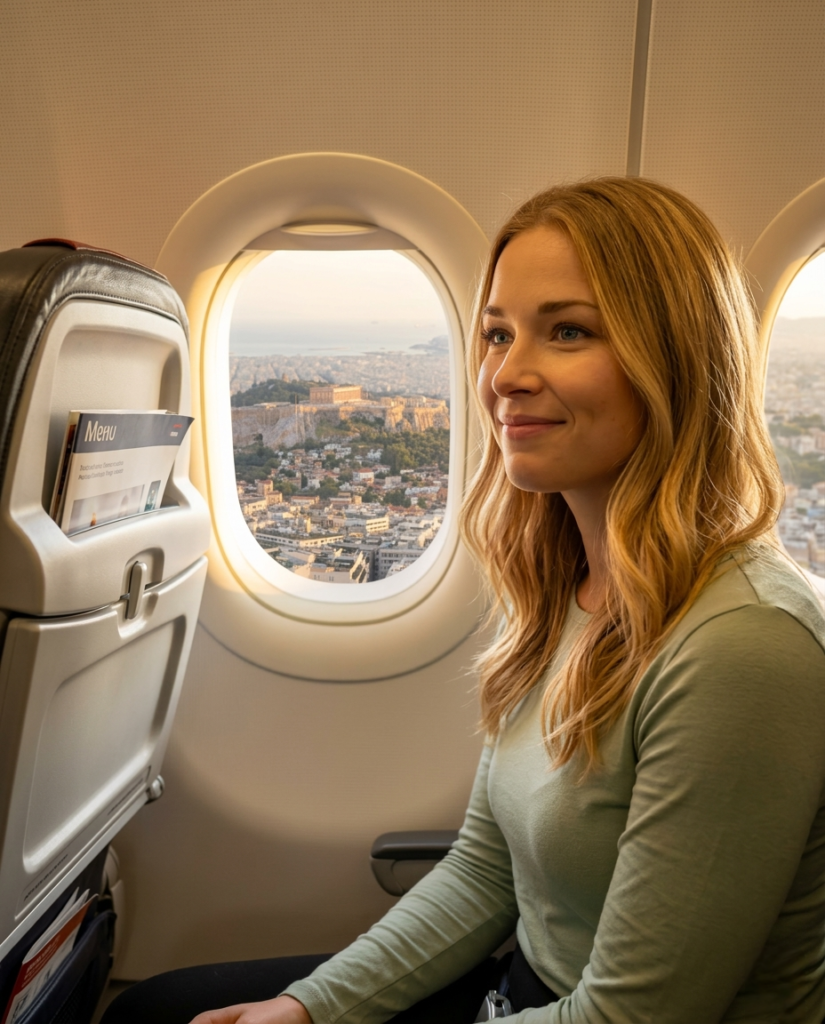
I landed in Athens expecting museums. What I got was an argument.
The Acropolis doesn’t sit in the city — it sits above it, watching, like it’s still deciding whether the rest of us deserve what was started here. I climbed the marble steps to the Parthenon and stood in front of columns that were raised in 438 BC using nothing but mathematics, rope, and an obsession with proportion so precise that each column leans slightly inward — they’d meet a mile above the ground if extended. The builders corrected for how human eyes distort straight lines. They engineered an illusion of perfection to achieve actual perfection. Twenty-five centuries ago.
Below the Acropolis, the Agora sprawled out — the open square where Socrates asked questions that got him killed and democracy was tested on people who weren’t sure they wanted it. Athens didn’t invent thinking. It invented thinking out loud, in public, with consequences. I walked where those conversations happened and felt the weight of standing on ground that decided the rest of Western civilisation would value reason over obedience. Not every generation has honoured that. But the argument started here.
The Plaka wrapped around the base of the hill — narrow streets, bougainvillea falling off balconies, old men sitting outside kafeneia with coffee cups that hadn’t moved in an hour. Athens is loud and gentle at the same time. Traffic and philosophy. Gyros at midnight and marble in the morning. The city doesn’t curate itself. It just keeps going, layering one century on top of the last without cleaning up first.
Meteora
Meteora I was not prepared for.
I knew the monasteries existed. I’d seen photographs. But photographs are liars when it comes to Meteora. You drive through the Thessalian plain — flat, agricultural, unremarkable — and then the earth just stops making sense. Sandstone pillars rise straight out of the ground, some over 400 metres tall, smooth and vertical like the planet forgot to finish them. And on top of these pillars, people built monasteries.

The first monks climbed in the 9th century using ropes and ladders wedged into cracks in the rock. By the 14th century, twenty-four monasteries sat on summits that most people couldn’t reach without risking their lives. Six remain active today. I climbed the carved steps to the Monastery of Great Meteoron — the oldest and highest — and stood on a balcony where the only sound was wind hitting rock. Below me, the valley stretched out like a map of a world that had nothing to do with this one.
Meteora is the opposite of Athens. Athens says think, question, engage. Meteora says stop. Be quiet. You are small and the rock was here before you and will be here after. I didn’t meditate or pray. I just stood still for a long time, which might be the same thing.
Mykonos
Mykonos erased everything.
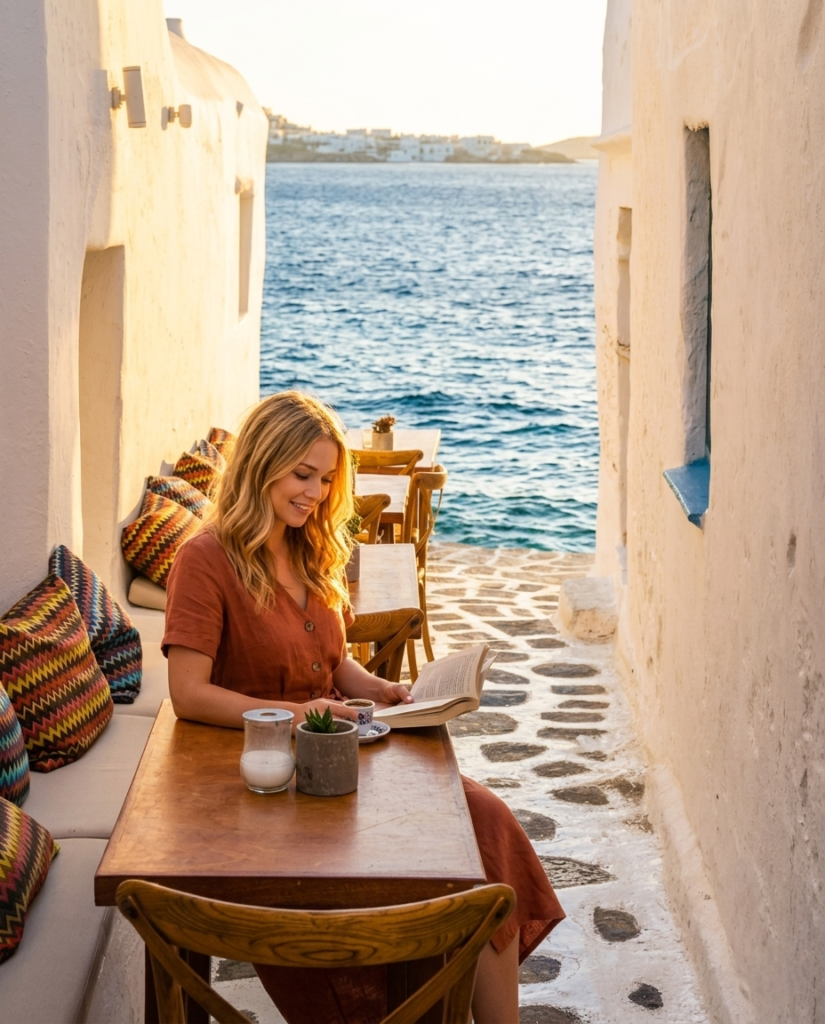
I stepped off the ferry and the wind hit me sideways — the Meltemi, the summer wind that owns the Cyclades and doesn’t negotiate. Mykonos is white and blue and relentless. The Chora is a maze of whitewashed alleys built deliberately confusing to trap pirates who came ashore looking for plunder. It still works. I got lost within ten minutes and ended up at Little Venice, where balconies hang directly over the water and the sunset turns the Aegean into something that makes you embarrassed to own a camera.
The windmills above the town have been standing since the 16th century, built by the Venetians to grind grain using the one thing Mykonos never runs out of — wind. Below them, the island does what it does now. Music. People. A kind of energy that doesn’t think about yesterday or tomorrow. Athens builds monuments to ideas. Meteora builds monuments to silence. Mykonos builds absolutely nothing and gets away with it on charm alone.
I sat on a rock near Armenistis lighthouse on the northern tip, away from everything, and watched the sea do what the sea does. Greece hadn’t even started yet. Three places in and I already understood why civilisation kept coming back here — not for the answers, but because this is where the questions sound different.
Next week — the islands keep going. And so do I.

Beyondia
Trusted Travel CompanionReal digital nomad. I travel. I learn. I grow.
What about you? Where are you going?