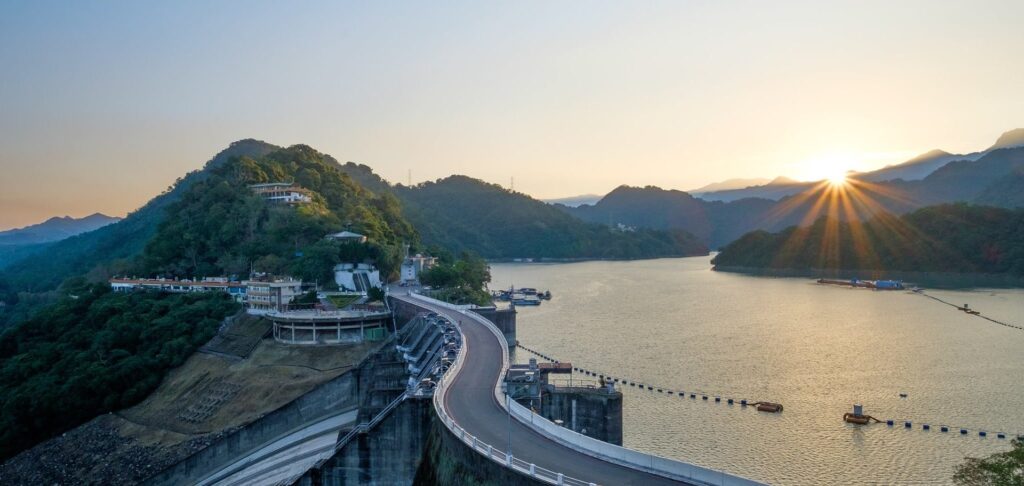
GoBeyondia Atlas 🗺️ East-Asia Oceania 🗾
Taiwan: Where an island of twenty-three million people that only twelve nations on earth officially recognize as a country produces over ninety percent of the world’s most advanced semiconductors — the chips inside every smartphone, every AI system, every military guidance computer on the planet manufactured primarily by a single company, TSMC, whose fabrication plants in Hsinchu Science Park represent the most strategically consequential square kilometers of industrial real estate in human history — and where the indigenous peoples who have lived on this island for at least six thousand years are, according to the dominant linguistic theory, the origin point of the entire Austronesian expansion, a migration that produced over twelve hundred languages spoken from Madagascar to Easter Island, from the Philippines to New Zealand, making Taiwan the probable launchpad for the largest maritime dispersal of people in the history of our species — and where the mountains rise to over two hundred peaks above three thousand meters on an island smaller than Switzerland, and where thirty-eight years of martial law gave way to one of Asia’s most robust democracies — because Taiwan is the country that proves existence does not require recognition, that the most indispensable place on earth can also be the most officially unacknowledged, and that what the world depends on most is precisely what it refuses to name.
Taiwan in 30 Seconds
An island of thirty-six thousand square kilometers — slightly smaller than Switzerland, slightly larger than Maryland — sitting in the western Pacific, separated from mainland China by the Taiwan Strait, one hundred and thirty kilometers of water that constitute the most strategically consequential body of water on earth. The island is two-thirds mountainous. Yushan — Jade Mountain — rises to three thousand nine hundred and fifty-two meters, the highest peak in northeast Asia, taller than Mount Fuji. There are over two hundred peaks above three thousand meters, compressed into an island you can drive across in three hours at sea level. The Central Mountain Range runs like a spine from north to south, dividing the densely populated western plain from the rugged, forested east coast. Taroko Gorge cuts through marble cliffs for nineteen kilometers, one of the deepest gorges in the world, the marble formed two hundred and fifty million years ago when the island was still part of the ocean floor. The indigenous peoples of Taiwan — currently sixteen officially recognized tribes and others seeking recognition — have inhabited the island for at least six thousand years and possibly much longer. They speak languages belonging to the Austronesian family, and here is where the island’s most extraordinary claim emerges: of the ten major divisions of the Austronesian language family, nine exist only in Taiwan. The tenth — the Malayo-Polynesian branch — contains every other Austronesian language on earth, all twelve hundred of them, spoken by nearly four hundred million people across half the planet’s longitude. This linguistic distribution is the primary evidence for the Out of Taiwan hypothesis, the dominant theory that Taiwan’s indigenous peoples are the origin point of the Austronesian expansion — the maritime migration that, beginning roughly four thousand years ago, spread from Taiwan to the Philippines, then across Indonesia, west to Madagascar, east through Melanesia and Polynesia to New Zealand and Easter Island. The navigators who crossed the Pacific, the ancestors of the Maori and the Hawaiians, the Malagasy and the Samoans, likely began here. An island the world refuses to officially recognize may be the launchpad for the greatest ocean migration in human history. The origin asks no one’s permission.
Evoke — Why You Visit Taiwan
You come to Taiwan because you have been living in a state of ambiguity — unrecognized, uncategorized, existing in a space between definitions that other people find uncomfortable — and you need a country that has turned that ambiguity into the most consequential existence on earth. Taiwan is not a member of the United Nations. Most countries do not recognize it. It cannot participate in the World Health Organization, the International Civil Aviation Organization, or most international bodies as a sovereign state. And yet it manufactures the technology that allows all of those organizations to function. Every email sent by the UN Secretariat, every flight tracked by international aviation systems, every medical device in every WHO-affiliated hospital runs on chips made overwhelmingly by a country those institutions will not name. The ambiguity is not an obstacle. The ambiguity is the condition under which Taiwan became indispensable. Without the pressure of being unrecognized, there would have been no strategic pivot to semiconductors. Without the Silicon Shield, the island’s security calculus would be entirely different. Without the diplomatic isolation, there would have been no imperative to become so essential that the world could not afford to lose it. Taiwan did not overcome its ambiguity. Taiwan weaponized it. You come because you have been told that your undefined status is a weakness. Taiwan will show you that it is a strategic position. The thing that has no name is the thing everything else runs on.
Explore — How You Experience Taiwan
Fly into Taipei and take the metro — one of the cleanest, most efficient transit systems in Asia — to the night markets, which are not tourist attractions but the island’s living culture: Shilin, Raohe, Ningxia, where the food is cooked in front of you and the flavors are a compressed history of every culture that has passed through — Hoklo, Hakka, Japanese, indigenous, mainland Chinese, all of it fused into something that tastes like no single tradition and like all of them. Eat beef noodle soup, which Taiwan reinvented from mainland Chinese recipes into its own national dish, a metaphor in a bowl: something brought from elsewhere that became more itself here than it ever was there. Take the train south along the western plain — rice paddies, industrial parks, the Hsinchu Science Park where TSMC’s fabrication facilities look like any other set of office buildings from the outside and contain, inside, the most advanced manufacturing technology humans have ever created, producing features on silicon wafers measured in atoms. Continue to the east coast and enter Taroko Gorge, where the road has been carved into marble cliffs and the river below has been cutting for millions of years, and understand that this island is not flat, not small, not simple — it is a vertical landscape with more topographic relief than countries ten times its size. Climb into the mountains where the indigenous Atayal, Bunun, Tsou, and other peoples maintain communities that predate every other human presence on the island by millennia, where the languages contain nine of the ten branches of the Austronesian family tree, where the oral traditions remember a time before the Chinese, before the Dutch, before the Spanish, before the Japanese, before the KMT, before anyone arrived to tell them who they were. Visit Sun Moon Lake, sacred to the Thao people — one of the smallest indigenous groups, fewer than a thousand people — and understand that this island holds both the most advanced technology on earth and one of the oldest continuous cultural presences in the Pacific, separated by a few hours’ drive.
Evolve — Who You Become in Taiwan
You leave Taiwan understanding that the most powerful form of existence is the one that does not depend on anyone else’s acknowledgment. Twelve countries recognize Taiwan. Seven billion people use its chips. The gap between official recognition and actual indispensability is the largest of any entity on earth, and Taiwan has not closed that gap — it has made it irrelevant. The island does not need a seat at the United Nations to manufacture the processors that run the United Nations’ computers. It does not need diplomatic recognition to be the origin point of a migration that populated half the Pacific. It does not need the world to call it a country to function as one — with elections, courts, universities, a free press, marriage equality, and a semiconductor industry that makes it the most strategically important thirty-six thousand square kilometers on the planet. You come home and look at the ambiguity in your own life — the role that has no title, the relationship that has no name, the identity that does not fit the available categories — and you stop waiting for someone to recognize it. Recognition is a courtesy. Existence is a fact. Taiwan has been existing without courtesy for over fifty years. It responded by becoming the place the world cannot function without. The mountains are still there — over two hundred peaks above three thousand meters, taller than anything in Japan, on an island the size of Maryland. The indigenous languages are still spoken — nine branches of a family tree that produced twelve hundred languages across half the planet. The chips are still being fabricated — ninety percent of the world’s most advanced processors, manufactured by a country that most countries will not name. The night markets are still open. The democracy is still functioning. The island has not moved. It has not asked for permission. It does not need to. Existence does not require recognition. Taiwan is the proof.
Your practical guide to Taiwan starts bellow 👇
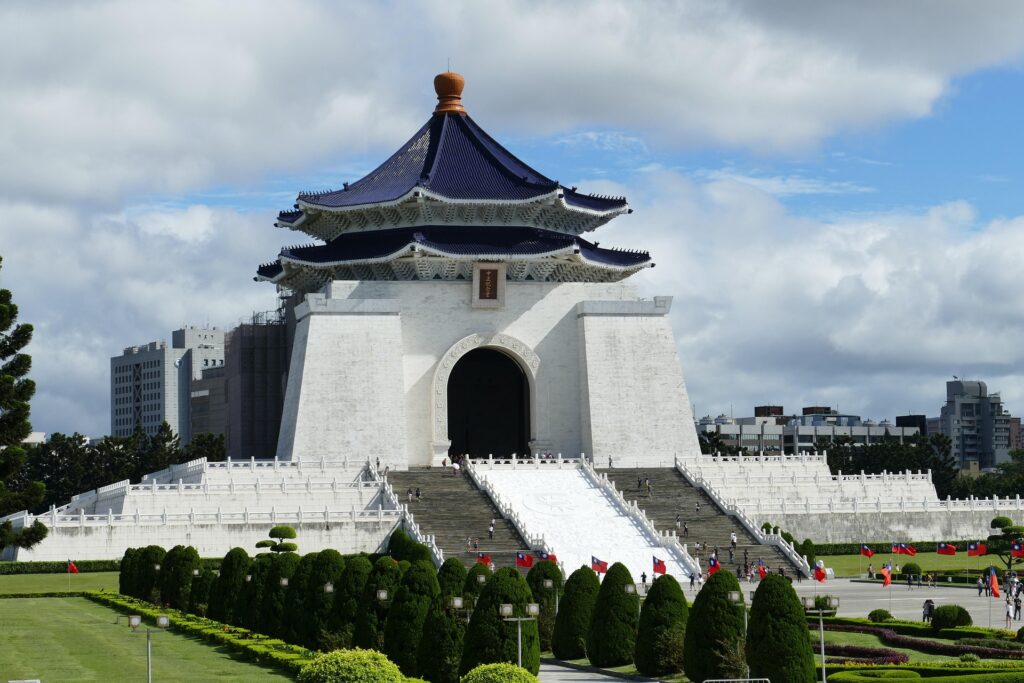
🕰️ Taiwan Historical Backdrop
Taiwan’s history is a compelling narrative of indigenous heritage and strategic crossroads. Originally inhabited by Austronesian peoples—the ancestors of many Pacific islanders—the island was famously dubbed “Ilha Formosa” (Beautiful Island) by 16th-century Portuguese sailors. Its story is told in the Dutch and Spanish colonial forts of the south, the centuries of Qing Dynasty administration, and the profound 50-year period of Japanese rule that modernized its infrastructure. Following the events of the mid-20th century, Taiwan evolved into one of the “Four Asian Tigers,” transforming from an agrarian society into a global leader in high-tech innovation. Today, it stands as a vibrant, multi-party democracy that fiercely protects its traditional Chinese heritage and indigenous roots while leading the world in civil liberties and progressive social values.
🌟 Taiwan Local Experiences
Beyond the high-tech skyline, discover Taiwan’s soul in the sensory symphony of a night market, where the aroma of grilled seafood and “stinky tofu” creates a shared culinary ritual. Experience the profound stillness of an Alishan sunrise, where the “Sea of Clouds” pours over ancient cypress forests, the intoxicating scent of a high-mountain Oolong tea ceremony, or the simple joy of a hot spring soak in the volcanic valleys of Beitou. Whether it’s participating in the rhythmic energy of a temple procession or navigating the island’s coast on a world-class cycling path, these moments reveal a nation that finds richness in the balance of fast-paced progress and unhurried tradition.
🌄 Taiwan Natural Wonders
- Taroko Gorge: A spectacular 19-kilometer-long canyon carved through solid marble by the Liwu River, featuring sheer cliffs and turquoise waters.
- Alishan National Scenic Area: Famous for its historic forest railway, giant ancient trees, and breathtaking sunrises above the clouds.
- Sun Moon Lake: A stunning alpine lake surrounded by mountains, sacred to the indigenous Thao people and known for its serene cycling trails.
- Yehliu Geopark: A unique coastal landscape of “honeycomb” and “mushroom” rock formations, including the famous “Queen’s Head.”
- Yushan (Jade Mountain): The highest peak in Northeast Asia (3,952m), offering a challenging and rewarding pilgrimage for hikers.
- Kenting National Park: The tropical southern tip of the island, known for its white-sand beaches, coral reefs, and vibrant surf culture.
🏙️ Taiwan Must-See Cities & Regions
- Taipei: (Capital) A high-energy metropolis where world-class museums and the iconic Taipei 101 meet historic districts like Wanhua and the trendy shops of Ximending. (Modern, Dynamic, Cultural)
- Tainan: The oldest city in Taiwan and its “Culinary Capital,” home to over 1,600 temples and the island’s most authentic street food heritage. (Historic, Traditional, Gastronomic)
- Kaohsiung: A massive port city in the south transformed into an artistic hub, featuring the Pier-2 Art Center and the stunning Lotus Pond. (Artistic, Maritime, Vibrant)
- Taichung: Known for its mild climate, the futuristic National Taichung Theater, and as the birthplace of pearl milk tea. (Creative, Modern, Central)
- Jiufen & Shifen: Former gold-mining mountain towns famous for their lantern-lit alleys, teahouses, and the tradition of releasing sky lanterns. (Nostalgic, Picturesque, Atmospheric)
🏞️ Taiwan National Parks & Nature Reserves
Managed with world-class conservation standards by the National Parks of Taiwan.
- Taroko National Park: The crown jewel of Taiwan’s geological beauty.
- Yangmingshan National Park: A volcanic landscape of fumaroles and cherry blossoms located just minutes from downtown Taipei.
- Shei-Pa National Park: A high-mountain wilderness protecting the rare Formosan landlocked salmon.
🏛️ Potential UNESCO World Heritage Sites
Due to unique geopolitical status, Taiwan is not a member of the UN, but it maintains 18 Potential World Heritage Sites managed to UNESCO standards:
- Alishan Forest Railway: A masterpiece of mountain engineering and colonial history.
- Kinmen Island: A unique landscape of traditional Fujianese architecture and Cold War history.
- For more information, visit the Taiwan Cultural Heritage Portal.
🖼️ Taiwan Museums & Cultural Sites
- National Palace Museum (Taipei): Housing one of the world’s largest collections of ancient Chinese imperial artifacts and artworks.
- Chimei Museum (Tainan): A spectacular private museum featuring Western art, musical instruments, and natural history.
- National Museum of Prehistory (Taitung): Detailing the fascinating Austronesian roots of the island and the wider Pacific.
- Longshan Temple (Taipei): A masterpiece of classical Taiwanese architecture and a focal point for local spiritual life since 1738.
🎉 Taiwan Festivals & Celebrations
- Lantern Festival: (February) Marking the end of the Lunar New Year with spectacular light displays and the “Pingxi Sky Lantern” event.
- Dragon Boat Festival: (June) High-intensity boat races held across the island to honor the poet Qu Yuan.
- Mid-Autumn (Moon) Festival: (September) A time for family reunions, mooncakes, and the unique Taiwanese tradition of outdoor barbecues.
- Taipei Pride: (October) The largest LGBTQ+ pride event in East Asia, celebrating the island’s progressive and inclusive social fabric.
🧽 How to Arrive
- ✈️ By Air
- Taiwan Taoyuan International (TPE) near Taipei is the primary global gateway. Kaohsiung International (KHH) serves southern routes.
- Airlines: EVA Air and China Airlines (Major carriers) offer world-class service. Low-cost carrier Tigerair Taiwan connects the region.
- 🚆 By Rail
- The Taiwan High Speed Rail (THSR) is a “proven example” of efficiency, connecting Taipei to Kaohsiung in just 90 minutes.
- 🚗 By Road
- Taiwan features excellent highways. Driving is on the right. Motorbikes are the primary “kinetic energy” of the cities and can be rented with an IDP.
📶 Stay Connected
- SIM Cards: Major providers are Chunghwa Telecom (best coverage), Taiwan Mobile, and FarEasTone.
- Where to buy: Kiosks are available 24/7 at TPE airport and in every city center. Registration with a passport is mandatory.
- eSIM: Widely supported and available via global platforms like Airalo.
- Connectivity: Taiwan has world-leading public Wi-Fi (iTaiwan) and exceptionally fast 5G even in remote mountain areas.
🏨 Where to Stay
Taiwan offers a “Diversified Portfolio” ranging from world-class luxury urban towers to historic “Minsu” (homestays).
- Mandarin Oriental, Taipei: The pinnacle of European-style luxury in the heart of the capital.
- The Old England Manor (Cingjing): A stunning Tudor-style estate in the high mountains—a unique architectural “reallocation.”
- Silk Place Taroko: The only luxury hotel located inside Taroko National Park.
- Minsu (B&Bs): For an authentic experience, stay in local homestays in Jiufen or the East Coast for deep-culture integration.
⛳ Unique Finds
- EasyCard (Yoyo Card): More than a transit card; use it to pay for everything from convenience stores to bike rentals—it is the island’s “Universal Key.”
- Convenience Store Culture: 7-Eleven and FamilyMart are “Service Hubs” where you can ship packages, pay bills, and eat high-quality meals.
- Oolong Tea: Visit the high-altitude plantations of Nantou to purchase tea that is treated with the same reverence as fine wine.
- The Eslite Bookstore: Visit the 24-hour branch in Taipei for a “Sanctuary of Knowledge” that never sleeps.
🤝 Taiwan Cultural Guidance
- The “Queue” Culture: Taiwanese value order. Always wait in line for the MRT, buses, and popular food stalls.
- Hospitality: Locals are exceptionally helpful and polite. A bow or a nod of the head is common when saying thank you.
- Temple Etiquette: Enter through the right door and exit through the left. Photography is generally allowed but be respectful of those praying.
- Basic Phrases:
- Hello: “Nǐ hǎo” (Nee-how)
- Thank you: “Xièxiè” (Sheh-sheh)
- How much?: “Duōshǎo qián?”
- Delicious: “Hǎo chī!”
🛂 Taiwan Entry & Visa Requirements
- Visa-Free: Citizens of the UK, US, Canada, EU, Australia, and many other nations (including Japan and South Korea) can enter visa-free for tourism for up to 90 days.
- Official Source: Consult the Taiwan Bureau of Consular Affairs.
💰 Practical Essentials
- Currency: New Taiwan Dollar (TWD). While cards are used in malls and hotels, cash is king for night markets and small eateries.
- Electricity: Type A and B (Two flat pins—same as North America). Voltage is 110V.
- Safety: Consistently ranked as one of the safest countries in the world. Solo travel is highly encouraged.
- Climate: Subtropical/Tropical. Best visited in Autumn (October-December) for clear skies or Spring (March-May).
✨ Bonus Tip: The Mountain-Sea Recalibration
To truly embrace Taiwan, you must experience the “Vertical Shift.” Most travelers stay in the urban corridor of the West Coast. Instead, take the train to the East Coast (Hualien or Taitung). Stand on the Qixingtan beach where the Pacific depths drop to thousands of meters just off-shore, and look back at the 3,000-meter Central Mountain Range rising directly from the sea. It is in this dramatic, unshielded scale—where the tectonic power of the earth meets the infinite blue—that your own sense of perspective and internal clarity will finally reveal themselves. Taiwan is a lesson in how a small island can contain the entire world’s intensity.
🔗 Featured Links
- Official Tourism: Taiwan.net.tw.
- Transport: Taiwan Railway (TRA) Booking.

Beyondia
Trusted Travel CompanionReal digital nomad. I travel. I learn. I grow.
What about you? Where are you going?