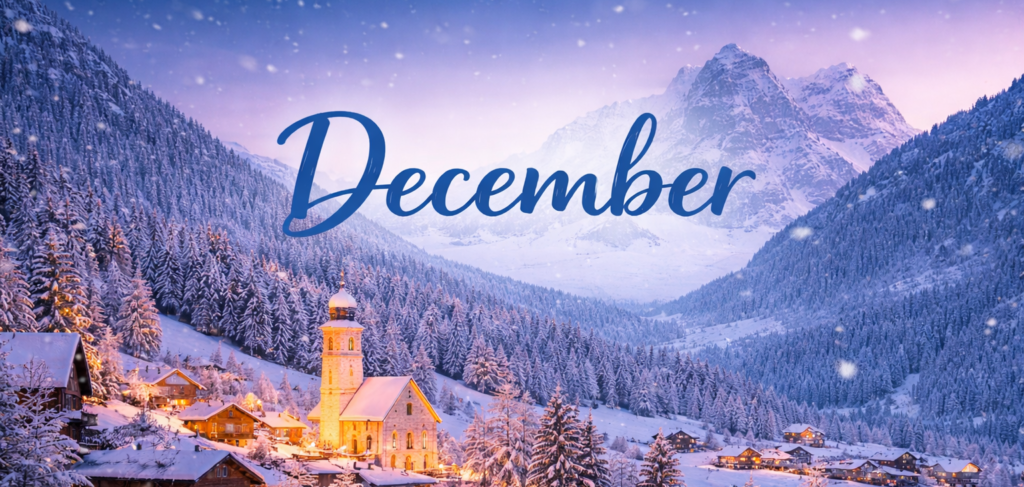
December is the month the year makes its last argument. The northern hemisphere divides between those retreating into the warmth of Christmas markets and those escaping toward the southern summer. The tropics enter their finest season. Patagonia reaches maximum daylight. The Maldives is perfect. The alpine world is at its most deliberate and its most beautiful. The world in December is not winding down — it is operating in two simultaneous registers, and the conscious traveller chooses which one they need rather than defaulting to the one the calendar imposes.
December rewards the decisive. The destinations that peak this month do so because December is genuinely their finest hour — the Austrian Alps at the beginning of the ski season, the Malaysian archipelago in its driest clarity, the Philippine islands between monsoon systems, the Estonian old city in its Christmas market light. The crowd goes where December tells it to. The twelve destinations here are where December is actually best.
Twelve destinations. Twelve versions of the month that most people spend in the same place they were last December.
Choose your December:
- Snow + winter magic: Austria, Switzerland, Estonia
- Warmth + ocean: Maldives, Malaysia, Philippines, Oman
- Southern summer: Chile, Argentina, Croatia
- Festive + cultural: Mexico, UAE
Austria: The Alpine Winter at Its Most Perfect
Best for: skiing, Christmas markets, Vienna New Year, alpine culture Go to: Vienna · Innsbruck · St. Anton am Arlberg Why December: the ski season opens across the Alps, the Christmas markets that define the European festive season are at their most atmospheric, Vienna’s New Year celebrations among the finest in the world
Austria in December is the alpine winter in its most deliberate and most beautiful form — the Christmas markets that the country invented and that the rest of Europe has been reproducing with varying degrees of success filling the squares of Vienna, Salzburg, and Innsbruck with the specific warmth that the combination of mulled wine, handcrafted goods, and medieval architecture produces and that no other context replicates. The Viennese Christmas market tradition dates to the 13th century — the Christkindlmarkt in front of the Rathaus, the market at Schönbrunn Palace, the smaller and more local markets in the inner city’s squares — operating in the specific December light of a city that understands winter as a cultural proposition rather than a meteorological inconvenience.
The ski season opens across the Austrian Alps in December — St. Anton am Arlberg, Kitzbühel, the Arlberg region — the early December snowpack sufficient on the higher slopes for the first runs of the season, the ski resorts in the specific pre-Christmas energy of a season beginning. St. Anton in early December, before the Christmas week crowds that the holiday brings to the most famous resort in the Alps, delivers the mountain infrastructure at full operation with the availability that the peak weeks remove — the lessons bookable, the restaurants reservable, the lifts boardable without the queues that the solstice holiday generates.
Vienna’s New Year — the Silvesterpfad, the outdoor celebration across the first district, the Philharmonic’s New Year Concert broadcast from the Musikverein to 50 countries, the waltz lessons in the streets, the fireworks above the Prater — is the December proposition that makes Austria’s capital the finest New Year destination in Europe. The city has been conducting this celebration with the seriousness of an institution that knows exactly what it is offering and has been offering it continuously since the Habsburg Empire decided that the end of the year required a performance equal to its beginning.
Temperatures: −4–2°C in the Alps · 0–5°C in Vienna · Colder with wind chill throughout
Read the full Austria Travel Guide →
Switzerland: Where the Christmas Season Was Invented
Best for: skiing, Christmas markets, alpine villages, winter photography Go to: Zurich · Zermatt · Verbier Why December: the ski season in full operation, Switzerland’s Christmas markets are the most beautiful in Europe, Zermatt and the Matterhorn in December light, the alpine villages at their most atmospheric
Switzerland in December is the country at the intersection of its two finest propositions — the ski season fully established across the Alps and the Christmas culture that the Swiss, alongside the Austrians and Germans, developed into the template that the entire northern hemisphere has been working from since the 19th century. Zurich’s Christmas market at Bellevue and the Wienachtsdorf in the Hauptbahnhof concourse, Bern’s Waisenhausplatz market, Montreux’s Christmas Market on the shores of Lake Geneva with the Alps reflected in the water — these are the European Christmas markets that the tradition’s finest expression belongs to, and December is the only month they exist.
Zermatt in December — the car-free village at the foot of the Matterhorn, the ski season in full operation from the 360 kilometres of marked runs across the Swiss and Italian sides of the mountain, the specific December light on the Matterhorn that the lower angle of the winter sun produces in the golden colour that the summer’s harsh alpine light doesn’t deliver — is the alpine destination at its most intentional. Zermatt in December is not a ski resort that happens to have a famous mountain above it. It is a mountain community that has been organising itself around the specific proposition of excellence in winter for 150 years. The investment is visible in every aspect of the operation.
Verbier in December — the ski resort above the Val de Bagnes that the British and international ski community discovered in the 1950s and that the Freeride World Tour has built its reputation around for the off-piste terrain above the resort — opens its season in December with the specific energy of a place that operates at the intersection of serious skiing and the social culture that the international clientele has grafted onto the mountain. The run from Mont-Fort at 3,330 metres down to the village at 1,500 metres in December snow, the Matterhorn visible across the valley, is the ski experience that no verbal description improves upon.
Temperatures: −8–0°C in the high Alps · 2–8°C in Zurich · Significantly colder with wind chill at altitude
Read the full Switzerland Travel Guide →
Maldives: The Definition of December
Best for: overwater villas, diving, complete disconnection, luxury Go to: North Malé Atoll · Baa Atoll · South Ari Atoll Why December: the northeast monsoon is fully established, the finest diving conditions of the year, the sea at its calmest and clearest, the ultimate December counterpoint to the northern winter
The Maldives in December is the tropical proposition at its most complete — the northeast monsoon that began in November now fully established, the skies dry and clear, the Indian Ocean calm and transparent to 30 metres in the atolls that the current system serves best. December is the month that the Maldives delivers everything its geography promises — the overwater villa above the water that exists in no other colour anywhere else in the world, the dive sites producing visibility that the wet season reduces to an approximation, the silence that the Indian Ocean provides when nothing is competing with it.
The Christmas week in the Maldives carries the premium that the northern hemisphere’s school holiday produces — the prices at their annual peak, the resorts at their maximum occupancy, the seaplane transfers booked months in advance. The two weeks either side of Christmas — the first two weeks of December and the week between New Year and the January school return — offer identical conditions at meaningfully lower prices and with the specific advantage of fewer children in the overwater pool adjacent to yours.
The Baa Atoll UNESCO Biosphere Reserve in December continues the manta ray season that began in November — the aggregations at Hanifaru Bay operating in the specific current conditions that the northeast monsoon creates, the mantas feeding in the plankton-rich water with the indifferent grace of animals that have been performing this behaviour in this location since before the resort archipelago existed beside it. The dive guides who operate within the biosphere reserve’s regulations carry the knowledge of the mantas’ individual identity — the researchers who study the population have catalogued over 3,000 individual animals by their unique spot patterns — that transforms a dive with manta rays into something closer to a reintroduction.
Temperatures: 26–31°C · Water: 28–29°C · Dry and clear throughout
Read the full Maldives Travel Guide →
Croatia: The Adriatic Winter and Its Christmas Markets
Best for: Dubrovnik Christmas, Split winter culture, Plitvice in snow, Zagreb Christmas market Go to: Dubrovnik · Zagreb · Plitvice Lakes Why December: Zagreb’s Christmas market consistently rated among Europe’s finest, Dubrovnik in its most intimate winter condition, Plitvice Lakes in the first snow, the Croatian coast without the summer density
Croatia in December is the country the summer crowd never sees — the Adriatic coast operating in the winter quiet that makes Dubrovnik most completely itself, the Christmas markets of Zagreb filling the city’s Baroque squares with the warmth that the summer’s 35°C and its tourist density both prevent in different ways. December is the month that Croatia’s non-coastal identity becomes most visible — the capital city’s cultural season, the winter version of the country that 20 million annual summer visitors systematically miss.
Zagreb’s Christmas market — Advent in Zagreb, winner of the Best Christmas Market in Europe award multiple times — fills the Jelačić Square, the Zrinjevac park, and the Strossmayer Promenade with the mulled wine stalls, the handcraft sellers, and the ice skating rink that the Croatian capital operates as the city’s most genuine seasonal expression. Zagreb is not a city that performs its Christmas market for tourists; it is a city that uses the Christmas market as the occasion for the collective outdoor life that the rest of the year’s weather distributes across the seasons. December concentrates it.
Dubrovnik in December — the old city freed from the cruise ship traffic that defines the summer experience, the city walls walkable in the crisp December air without the August crowd, the restaurants and wine bars in the old city operating at the pace that makes Dubrovnik comprehensible rather than managed — is the city that the people who love it most consistently choose. The December sea temperature, at 14–16°C, makes swimming inadvisable. The December light on the limestone, at 10am on a clear winter morning with the Adriatic visible from the walls — that requires no temperature qualification.
Temperatures: 2–8°C in Zagreb · 8–14°C in Dubrovnik · Colder inland
Read the full Croatia Travel Guide →
Mexico: Posadas, Pacific Coast, and the Yucatán in Dry Season
Best for: Pacific coast beaches, Oaxacan Christmas traditions, Yucatán ruins, Mexico City festive season Go to: Puerto Vallarta · Oaxaca · Mérida Why December: the Pacific coast at its finest, Las Posadas Christmas tradition fills the colonial cities with candlelit processions, the Yucatán in peak dry season, Mexico City in its most festive condition
Mexico in December is the country in its most celebratory and its most accessible simultaneously — the dry season established across most of the country, the Pacific coast at the warm clear conditions that make it the finest beach proposition in North America below the Hawaiian price point, and the Las Posadas tradition filling the colonial cities from December 16th through 24th with the candlelit processions and the piñata-breaking and the ponche caliente that the Mexican Christmas has maintained as a living ritual rather than a commercial substitute. The Posadas — the nine-night reenactment of Mary and Joseph seeking shelter in Bethlehem — are conducted in the streets and courtyards of every colonial city in the country, the procession moving from house to house, the lanterns carried through the narrow streets in the specific December darkness that the warm climate makes tolerable in a way the northern hemisphere cannot.
Puerto Vallarta on the Pacific coast in December — the Banderas Bay, the Sierra Madre mountains descending to the water, the old town’s cobblestone streets and the Malecón seafront promenade — sits in the dry season that the Mexican Pacific enjoys from November through April, the sea at 26–28°C, the mountain backdrop dusted with the cool that the altitude delivers without the beach needing to acknowledge it. The humpback whales that winter in Banderas Bay arrive in December — the same population that the Pacific Northwest coast sees in summer returns to the warm Mexican waters from November through March, the whale watching operations running morning departures from the Puerto Vallarta marina in the specific December condition where the sightings begin as the population builds toward the January and February peak.
Oaxaca in December — the city whose culinary and cultural identity the international food community has been excavating with increasing intensity for a decade — is at the intersection of the Posadas tradition and the December market season that the artisan communities of the surrounding valleys conduct with the seriousness of a cultural economy that has been operating since before the Spanish arrived. The Tlacolula market on Sundays, the Teotitlán del Valle wool rug weavers, the Alebrijes carvers of San Martín Tilcajete — Oaxaca in December is the Mexico that rewards the traveller who arrived for more than the beach.
Temperatures: 18–26°C in Oaxaca · 24–30°C in Puerto Vallarta · 26–32°C in the Yucatán
Read the full Mexico Travel Guide →
United Arab Emirates: The Peak Season at Full Power
Best for: Dubai and Abu Dhabi, desert safaris, outdoor life, luxury, cultural contrast Go to: Dubai · Abu Dhabi · Al Ula (cross-border) Why December: the finest month in the Gulf calendar — 22–26°C, the outdoor season fully established, Dubai’s New Year fireworks among the most spectacular in the world, the desert at its most hospitable
The UAE in December is the Gulf state operating at the specific conditions its entire infrastructure was built to deliver — the 22–26°C that makes the outdoor life of a country whose climate permits it for only five months of the year fully accessible, the beach clubs and the desert camps and the architecture tours and the cultural institutions all running simultaneously in the clean winter light that the summer’s heat haze removes from the equation. December is the UAE’s peak month for precisely calibrated reasons: the weather is exactly right, the cultural calendar is full, and the year-end energy that concentrates in the Gulf’s most cosmopolitan city creates an atmosphere that the other eleven months approximate but don’t replicate.
Dubai in December — the downtown area around the Burj Khalifa and the Dubai Fountain in the specific winter clarity that reveals the tower’s full height against a sky that the summer’s haze softens, the Dubai Frame and the Museum of the Future on the Sheikh Zayed Road, the Al Seef heritage district along the Dubai Creek operating in the cool evening air — is the city most completely itself. The New Year’s Eve fireworks from the Burj Khalifa — the annual display that the city produces as its statement of intent, the Burj Khalifa used as the launch platform for a show that the international media broadcasts to audiences that make it consistently the most-watched single fireworks event in the world — is December in Dubai at its most declarative.
The desert camps outside Dubai and Abu Dhabi in December — the Liwa oasis at the edge of the Empty Quarter, the Mleiha archaeological site in Sharjah, the Al Maha Desert Resort’s private reserve within the Dubai Conservation Reserve — deliver the Arabian desert at the specific temperature where sleeping under the stars requires only a light blanket rather than the full insulation the January desert nights occasionally demand. The camel trekking, the falconry, the dune drives in the December warmth with the stars visible from the camp at 11pm — the desert experience that the summer makes lethal and that December makes the finest version of itself.
Temperatures: 18–26°C in Dubai · 17–24°C in Abu Dhabi · Cool desert nights
Read the full UAE Travel Guide →
Malaysia: Borneo and the Peninsula in Perfect Season
Best for: Borneo wildlife, Penang food culture, Langkawi beaches, Cameron Highlands Go to: Sabah · Penang · Langkawi Why December: Sabah’s finest wildlife month, Penang and Langkawi in the dry season, Cameron Highlands at their most accessible, the country between monsoon systems on the west coast
Malaysia in December is the country at its driest and most accessible on the west coast — the northeast monsoon that delivers rain to the east coast of the peninsula leaves the west coast, Penang, and Langkawi in the dry shadow that makes December the finest month for the destinations the majority of Malaysia’s visitors come for. The east coast of the peninsula, including the Perhentian Islands and Tioman, is in the northeast monsoon’s rain season and closed to visitors — a useful reminder that Malaysia’s geography requires the same weather awareness that Sri Lanka and Thailand demand of the traveller who arrives expecting the whole country to be simultaneously in its best season.
Sabah in Malaysian Borneo in December — the Lower Kinabatangan River, the Danum Valley primary rainforest, the Sipadan dive island — is in the specific window that the birding and wildlife community considers the finest month of the year. The hornbills of the Kinabatangan, the eight species that the river corridor supports including the rhinoceros hornbill with its orange and yellow casque that is the state emblem of Sarawak, are in December in the fruiting season behaviour that concentrates them in the riverside trees in the morning light most accessible from the riverboats. The 40-year-old primary forest of the Danum Valley in December, the canopy walkway above the old-growth trees, the wildlife that a forest that has never been cleared supports in the density that secondary and plantation forest cannot — this is the Borneo that the orangutan rehabilitation centres serve as introduction to and that the Danum delivers as the primary text.
Penang in December — George Town’s UNESCO heritage streets, the clan jetties, the Peranakan shophouses with their tilework facades, the hawker centres where the char kway teow and the Penang laksa and the hokkien mee have been served from the same stalls for generations — is in the dry season that the northeast monsoon delivers to the west coast. The December food market at the Esplanade, the Christmas celebrations that George Town’s significant Christian community conducts through the heritage streets in the colonial buildings that the British administration left and the Penangites have maintained — December in Penang is the food and heritage city in its most comfortable and its most festive condition simultaneously.
Temperatures: 26–32°C across the peninsula · 26–31°C in Sabah · Dry on the west coast, wet on the east
Read the full Malaysia Travel Guide →
Philippines: The Islands Between Storms and Celebration
Best for: Palawan, the Visayas, Siargao, Christmas celebrations, island hopping Go to: El Nido · Cebu · Siargao Why December: the dry season established across the Visayas and Palawan, the Christmas season that the Philippines celebrates with more sustained energy than anywhere else in the world, the islands in their finest weather window
The Philippines in December is the island archipelago conducting the longest and most exuberant Christmas season in the world — the ber months beginning in September, the Christmas preparations visible from the moment the calendar turns, and December itself the culmination of a national celebration that the country approaches with the specific collective energy of a Catholic population of 110 million people who have decided that Christmas deserves a four-month runway and a week of Simbang Gabi masses at 4am. The parol — the traditional star-shaped lanterns that Filipino communities have been making since the 17th century — fill the streets of every town and city in December with the specific light that the country uses as its Christmas identity. The Giant Lantern Festival of San Fernando, Pampanga, held in the second week of December, assembles the largest and most technically sophisticated parols in the world — up to five metres in diameter, programmed in light sequences that the community has been developing for decades.
El Nido in Palawan in December — the limestone karst formations of the Bacuit Bay, the island hopping circuits through the lagoons and beaches that consistently rank among the finest in Southeast Asia — sits in the dry season that November began and December maintains at full clarity. The December water visibility in the lagoons, the coral gardens accessible by snorkelling from the tour boats, the sunset from the viewpoint above the El Nido town — these are the Palawan experiences that December delivers in the specific condition where the northeast monsoon’s arrival has cleared the sky without yet bringing the north wind that the January and February seas occasionally produce.
Siargao in December — the Cloud 9 surf break, the island’s coconut palm coastline, the Sugba Lagoon in the northwest — enters the Christmas season with the surfing community of the island at its most concentrated and its most social. The Cloud 9 break in December, the northwest swell consistent, the island operating in the festive register that the Philippine Christmas delivers regardless of the destination — Siargao is the beach and surf version of the country’s most genuine seasonal celebration.
Temperatures: 26–32°C across the Visayas · 25–31°C in Palawan · Dry in the west, transitional in the east
Read the full Philippines Travel Guide →
Estonia: The Baltic Winter at Its Most Magical
Best for: Tallinn Christmas market, winter culture, old city in snow, sauna tradition Go to: Tallinn · Lahemaa · Tartu Why December: Tallinn’s Christmas market is among the oldest in the world, the medieval old city in winter is its most atmospheric condition, the Estonian sauna tradition in winter is the most genuine version available, the Baltic winter darkness the correct context for the culture it produced
Estonia in December is the Baltic winter proposition at its most complete — the medieval UNESCO old city of Tallinn carrying the Christmas market tradition that has operated in the Town Hall Square since 1441, making it one of the oldest continuously running Christmas markets in the world, the specific combination of Gothic architecture, mulled wine, and Estonian handicrafts that the Hanseatic League’s northern trading culture produced and that December most accurately delivers. The Tallinn Christmas market in December, the Town Hall illuminated, the Christmas tree in the square that the Estonians claim to have invented in 1441, the stalls selling Estonian wool goods and gingerbread and kama flour — this is the Christmas market in its most historically grounded form rather than the modern recreation.
The Estonian winter — the darkness that descends fully in December with the sun setting before 3:30pm in Tallinn — is not the obstacle to visiting that the northern hemisphere traveller assumes. It is the context. The Estonian culture of sauna, of candlelight, of preserved foods and dark rye bread and the specific interior life that the long winter produces — these are the cultural expressions that the summer’s white nights reveal as the other face of the same coin. The December visit to Estonia accesses the country at its most genuinely itself rather than at the performance of outdoor life that the midsummer produces for the visitor’s benefit.
The Estonian sauna tradition in December — the smoke sauna of Otepää in the south, the farmhouse saunas of the Lahemaa national park, the urban saunas of Tallinn that the sauna culture maintains as a social institution rather than a hotel amenity — is the most genuinely experienced in winter when the contrast between the birch-steam heat inside and the −10°C and snow outside is at its most instructive. Rolling in the snow after the sauna, the specific sensation that the Estonian winter delivers as a cultural rite of passage, requires the December temperature to be what it claims to be.
Temperatures: −5–2°C in Tallinn · Occasional snow from December · Short days throughout
Read the full Estonia Travel Guide →
Chile: Patagonia Opens and the Southern Summer Begins
Best for: Torres del Paine, Atacama, Santiago, wine valleys, Chiloé Island Go to: Torres del Paine · Atacama · Santiago Why December: the southern hemisphere summer arrives, Torres del Paine fully open for the trekking season, the Atacama in the clear season, Santiago in the summer warmth, the longest days of the Chilean year beginning
Chile in December is the southern hemisphere summer arriving at full power — the December solstice delivering the longest days of the Chilean year, the Patagonian trekking season fully operational, and the country from the Atacama in the north to the Torres del Paine in the south accessible simultaneously in the specific summer condition that the southern hemisphere produces with the same generous logic that the northern summer does, but in December when the northern traveller is least expecting it.
Torres del Paine in December — the W Trek and the O Circuit opening for the season, the Torres themselves emerging from the spring snow in the specific first-summer condition where the lower slopes are in the fresh green of December growth and the granite towers above still carry the remnant white of the Patagonian winter — is the park in its opening chapter. The huts and campsites fill rapidly through December toward the January peak; the first two weeks of December offer the season’s best conditions combined with the booking availability that the January peak removes. The Mirador Las Torres at 5:30am in December, the alpenglow on the three granite towers, the colour moving from pink to orange to gold in the specific fifteen-minute window that the Patagonian dawn produces — this is the Chile image that no photograph taken at 10am delivers and that December’s long days make accessible at an hour when the hut camp has not yet assembled for the day’s departure.
The Atacama Desert in December — the altiplano in the southern summer clarity that the clear season provides at 2,400 metres altitude, the salt flats and the geysers and the lagoons with their flamingo populations operating in the warmest months of the desert year — is the northern counterpoint to Patagonia’s southern drama. The Valle de la Luna at dusk in December, the shadows of the lunar landscape extending across the salt formations, the Andean sunset turning the Licancabur volcano above San Pedro de Atacama the specific copper that the desert’s iron oxide content produces — this is the Atacama in the condition that the winter months’ cold and the summer’s extreme heat bracket between them, and December sits precisely in the most comfortable zone.
Temperatures: 12–22°C in Torres del Paine · 8–24°C in the Atacama · 18–28°C in Santiago
Read the full Chile Travel Guide →
Argentina: Buenos Aires, Iguazú, and the Southern Summer
Best for: Buenos Aires summer, Iguazú Falls, Mendoza wine, Patagonia opening, Salta Go to: Buenos Aires · Iguazú · Mendoza Why December: Buenos Aires in the southern summer at its most vibrant, Iguazú Falls at the high water level that the December rains produce, Mendoza wine country in the summer heat, Patagonia fully open
Argentina in December is the southern hemisphere summer delivering the country in its most energetic and most accessible form — Buenos Aires in the warmth that makes the outdoor life of the Argentine capital the dominant social reality, Iguazú Falls building toward the January and February high water levels that produce the most dramatic version of the falls, and Mendoza’s wine country in the summer heat that the high-altitude Andean vineyards convert into the Malbec and Torrontés that Argentina has built its international wine reputation on. December in Argentina is the country most completely itself — the culture, the landscape, and the weather all operating in the register that the Argentine character was produced by.
Buenos Aires in December — the Palermo neighbourhood’s jacaranda trees in their final flowering before the summer heat ends the blossom, the Sunday market of San Telmo in the 28–32°C warmth that makes the cobblestone streets the correct outdoor extension of the galleries and antique shops lining them, the outdoor milonga at the La Glorieta pavilion in the Belgrano park where the tango dancers who are not performing for tourists practice on Sunday evenings — is the Argentine capital operating in its summer identity. The steak dinner that begins at 10pm and the conversation that extends past midnight, the summer social calendar of a city where the cultural life intensifies in December rather than retreating for a holiday, the Costanera Sur ecological reserve along the Río de la Plata at dawn when the Buenos Aires skyline is visible across the water and the birdlife of the reserve’s wetlands is most active — December Buenos Aires is the city available to the visitor who arrives without the convention of the northern hemisphere’s December indoors.
Iguazú Falls in December — the 275 individual falls across the 2.7-kilometre width of the Iguazú River at the border between Argentina and Brazil, the Devil’s Throat U-shaped gorge receiving the main volume of the river in the sustained thunder that Roosevelt’s wife Eleanor described, on her 1944 visit, as making Niagara look like a kitchen faucet — is building toward the January and February high water levels. December delivers Iguazú at the transitional volume where the dry season’s receded level and the wet season’s maximum combine in a flow that is already extraordinary and that the December rain is in the process of making more so. The Argentine side of the falls, the lower circuit and the upper circuit above the gorge, the catwalks extending over the Devil’s Throat — December is Iguazú with the full dramatic intention of the geography visible and the crowd at one month’s remove from its annual peak.
Temperatures: 25–33°C in Buenos Aires · 26–32°C at Iguazú · 22–32°C in Mendoza · 8–20°C in Patagonia
Read the full Argentina Travel Guide →
Oman: The Arabian Peninsula at Its Most Generous
Best for: Muscat, wadis, Wahiba Sands desert, Musandam fjords, frankincense trail Go to: Muscat · Wahiba Sands · Musandam Why December: the finest month in the Omani calendar — the temperatures at their most comfortable, the wadis accessible, the desert perfectly hospitable, Muscat in the winter clarity that the summer heat removes
Oman in December is the Arabian Peninsula destination at its single most accessible and most complete — the temperatures that make the country’s outdoor landscape its primary offering sitting in the 20–26°C window that converts the wadis, the desert camps, the coastal hiking trails, and the frankincense road of the Dhofar region from weather-managed experiences into fully available ones. December is the month that Oman’s extraordinary geography — the Hajar Mountains, the wadis, the Wahiba Sands, the Musandam fjords, the Dhofar frankincense groves — becomes accessible across a full day without the thermal calculation that the rest of the year requires.
Wadi Shab in December — the canyon accessible by short boat crossing then a 45-minute walk through the gorge where the water runs clear green between limestone walls to the cave swimming hole at the end — is at the December water level that makes the swim through the narrow rock opening into the cavern’s interior the specific surprise of geography revealing itself. The wadi walk in December morning light, the canyon walls catching the low-angle winter sun that the high summer overhead light doesn’t produce, is the Oman experience that the country’s dramatic geology promises and that December most reliably delivers in its most comfortable form.
The Wahiba Sands in December — the 160-kilometre dune sea that the Bedouin communities of the eastern region have navigated for generations, the overnight camp at the base of the high dunes — delivers the desert experience in the specific December condition where the days are warm enough for the dune walks that the temperature makes active rather than endured, and the nights are cold enough for the star viewing that the Arabian Peninsula’s low humidity and complete absence of light pollution produces in the quantities that the urban-dwelling visitor finds genuinely overwhelming. The Milky Way over the Wahiba Sands from the camp at midnight in December is the specific Arabian night that the frankincense trade’s ancient caravans navigated by and that the December temperature makes the reason to stay awake rather than retreat inside.
Muscat in December — the low-rise white-painted capital between the Hajar Mountains and the Gulf of Oman, the Sultan Qaboos Grand Mosque with its 50-metre minaret and the hand-knotted carpet that was the largest in the world until Iran produced a larger one in 2007, the Mutrah Souk’s frankincense and silver and the corridor of trading culture that the port has maintained since the ancient maritime routes made Oman the most connected trading nation in the Arabian world — is in December at the temperature where the outdoor life of the souk, the corniche, and the old quarter is fully accessible across the whole day.
Temperatures: 18–26°C in Muscat · 15–24°C in the mountains · Cool desert nights
Read the full Oman Travel Guide →

Beyondia
Trusted Travel CompanionReal digital nomad. I travel. I learn. I grow.
What about you? Where are you going?