GoBeyondia Atlas 🗺️ East-Asia Oceania 🗾
Mongolia: Where nomads who owned nothing that could not be packed onto a horse built the largest contiguous land empire in human history — twelve million square miles from the Sea of Japan to Eastern Europe, from Siberia to the Indian subcontinent — and created the first international postal system, guaranteed religious freedom centuries before the Enlightenment, reopened the Silk Road under a peace so stable that a young woman could walk from Korea to Hungary carrying a pot of gold on her head without being harmed, as the saying went — and then the empire dissolved, the khanates fractured, the capital at Karakorum was abandoned, and the descendants of the people who connected the entire known world returned to the steppe where they still live today at a density of approximately two people per square kilometer, making Mongolia the most sparsely populated sovereign state on earth — because Mongolia understood something the rest of the world still hasn’t: the point of connection was never to stay.
Mongolia in 30 Seconds
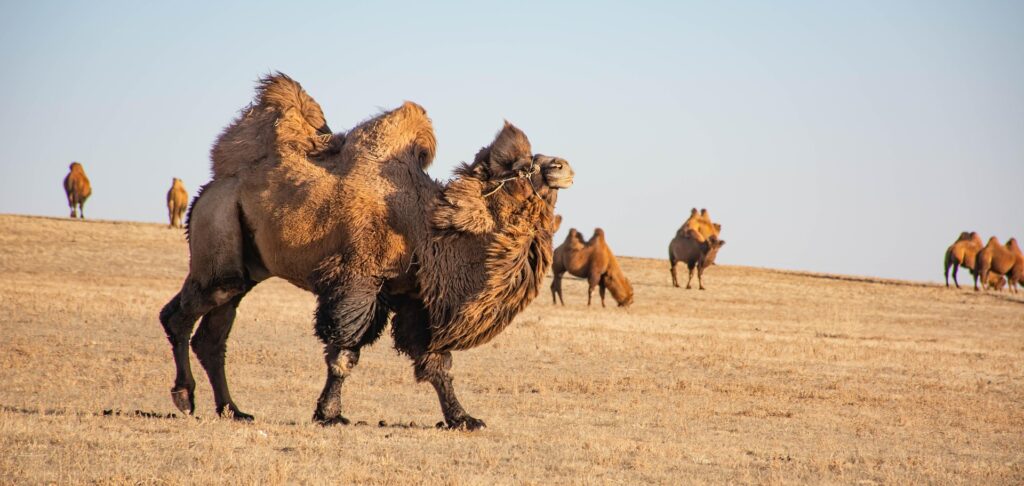
A landlocked country between Russia and China, larger than France, Spain, Germany, and Belgium combined, with a population of roughly three and a half million — fewer people than Brooklyn. Livestock outnumber humans by roughly twelve to one. Approximately a quarter of the population still lives as nomadic or semi-nomadic herders, migrating seasonally with sheep, goats, horses, yaks, and camels across grassland steppe that stretches to the horizon without a single fence. The traditional dwelling is the ger — a portable felt tent that can be assembled in an hour, disassembled in less, and carried by camel or truck to the next pasture. You can knock on the door of any ger in the countryside and be given salty milk tea, a hot meal, and a place to sleep. This is not a tourism initiative. It is a survival protocol encoded into culture: when the nearest neighbor is a day’s ride away, hospitality is infrastructure. In 1206, a man named Temüjin — who had been abandoned by his tribe as a child, survived by foraging, and killed his half-brother over food — was proclaimed Genghis Khan at a great assembly on the steppe. Over the next two decades, he and his successors built the largest contiguous land empire the world has ever seen. The Mongol Empire at its peak controlled territory from Korea to Poland, from Vietnam to Persia. The Yam, or Örtöö, was the postal relay system that made this possible — roughly fourteen hundred stations positioned every twenty to thirty miles, using fifty thousand horses, where a rider could hand a message to the next rider or swap horses and continue, covering two hundred to three hundred kilometers per day. When the Great Khan died in Karakorum, the news reached Mongol forces in Central Europe within four to six weeks. Genghis Khan abolished inherited aristocratic titles, banned the kidnapping and sale of women, forbade the enslavement of any Mongol, imposed a census, granted diplomatic immunity to foreign ambassadors, and ordered religious freedom — shamanism, Buddhism, Christianity, and Islam all practiced freely across the empire. He promoted people by competence, not bloodline. Ögedei Khan, his successor, paid merchants double or triple their asking price to encourage trade. Marco Polo traveled the Yam in 1274 and was astonished to find paper money — completely unknown in medieval Europe. The empire fractured after 1260 into four khanates and eventually dissolved. Mongolia fell under Qing Chinese control, then Soviet influence, then emerged as a democracy in 1990. Today, half the population lives in Ulaanbaatar, the coldest capital city on earth. The other half lives across one point five million square kilometers of steppe, desert, and mountain. You can drive for hours and encounter nothing man-made.
Evoke — Why You Visit Mongolia
You come to Mongolia because you have been building something — a company, a network, a system of connections — and you have confused the connections with the infrastructure. You think the network requires permanent structures. Mongolia will show you that the greatest network ever built was operated by people who lived in tents. The Mongol Empire did not succeed because it held territory. It succeeded because it moved through it. The Yam was not a system of buildings. It was a system of relationships — each station a node, each rider a link, each horse a replaceable component in a chain that valued speed over permanence. The empire itself was a network that happened to resemble a state. When it dissolved, the network dissolved with it, because the network was never the point. The connection was the point. Genghis Khan came from nothing. Abandoned. Starving. A fratricide. He built the largest empire in history not by accumulating things but by understanding that power moves through systems, not into structures. He abolished aristocratic titles because hereditary power creates bottlenecks. He promoted by competence because networks optimize for throughput, not status. He guaranteed religious freedom because ideological uniformity creates friction. Every design decision in the Mongol Empire was a network design decision — minimize latency, maximize flow, remove obstacles to transmission. And when the network could no longer be maintained, the Mongols did what nomads do. They went home. You come because you have been pouring resources into headquarters and infrastructure and branding and permanence, and the thing that actually matters — the connection between the nodes — is dying. Mongolia will remind you that the greatest empire in history was run from a tent.
Explore — How You Experience Mongolia
Fly into Ulaanbaatar and feel the paradox: half the country in one city, the coldest capital on earth, a skyline of Soviet-era apartment blocks and modern glass towers surrounded by expanding ger districts where sixty percent of the city’s residents live in the same portable dwellings their ancestors carried across the steppe. Then leave the city and drive. The road may or may not exist. Mongolia has long stretches where navigation means following tire tracks across open grassland. The steppe is not empty. It is full — of grass, sky, wind, horses, and the silence that occurs when there is nothing between you and the horizon in any direction. Visit a nomadic family and sit inside their ger — the door always facing south, the stove in the center, the arrangement of objects following a spatial logic that has not changed in centuries. Accept the salty milk tea. Eat the dried curd. Understand that everything in this dwelling can be packed, moved, and reassembled by tomorrow, and that this is not poverty — it is a design philosophy. The ger is the original minimum viable product: shelter, warmth, community, portability, and a door that faces the same direction everywhere on the steppe so that a stranger arriving at any ger in Mongolia already knows which way to enter. Drive to the ancient capital of Karakorum — five hours from Ulaanbaatar — and find almost nothing. The capital of the largest contiguous empire in history is a field. Erdene Zuu Monastery, built from the ruins of the city, stands nearby. The empire that connected Korea to Hungary left behind a monastery and a field. The infrastructure was never the point. The movement was the point.
Evolve — Who You Become in Mongolia
You leave Mongolia understanding that scale and permanence are not the same thing. The Mongol Empire covered twelve million square miles and lasted, in its unified form, roughly fifty-four years. The ger has covered the same steppe for centuries and is still standing — or rather, still moving, which is how it survives. Genghis Khan built a postal system of fourteen hundred stations that transmitted information at three hundred kilometers per day using horses. Today, Mongolian herders have satellite dishes on their gers and solar panels charging phones that connect to the same network principle — nodes, links, minimal infrastructure, maximum reach. The technology changed. The architecture didn’t. You come home and look at the thing you built — the company, the platform, the organization — and ask yourself whether you built a network or a monument. Whether the resources went into connections or into headquarters. Whether the value lives in the nodes or in the building that houses them. Mongolia’s answer is clear: the capital is a field. The empire is a memory. The ger is still moving. The hospitality protocol — knock on any door, receive tea — still functions at two people per square kilometer, across one point five million square kilometers of steppe, without a single app or platform or subscription, because the network was never the infrastructure. The network was always the people. And the people are still there. Moving. As they always have. Packing the tent, loading the horse, reading the grass, heading toward the next pasture, which is the next pasture, which is the next pasture, which is the point.
Your practical guide to Mongolia starts bellow 👇
🕰️ Mongolia Historical Backdrop
Mongolia’s history is a legendary epic of movement and monumental impact. In the 13th century, under the leadership of Genghis Khan, the Mongol tribes unified to create the largest contiguous land empire in human history, bridging the East and West and facilitating the first great era of global trade. Its story is told in the ancient ruins of Karakorum, the Buddhist monasteries that survived the 20th-century Soviet era, and the resilient nomadic traditions that have remained largely unchanged for millennia. Following a peaceful democratic revolution in 1990, Mongolia has emerged as a vibrant nation that fiercely protects its ancestral roots while embracing a modern, globalized future. It is a land where the spirit of the horse and the freedom of the open plains define a culture of unparalleled resilience and hospitality.
🌟 Mongolia Local Experiences
Beyond the capital’s bustle, discover Mongolia’s soul in the ritual of the Nomadic Stay—living in a traditional Ger (yurt) and learning the seasonal rhythms of herding sheep, goats, and camels. Experience the profound “Acoustic Stillness” of the Gobi desert at night, the exhilarating energy of the Naadam Festival’s horse races, or the simple joy of sharing a bowl of Suutei Tsai (salted milk tea) with a nomadic family. Whether it’s witnessing the ancient art of golden eagle hunting in the Altai or listening to the haunting, otherworldly beauty of Khöömii (throat singing), these moments reveal a nation that finds richness in connection, freedom, and a deep respect for the natural world.
🌄 Mongolia Natural Wonders
- The Gobi Desert: A diverse landscape of towering sand dunes (Khongoryn Els), red flaming cliffs rich in dinosaur fossils, and the ice-filled canyons of Yolyn Am.
- Lake Khuvsgul: Known as the “Blue Pearl of Mongolia,” a pristine alpine lake containing 1% of the world’s fresh water, surrounded by larch forests and reindeer herder territories.
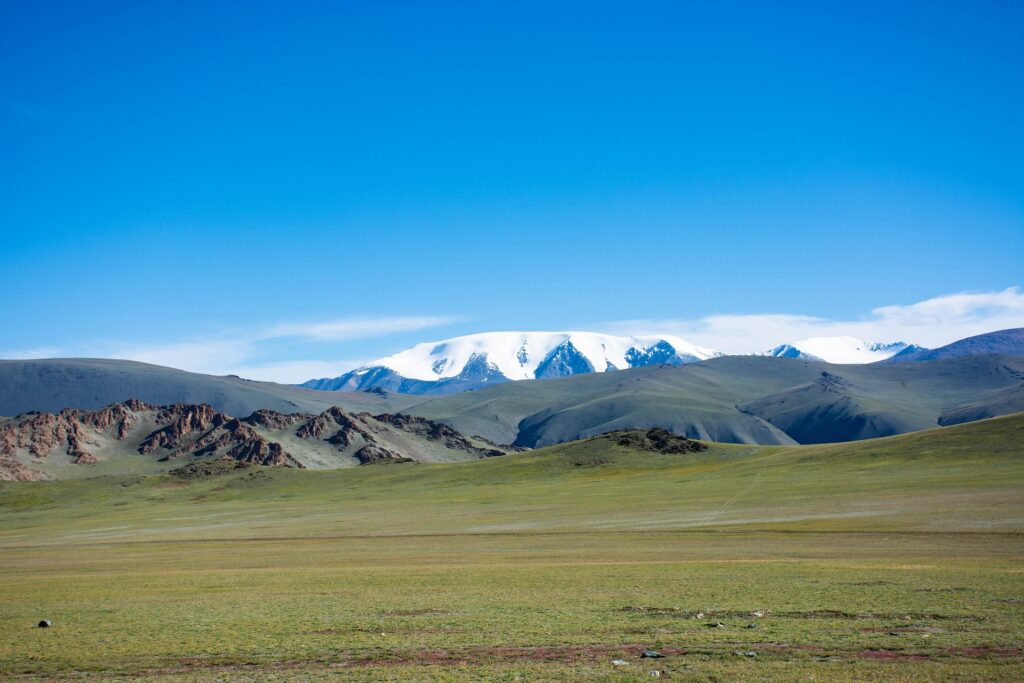
- The Altai Mountains: Dramatic, snow-capped peaks in western Mongolia, home to glaciers and the traditional Kazakh eagle hunters.
- The Orkhon Valley: A UNESCO-listed cultural landscape featuring the Orkhon River, spectacular waterfalls, and the historic heartland of nomadic empires.
- The Singing Dunes (Khongoryn Els): Massive dunes that emit a low-frequency hum when the wind moves the sand.
- Terelj National Park: Famous for its unique rock formations, including “Turtle Rock,” and its lush alpine scenery near the capital.
🏙️ Mongolia Must-See Cities & Regions
- Ulaanbaatar: (Capital) A high-energy hub where modern glass skyscrapers stand alongside Soviet-era apartments and traditional Ger districts. (Dynamic, Urban, Cultural)
- Karakorum (Kharkhorin): The 13th-century capital of the Mongol Empire, home to the magnificent Erdene Zuu Monastery, the first Buddhist monastery in Mongolia. (Historic, Spiritual, Archaeological)
- The South Gobi: The gateway to the desert’s most iconic dunes and the legendary “Flaming Cliffs” of Bayanzag. (Vast, Otherworldly, Ancient)
- Bayan-Ölgii: The mountainous far west, predominantly inhabited by Kazakhs and famous for the Golden Eagle Festival. (Rugged, Multi-ethnic, Adventurous)
- Tsetserleg: One of the most beautiful provincial capitals, nestled in a mountain valley with historic temples and nearby hot springs. (Picturesque, Relaxed, Highland)
🏞️ Mongolia National Parks & Nature Reserves
Managed with a focus on protecting one of the world’s last intact wilderness areas by the Ministry of Environment and Tourism.
- Gorkhi-Terelj National Park: A popular destination for hiking, horse riding, and rock climbing.
- Khustai National Park: Home to the world’s only remaining species of wild horse, the Takhi (Przewalski’s horse).
- Gobi Gurvan Saikhan National Park: The largest national park in Mongolia, encompassing the Yolyn Am ice gorge and the Khongor sand dunes.
🏛️ UNESCO World Heritage Sites
- Orkhon Valley Cultural Landscape — Illustrating the evolution of nomadic pastoral traditions over two millennia.
- Petroglyphic Complexes of the Mongolian Altai — A vast collection of rock carvings documenting the history of culture in Northern Asia.
- Great Burkhan Khaldun Mountain and its Surrounding Sacred Landscape — Believed to be the birthplace and burial ground of Genghis Khan.
- Landscapes of Dauria — A shared site with Russia protecting the unique steppe ecosystem.
- For a complete list, visit the UNESCO Mongolia Portal.
🖼️ Mongolia Museums & Cultural Sites
- National Museum of Mongolia (Ulaanbaatar): Detailing the history of the country from the Stone Age to the modern day.
- Choijin Lama Temple Museum: A stunning complex of Buddhist temples in downtown Ulaanbaatar that escaped destruction in the 1930s.
- Zanabazar Museum of Fine Arts: Dedicated to the works of the “Michelangelo of Asia,” G. Zanabazar, and other Mongolian masters.
- Genghis Khan Statue Complex (Tsonjin Boldog): A 40-meter tall stainless steel statue of the Great Khan on horseback.
🎉 Mongolia Festivals & Celebrations
- Naadam Festival: (July 11-13) The “Three Games of Men”—wrestling, horse racing, and archery. A spectacular display of national pride and tradition.
- Golden Eagle Festival: (October) Held in Bayan-Ölgii, where Kazakh eagle hunters showcase the skill of their birds.
- Tsagaan Sar (Lunar New Year): (Jan/Feb) The most important family holiday, marked by visits, traditional food (Buuz), and the honoring of elders.
- Ice Festival (Lake Khuvsgul): (March) A winter celebration featuring ice sculptures, horse-drawn sleds, and shamanic rituals on the frozen lake.
🧽 How to Arrive
- ✈️ By Air
- Chinggis Khaan International Airport (UBN) is the primary gateway, located about 50km from Ulaanbaatar.
- Airlines: MIAT Mongolian Airlines (Flag carrier) and carriers like Turkish Airlines, Korean Air, and Air China connect Mongolia to the world.
- 🚆 By Rail
- The Trans-Mongolian Railway connects Ulaanbaatar to Moscow, Russia and Beijing, China, offering one of the world’s most epic train journeys.
- 🚗 By Road
- Overland entry is possible from Russia (Altanbulag) and China (Zamiin-Uud). Self-driving requires significant preparation and specialized permits.
📶 Stay Connected
- SIM Cards: Major providers are Unitel, Mobicom, and G-Mobile.
- Where to buy: Kiosks are abundant at UBN Airport and in Ulaanbaatar city center. Passport registration is standard.
- Connectivity: High-speed 4G/5G is reliable in Ulaanbaatar and provincial centers, but expect “Zero-Signal” status in the vast countryside—the ultimate digital detox.
- eSIM: Supported by Mobicom and Unitel; also available via international providers like Airalo.
🏨 Where to Stay
Mongolia offers a choice between international luxury in the capital and immersive nomadic living in the countryside.
- Shangri-La Ulaanbaatar: The pinnacle of five-star luxury in the heart of the capital.
- Three Camel Lodge (Gobi): A world-renowned luxury eco-lodge built according to traditional nomadic architecture.
- HS Khaan Resort Hotel: Offering high-end Ger suites with panoramic views of the steppe near the capital.
- Community Ger Camps: Numerous camps across the country offer a comfortable way to experience nomadic life with traditional meals and amenities.
⛳ Unique Finds
- Dinosaur Fossils: Visit the “Flaming Cliffs” where the first dinosaur eggs were discovered in the 1920s.
- Fermented Mare’s Milk (Airag): Try the traditional nomadic beverage, a source of pride and nutrition on the steppe.
- Cashmere Shopping: Mongolia produces some of the world’s finest cashmere; visit the Gobi Cashmere outlet in Ulaanbaatar for local prices.
- Shamanic Consultations: Witness the ancient practice of Tengerism, which remains a deep-rooted spiritual force in Mongolian life.
🤝 Mongolia Cultural Guidance
- Ger Etiquette: Always enter a Ger with your left foot first. Do not step on the threshold. Move in a clockwise direction inside the tent.
- Hospitality: If offered food or drink, it is polite to accept it with your right hand and take at least a small taste.
- Respect for the Fire: The hearth is sacred. Never throw trash or water into the fire inside a Ger.
- Basic Phrases:
- Hello: “Sain baina uu?” (Formal) / “Sain uu?” (Informal)
- Thank you: “Bayarlalaa”
- How are you?: “Sonin saihan yu baina?”
- Everything is good: “Sain!”
🛂 Mongolia Entry & Visa Requirements
- Visa-Free: Citizens of over 60 countries (including US, UK, Canada, and many EU states) can enter visa-free for tourism for up to 30 days.
- E-Visa: Efficient digital process for many other nationalities via the official portal.
- Official Source: Consult the Mongolian Immigration Agency.
💰 Practical Essentials
- Currency: Mongolian Tughrik (MNT). Cash is essential in the countryside; credit cards are widely accepted in Ulaanbaatar.
- Electricity: Type C and F (European round pins). Voltage is 220V.
- Safety: Generally very safe. Standard urban vigilance is advised in Ulaanbaatar against pickpocketing in crowded markets.
- Climate: Extreme continental. Best visited from June to September. July is the peak month for weather and festivals.
✨ Bonus Tip: The Art of Absence
To truly embrace Mongolia, you must learn to “Watch the Horizon.” Most travelers spend their lives surrounded by vertical boundaries—buildings, walls, and screens. In Mongolia, the world is horizontal. Spend a day sitting in the middle of the steppe with nothing in your field of vision but the grass and the sky. It is in this absolute absence of distraction—this “Great Emptiness”—that your own internal noise finally begins to settle, revealing a transformative sense of scale and clarity that only the wild can provide.
🔗 Featured Links
- Official Tourism: Visit Mongolia.
- Railway Tickets: UBTZ (Mongolian Railway).

Beyondia
Trusted Travel CompanionReal digital nomad. I travel. I learn. I grow.
What about you? Where are you going?