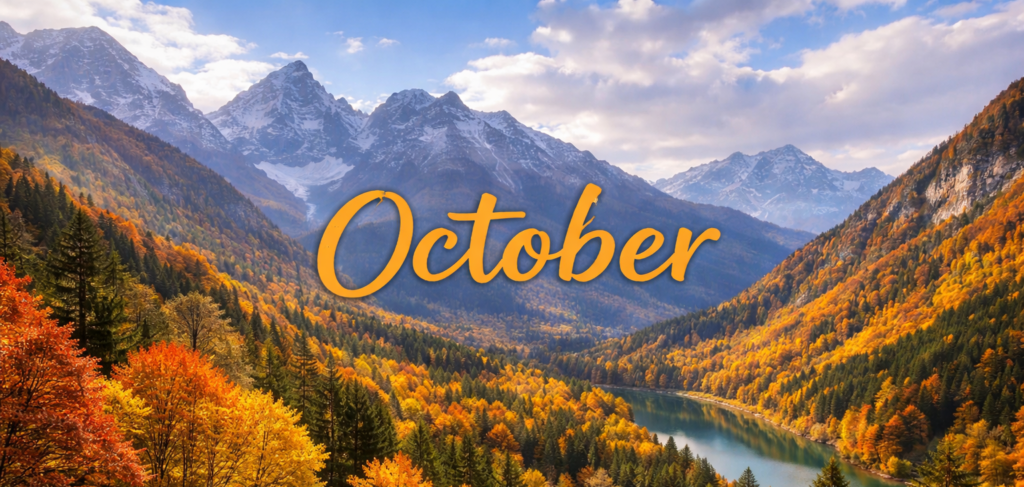
October is the month the world shifts register. The summer is definitively over in the northern hemisphere and nobody is pretending otherwise. The light changes from the overhead clarity of summer to something lower, warmer, and more considered — the golden hour that October produces lasts most of the day rather than the twenty minutes that June allows. In Asia, the monsoon is retreating and the continent is reopening. In the Himalayas, the autumn trekking season is at its peak. In the Middle East, the desert has cooled to its most hospitable. The crowd that August assembled has dispersed. The destinations are, briefly, almost themselves again.
October is the month that separates the traveller who plans from the traveller who reacts. The autumn window is real, it is finite, and the destinations that peak in October do so with a specificity that no other month replicates. Japan’s forests are turning. Nepal’s peaks are at their clearest. Jordan’s desert is walkable all day. The window is open. It closes in November.
Twelve destinations. Twelve arguments for the month that most people spend watching the leaves change from a window.
Choose your October:
- Autumn + colour: Japan, Georgia, Nepal
- Desert + ancient: Morocco, Jordan, Turkey
- Tropical + warm: Thailand, Vietnam, Sri Lanka
- Mountain + spiritual: Bhutan, India, Peru
Japan: The Forests on Fire
Best for: autumn foliage, temple gardens, onsen towns, food culture Go to: Kyoto · Nikko · Hokkaido Why October: koyo — the Japanese autumn foliage — begins in Hokkaido in early October and moves south through the month, the temple gardens and mountain forests producing the red, gold, and amber that the spring cherry blossom season mirrors in a different palette
Japan in October is the country’s second great seasonal spectacle — the koyo, the autumn foliage, moving south from Hokkaido through Honshu across the month in the colour wave that the Japanese track with the same meteorological seriousness they apply to the spring cherry blossom front. Where the sakura delivers pink and white in a brief two-week window, the koyo delivers red, gold, orange, and amber across six weeks — the maples, the ginkgos, the Japanese zelkova trees conducting the annual colour display that the temple gardens of Kyoto and Nikko were designed, consciously, to frame.
Hokkaido in early October — the Daisetsuzan National Park’s highland plateau, the first in Japan to turn — carries the colour that the rest of the country will receive in November. The beech and maple forests above Sounkyo Gorge in early October, the canyon walls in the specific northern Japan autumn palette that the lower latitudes’ softer colour doesn’t replicate, are the October destination for those who want the koyo at its most saturated without the Kyoto crowd.
Kyoto in late October — Eikan-dō’s maple garden, the Tōfuku-ji garden’s sea of turning maples above the Tsūten bridge, the Philosopher’s Path under the ginkgo canopy — delivers the autumn version of the city’s seasonal identity at the beginning of the colour turn rather than the peak that November reaches. Late October Kyoto is the considered choice: the colour building rather than at maximum, the crowds that the peak koyo in early November brings not yet assembled, the temple gardens accessible at the pace the architecture was designed for.
Temperatures: 10–18°C in Kyoto · 5–14°C in Hokkaido · Cool evenings throughout
Read the full Japan Travel Guide →
Morocco: The Desert Window Opens
Best for: Sahara, imperial cities, Atlas trekking, medina culture Go to: Marrakech · Fes · Merzouga Why October: the finest month in the Moroccan calendar — the summer heat gone, the tourist volumes below spring peak, the Sahara cool enough for full immersion, the medinas returned to their natural rhythm
Morocco in October is the country at its annual best — the convergence of ideal temperatures, retreating crowds, and the Sahara entering the season that the desert’s most devoted visitors specifically plan around. The summer heat that makes Marrakech oppressive from June through August has retreated to the 20–26°C that returns the city to full navigability. The Jemaa el-Fna square in Marrakech in October evening — the food stalls assembling at dusk, the storytellers and musicians and snake charmers operating the tradition that UNESCO designated a Masterpiece of Oral and Intangible Heritage, the square filling with the specific energy that the summer’s heat reduces to a late-night-only proposition — is the Morocco that the travel writing has been attempting to describe for a century and that October delivers at its most complete.
Fes el-Bali in October — the labyrinthine medina that contains the world’s oldest university, the leather tanneries that the Phoenician dyeing method has operated since the 11th century, the 9,000 streets that the GPS cannot map and the local guides navigate from memory — is at the temperature where the full-day exploration that the medieval city deserves becomes possible. October in Fes is the final month of the low-season window that September opened — the spring crowds haven’t arrived yet and the summer’s deterrent heat is gone. The narrow streets in October morning light, the smell of cedar and cumin and the tannery’s natural dyes, the sound of the craftspeople in the souks — this is the Fes that rewards the traveller who arrived before the November rain season.
The Sahara at Merzouga in October is the desert entering its finest season — the nights cooling to the temperatures that make the stars extraordinary, the days warm but not the extreme heat that the summer makes. The camel trek at dawn in October, the dunes in the low October light with the shadows long and the colours saturated — this is the Sahara at the specific intersection of warmth and clarity that the summer exceeds and the winter replaces with cold.
Temperatures: 18–26°C in Marrakech · 15–23°C in Fes · Cool nights in the Sahara
Read the full Morocco Travel Guide →
Jordan: The Desert Kingdom at Its Peak
Best for: Petra, Wadi Rum, Dead Sea, Jerash, Jordan Trail trekking Go to: Petra · Wadi Rum · Jerash Why October: the finest month in the Jordanian calendar — the summer heat gone, the desert accessible all day, Petra in its most beautiful light, the Jordan Trail’s prime trekking season
Jordan in October is the destination operating at its annual maximum — the summer heat that compresses Petra into early morning visits and makes Wadi Rum unnavigable at midday has retreated, the desert temperatures settling into the 18–25°C window that makes the outdoor Jordan — the ancient city, the desert camp, the canyon hike, the Dead Sea float — fully accessible across a complete day. Jordan receives its highest visitor numbers in October and November for precisely this reason: the destination is genuinely at its best and experienced travellers have learned to arrive accordingly.
Petra in October — the rose-red Nabataean city carved into the sandstone cliffs of the Wadi Musa valley — is at its most accessible and its most beautiful simultaneously. The walk through the Siq, the kilometre-long slot canyon that conceals the city until the Treasury appears suddenly at the end of the narrow passage, in October carries the colour that the low-angle autumn light extracts from the sandstone walls — the pinks and reds and purples that the overhead summer sun flattens to a uniform rosy tone and that the October afternoon light differentiates into the geological layers that the Nabataean architects used deliberately in their carved facades. The Treasury at 4pm in October, the shadows moving across the carved columns, is the image that every Petra photograph has been working toward.
Wadi Rum in October — the protected desert wilderness of red sand and dramatic sandstone formations that T.E. Lawrence described as vast, echoing, and God-like — is at the specific desert temperature that makes the overnight camp the centrepiece of the experience rather than the thermal endurance test that August produces. The Bedouin camp dinner under a sky that the Wadi Rum desert’s complete absence of light pollution delivers as a planetarium ceiling — the Milky Way visible with the naked eye, the silence total, the temperature dropping to 10°C after midnight — is the Jordan that the ancient history daytime justifies staying for.
Temperatures: 15–25°C in Petra · 12–24°C in Wadi Rum · 20–28°C at the Dead Sea
Read the full Jordan Travel Guide →
Thailand: The Kingdom Reawakens
Best for: beaches, temples, jungle, islands, cultural festivals Go to: Chiang Mai · Koh Lanta · Bangkok Why October: the monsoon retreating, Chiang Mai’s Yi Peng lantern festival in October or November, the Andaman coast reopening, Chiang Mai at its most culturally charged
Thailand in October sits at the end of the monsoon season that runs from June through October across most of the country — the rain retreating, the landscapes at their most lush from the season’s rainfall, and the Andaman coast beginning the dry season that makes Koh Lanta, Krabi, and the Phi Phi Islands most accessible from November through April. October in Thailand is the transition month — the country in the specific state of reopening that rewards the traveller who arrives slightly ahead of the November crowd that the dry season’s full establishment brings.
Chiang Mai in October carries the cultural events that make the northern city the most distinctive destination in Thailand beyond the southern beaches. The Yi Peng lantern festival — the release of thousands of paper lanterns into the night sky over the city, the lanterns rising above the moats and temples of the old city in the specific image that represents Thailand’s festival culture most immediately — falls in October or November depending on the lunar calendar. The sky above Chiang Mai during the lantern release, the lights ascending in the warm air above the Ping River, is the Thailand image that the photography community considers the finest annual event in the country. The timing requires checking the lunar calendar annually. The result is worth the planning.
Bangkok in October — the city of 10 million at the end of the rainy season, the outdoor markets and canal culture returning to full operation, the temples in the specific post-rain clarity that the monsoon’s cleaning delivers — is the Thai capital at the intersection of its cultural richness and its most comfortable temperature. The Grand Palace and Wat Pho in October, the Chao Phraya river at the post-monsoon level that makes the ferry rides between the riverside temples the finest transport in the city — Bangkok in October is the city operating on its own terms rather than the tourist industry’s simplified version.
Temperatures: 22–32°C in Bangkok · 18–28°C in Chiang Mai
Read the full Thailand Travel Guide →
Vietnam: Rice Terraces and the Northern Highlands at Peak Colour
Best for: northern highlands rice harvest, Hoi An, Ha Long Bay, Central Highlands Go to: Ha Giang · Hoi An · Hue Why October: the rice terraces of the northern highlands at peak harvest colour — the most photographed landscape in Vietnam, Ha Long Bay in the autumn clarity, central coast in its final dry window
Vietnam in October is the northern highlands at the annual moment that the travel photography community assembles to document — the rice terraces of Ha Giang province, Sapa, and the Mu Cang Chai valley in the harvest season that turns the carved hillside paddies from the green of the growing season to the gold of the mature rice, the colour change moving across the terraces as the harvest progresses down the elevation bands over the course of the month. The terraces of Hoàng Su Phì in Ha Giang, the Trung Khánh rice fields of Cao Bằng, the Mu Cang Chai valley — these are the landscapes that the drone photography of Vietnam has made the country’s most internationally recognisable image, and October is the month they are at their most vivid.
Ha Long Bay in October — the 1,969 limestone karsts rising from the Gulf of Tonkin waters, the UNESCO World Heritage site that Vietnam’s tourism industry has been managing the tension between protection and access since the 1990s — sits in the autumn clarity that the summer months’ humidity softens. The overnight cruise between the karsts in October, the morning mist that the season produces rising between the formations at dawn, the kayaking through the caves and lagoons enclosed by the limestone — Ha Long Bay in October carries the atmospheric quality that the summer’s heat haze reduces and that the winter’s cold mist replaces with a different but equally compelling version.
The central coast — Hoi An, Da Nang, Hue — in October sits at the beginning of the northeast monsoon that will bring rain to the region from November through January. The final weeks of October are the last reliable window for the central coast’s dry season, the ancient trading town of Hoi An in the October light that the approaching season softens — the travel community’s October recommendation for Vietnam consistently points north and central simultaneously.
Temperatures: 16–24°C in the northern highlands · 22–28°C in the central coast · Transitional weather throughout
Read the full Vietnam Travel Guide →
Sri Lanka: The Cultural Triangle in Prime Season
Best for: Kandy’s Esala Perahera aftermath, cultural triangle, east coast final weeks, Hill Country Go to: Kandy · Sigiriya · Ella Why October: the northeast monsoon hasn’t yet reached the cultural triangle, Hill Country at its most lush, the island in the transitional season that rewards flexible itineraries
Sri Lanka in October occupies the inter-monsoon transition that the island’s dual weather system produces twice a year — the southwest monsoon that has been delivering rain to the west and south coast since May is retreating, the northeast monsoon that will arrive in November hasn’t established itself, and the cultural triangle in the north-centre of the island sits in the brief window of relative dryness that the transition between the two systems creates. October in Sri Lanka rewards the traveller who understands the island’s weather geography rather than treating it as a single climate zone.
The Hill Country — Ella, Nuwara Eliya, the tea country between Kandy and Badulla — in October carries the post-monsoon lushness that the southwest rain season has produced, the tea estates in the specific green that the combination of altitude and rainfall delivers and that the dry season’s more subdued colour doesn’t replicate. The train journey from Kandy to Ella — described consistently by travel writers as one of the finest train rides in the world, the narrow-gauge railway crossing the Demodara Nine Arches Bridge above the jungle canopy — runs through the Hill Country in October in the mist and green that the post-monsoon landscape provides. The journey takes seven hours. The correct choice is the observation car or the open door of the carriage, the tea estate scenery moving past at the pace that this specific railway was built to navigate.
Sigiriya in October — the 5th-century rock fortress rising 200 metres above the jungle, the frescoes painted on the cliff face 1,500 years ago, the mirror wall beside which the Kassapa king’s court composed poetry in reflection — sits in the inter-monsoon clarity that makes the morning climb before 8am the finest version of the ascent available. The view from the Lion’s Gate at the summit, the jungle canopy extending to the horizon in every direction, in October carries the post-rain green that the January dry season visit delivers in a different, drier register.
Temperatures: 25–32°C in the cultural triangle · 16–22°C in the Hill Country · Variable on the coasts
Read the full Sri Lanka Travel Guide →
India: The Subcontinent at Its Most Inviting
Best for: Rajasthan, Kerala backwaters, wildlife safaris, Varanasi, Pushkar Camel Fair Go to: Rajasthan · Kerala · Ranthambore Why October: the monsoon has retreated, Rajasthan opening its finest season, Pushkar Camel Fair in late October or November, wildlife safari season begins, Kerala at its post-monsoon best
India in October is the subcontinent emerging from the monsoon that has defined the country since June — the rain retreating north and the landscape left behind it in the specific post-monsoon state that makes October India’s most consistently rewarding month for the traveller arriving for the first time or the twentieth. The heat that makes Rajasthan challenging from March through June has been washed away by the monsoon. The cool season that will make the desert state fully navigable hasn’t yet arrived. October is the threshold — India just warm enough to be alive and just cool enough to be accessible.
Rajasthan in October — the first full month of the cool season in the desert state — opens the palace hotels and the fort cities of Jaipur, Jodhpur, Udaipur, and Jaisalmer to the full-day exploration that the summer heat prevents. The Mehrangarh Fort above Jodhpur in October morning light, the blue-painted houses of the old city below, the Thar Desert extending beyond the city walls to the horizon — this is Rajasthan operating in the conditions for which its architecture, its hospitality culture, and its extraordinary food tradition were designed. Udaipur’s Lake Pichola in October, the City Palace reflected in the water, the Lake Palace Hotel on the island visible from the ghats at dusk — these are the images of India that October delivers without the heat tax.
The Pushkar Camel Fair — the annual gathering of up to 200,000 camels, horses, and livestock traders on the dunes outside the sacred city of Pushkar, simultaneously the largest livestock fair and one of the most photographically extraordinary cultural events in Asia — falls in late October or November depending on the lunar calendar. The fair’s official five-day trading period, the camel races and the traditional music, the pilgrims bathing in the sacred Pushkar Lake, the chai stalls and the desert dust — Pushkar during the fair is the India that arrives fully formed and unrepeatable.
Temperatures: 15–28°C in Rajasthan · 24–32°C in Kerala · 15–25°C in Delhi
Read the full India Travel Guide →
Peru: The Dry Season’s Final Gift
Best for: Machu Picchu, Sacred Valley, Lake Titicaca, Amazon Go to: Cusco · Machu Picchu · Lake Titicaca Why October: the last month of reliable dry season weather — clearer than November, less crowded than August, the Andes in the specific transition between dry and wet that produces the finest combined conditions of the year
Peru in October is the Andean world in its final reliable dry season month — the skies that have been clear since May beginning to admit the clouds that the approaching wet season sends as advance notice, the landscapes in the specific transition state where the dry season’s clarity and the wet season’s first green growth coexist in a way that neither the peak dry nor the peak wet season produces. October in Peru is the month that the experienced Andean traveller chooses over August — the crowd reduced from the summer peak, the prices below August’s maximum, and the weather still excellent with the additional visual interest that the season’s transition provides.
Machu Picchu in October — available with shorter advance booking than August, the timed entry still required but the 5am first slot accessible without the months-ahead planning that the summer peak demands — delivers the citadel in the specific October condition where the dry season’s clarity is occasionally broken by the afternoon clouds that the wet season’s approach sends over the Andes. The morning at Machu Picchu in October is typically clear and extraordinary. The afternoon clouds that sometimes build above the peaks — the mist that the Urubamba valley below produces as the humidity returns — add the atmospheric layer that the pure dry season’s cloudless sky doesn’t offer and that the full wet season delivers too completely. October provides the balance.
The Sacred Valley in October — Ollantaytambo’s Inca fortress, the market of Pisac, the salt pans of Maras gleaming white in the valley — carries the first green growth of the approaching planting season on the agricultural terraces that the dry season’s brown earth replaces with the specific Andean green that the rains produce. The October valley is the Sacred Valley between seasons — the transition that the landscape performs annually and that the Inca agricultural calendar was designed around.
Temperatures: 5–20°C in Cusco · 10–22°C at Machu Picchu · Cold nights throughout
Read the full Peru Travel Guide →
Turkey: The Country in Its Golden Autumn
Best for: Istanbul autumn, Cappadocia peak season, Aegean coast final warm weeks, Eastern Turkey Go to: Istanbul · Cappadocia · Eastern Anatolia Why October: the finest month in the Turkish calendar — the summer heat gone, Cappadocia in its most beautiful season, Istanbul in autumn, Eastern Anatolia’s ancient sites in the last warm window
Turkey in October is the country at its annual best — the convergence of retreating summer heat, the autumn colour beginning in the Anatolian highlands, and the cultural and archaeological sites accessible in the comfortable temperatures that the summer’s intensity prevents full exploration. Cappadocia in October is the hot air balloon destination at its peak beauty — the fairy chimneys and the volcanic valleys of the Göreme basin in the autumn colour that October brings to the vines and poplars that the cave-dwelling landscape supports, the balloon launches at dawn in the stable October atmosphere that the season delivers more consistently than any other month.
The balloon flight over Cappadocia at dawn in October — the basket rising above the valley floor as the sun clears the horizon, the fairy chimneys below, the other balloons visible across the valley in the specific October light that the autumn season produces — is the Turkey image that the travel community has made the country’s most internationally recognised, and October is the month that the combination of colour, light, and atmospheric stability delivers it most reliably. The valleys of Göreme, Ihlara, and the Uçhisar rock castle in October afternoon light, the vines turning yellow and the poplar trees gold — this is Cappadocia producing the visual argument for its reputation.
Istanbul in October — the summer’s 35°C reduced to the navigable 16–20°C that makes the Grand Bazaar, the Spice Market, the Süleymaniye Mosque, and the Topkapı Palace accessible across a full day without the thermal retreat — is the city at its most complete. The Bosphorus ferry in October, the Asian and European shores in the autumn light, the minarets of the mosques above the water — Istanbul in October is the city that the summer visitor experiences in fragments and that October delivers whole.
Temperatures: 12–20°C in Istanbul · 8–18°C in Cappadocia · 15–24°C on the Aegean coast
Read the full Turkey Travel Guide →
Georgia: The Caucasus in Full Autumn Colour
Best for: Kakheti harvest completion, Tbilisi autumn, Kazbegi peak colour, wine festivals Go to: Kakheti · Tbilisi · Kazbegi Why October: the grape harvest peaks in Kakheti, the Caucasus forests in full autumn colour, Tbilisi’s finest cultural month, Kazbegi in the specific October condition before the first winter snows
Georgia in October is the Caucasus at its most visually complete — the Kakheti wine region in the final weeks of the grape harvest, the Alazani Valley’s vineyards turning gold and amber as the picking concludes, the monasteries of Bodbe and Alaverdi standing in the autumn colour of the surrounding forest in the specific October palette that the Caucasus beech and oak forests produce at their most saturated. The wine festivals that October brings to Kakheti — the Rtveli harvest celebrations in the villages of Telavi, Sighnaghi, and Kvareli — are the Georgia that the food and wine community has been quietly discovering while the adventure travel community was focused on the mountains.
Tbilisi in October carries the cultural season that the autumn launches — the theatres and concert halls reopening, the galleries mounting their autumn exhibitions, the wine bars of the Fabrika and the Abanotubani neighbourhood operating in the 15–20°C that makes the outdoor tables viable into the evening without the summer heat and into the night without the winter cold. The Tbilisi International Film Festival in October, the open-air cinema in the Rike Park beside the Mtkvari River — Tbilisi in October is the city’s cultural identity at its most active.
Kazbegi in October — the Gergeti Trinity Church at 2,170 metres, the Greater Caucasus peaks above it in the first snows of the approaching winter — is the mountain proposition at the threshold of its winter closure. October delivers Kazbegi in the specific condition where the autumn colour has reached the treeline below the church and the first snow has touched the peaks above — the combination of gold forest, white peaks, and the 14th-century church between them is the Georgia that the landscape photographs are always reaching for and that October delivers in the final weeks before the mountain winter closes the higher ground.
Temperatures: 10–18°C in Tbilisi · 8–15°C in Kakheti · Significantly colder in Kazbegi
Read the full Georgia Travel Guide →
Nepal: The Himalayan Trekking Season at Its Peak
Best for: Everest Base Camp, Annapurna Circuit, Kathmandu festivals, Pokhara Go to: Everest Base Camp · Annapurna Circuit · Kathmandu Why October: the finest trekking month in the Himalayan calendar — the monsoon gone, the skies clear, the peaks visible at their maximum clarity, the trails at their most populated and best-serviced condition
Nepal in October is the Himalayas operating at their annual maximum clarity — the monsoon that dominated June through September has retreated, the air washed clean by the rain season, and the peaks of the Everest and Annapurna regions visible in the specific post-monsoon clarity that trekking guides and high-altitude photographers describe as the finest visibility of the year. October is Nepal’s peak trekking month and for precise reasons — the skies are cleaner than any other month, the trails are dry from the monsoon’s end, and the temperatures at altitude are cold but manageable before the November and December cold that the Himalayan winter brings.
The Everest Base Camp trek in October — the 13-day Lukla-to-Base Camp route through the Khumbu region, the Sherpa villages of Namche Bazaar and Tengboche monastery, the Khumbu Icefall visible from the Base Camp at 5,364 metres — is at its most populated condition with the tea houses and lodges fully operational and the trail supporting the maximum visitor numbers that the Sagarmatha National Park permits. The Khumbu peaks — Ama Dablam, Lhotse, Nuptse, and the summit of Everest itself — in October carry the post-monsoon clarity that reveals the full vertical relief of the world’s highest mountain range in conditions that the summer monsoon and the winter cold both prevent.
The Annapurna Circuit in October — the 160-180 kilometre circumnavigation of the Annapurna massif, crossing the Thorong La pass at 5,416 metres, descending to the pilgrimage town of Muktinath, the trail passing through the subtropical forests of the lower Marsyangdi valley and the Tibetan plateau landscape of the upper Mustang — delivers the full range of Himalayan geography in the October condition where the trail is dry, the views clear, and the temperature at the high passes cold but navigable for properly equipped trekkers.
Temperatures: 15–25°C in Kathmandu · Cold at altitude (below freezing above 4,000 metres at night)
Read the full Nepal Travel Guide →
Bhutan: The Kingdom in Autumn Gold
Best for: Thimphu Tsechu festival, Tiger’s Nest, Punakha, Paro Valley, Black-Necked Crane Festival Go to: Thimphu · Paro · Bumthang Why October: Thimphu Tsechu festival fills the capital, autumn colour in the Himalayan forests, Black-Necked Crane Festival in November approaching, the finest trekking month in the Bhutanese calendar
Bhutan in October is the Himalayan kingdom at its most culturally charged and its most visually complete — the Thimphu Tsechu festival filling the capital’s Tashichho Dzong courtyard with the masked dances, the thangka unfurlings, and the religious performance that the Bhutanese calendar organises around as its most important event after the Paro Tsechu of spring. The Thimphu Tsechu in October draws the Bhutanese population from across the country in the traditional dress of gho and kira — the men in the knee-length robe, the women in the ankle-length dress — the colour of the festival costume against the white and red of the dzong walls producing the visual identity of Bhutan that the tourism images have been reproducing since the country opened to visitors in 1974.
The Bumthang valley in central Bhutan in October — the heartland of Bhutanese culture, the valley of four sub-valleys containing the oldest temples in the country including the Jambay Lhakhang that Songtsen Gampo is said to have built in the 7th century simultaneously with 107 other temples across the Himalayan world in a single day — carries the buckwheat harvest that the valley’s agricultural calendar produces in October, the fields turning rust-red as the crop ripens in the specific Bumthang light that the altitude and the valley’s enclosed geometry delivers differently from the Paro valley below.
The Tiger’s Nest hike in October — the Paro Taktsang monastery at 3,120 metres, the two-hour climb through the pine forest in the autumn colour that October delivers to the rhododendron and oak trees below the cliff face — is in its finest sustained condition. The monastery on the cliff face in October afternoon light, the Paro valley visible below through the autumn haze, the prayer flags connecting the cliff to the void — this is the Bhutan that justifies the Sustainable Development Fee and the careful preparation that a country managing its tourism with this deliberateness requires.
Temperatures: 10–20°C in Paro · 8–18°C in Bumthang · Colder at altitude
Read the full Bhutan Travel Guide →

Beyondia
Trusted Travel CompanionReal digital nomad. I travel. I learn. I grow.
What about you? Where are you going?