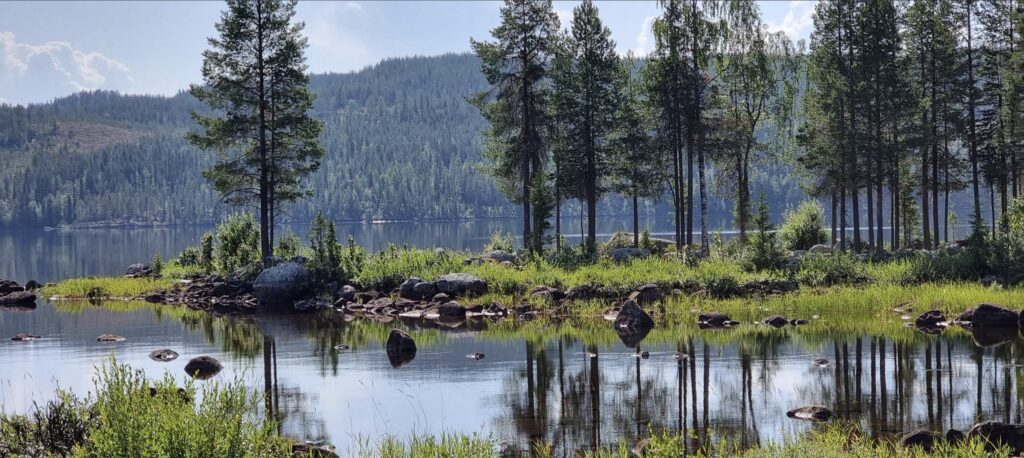
🌐 Around the World with Beyondia 🧵 Nordic & Western Europe Region 🪡 Episode 77: Muddus
Muddus National Park (Muddus nationalpark, or Muttos in Lule Sámi) is a protected wilderness area in Jokkmokk Municipality in Norrbotten County, in the Swedish Arctic region of northern Sweden. The park covers approximately 493 square kilometres — one of the larger Swedish national parks by area — extending across specific terrain that includes primeval pine forest (approximately 25% of park area), extensive peat bogs and wetlands (approximately 50% of park area), specific mixed forest with birch and spruce, specific rocky highland areas rising to approximately 660 metres elevation, and specific water bodies including the Muddusjokk river (which forms the primary drainage of the park). The park sits approximately 40 kilometres north of Jokkmokk (the nearest town, approximately 3,000 residents, one of the primary Sámi cultural centres in Sweden) and approximately 100 kilometres south of the Arctic Circle (which crosses this region of Sweden at approximately 66°33′N latitude).
Muddus Location Specifics
The specific location within the boreal forest zone — the substantial forested band extending across northern Eurasia and North America between approximately 50-70 degrees north latitude — places Muddus within one of the specific major biomes of the northern hemisphere. The boreal forest (called taiga in Russian, taiga also used in English scientific literature) covers approximately 12 million square kilometres globally, representing roughly one-third of the world’s forest cover. Most of the European boreal forest has been substantially modified by human activity across the past 1,000-2,000 years, with commercial forestry operations converting most Swedish, Finnish, and Norwegian forests into managed timber plantations. The specific undisturbed primeval boreal forest at Muddus represents one of the increasingly rare remnants of what this biome originally looked like.
The specific climate at Muddus is subarctic continental. Winter temperatures average approximately -14°C in January, with cold snaps reaching -40°C or lower during specific weather patterns (the specific inland location without Atlantic moderation produces substantially colder winter temperatures than coastal locations at similar latitude). Summer temperatures average approximately 13°C in July, with occasional peak days reaching 25-30°C. Annual precipitation is approximately 500-600 millimetres, with substantial specific seasonal snowpack (typically 60-80 centimetres of snow accumulation during winter months). The specific climate combination — cold dry winters with substantial snowpack, cool moist summers, extended daylight during summer months — has shaped the specific ecosystem character of the park.
Muddus Forest Character
The specific forest character at Muddus is what distinguishes the park within European conservation. The dominant tree species is Scots pine (Pinus sylvestris), the specific pine species native to most of northern and central Europe. In managed European forests, Scots pine is typically harvested at approximately 60-100 years of age when the trees reach commercially useful size. In the specific undisturbed forest at Muddus, individual Scots pine trees can grow to 400, 500, 600, and even over 700 years of age — with the specific documented oldest trees in the park exceeding 700 years, dating from approximately the 13th-14th centuries. The specific old trees are substantially different from young managed pines in their appearance: taller (typically 20-25 metres versus 15-20 metres for managed pines), broader trunks (often 60-80 centimetres in diameter versus 30-40 centimetres for managed pines), and specific bark and crown characteristics that develop only across centuries of growth.
The specific structural complexity of the primeval forest ecosystem includes elements substantially absent from managed forests. Standing dead trees (called snags in ecological literature) remain in place for decades or centuries after tree death, providing specific habitat for cavity-nesting birds, wood-boring insects, and specific fungal communities. Fallen dead trees (called coarse woody debris) accumulate on the forest floor and decompose slowly across centuries, returning nutrients to the soil through specific decomposition processes that support specific specialist insect and fungal species. The specific canopy structure includes multiple layers — mature dominant trees, subcanopy trees, understory shrubs, and specific ground layer vegetation — producing habitat complexity that specific specialist species require. The specific soil layer includes deep organic accumulation from centuries of undisturbed leaf and needle fall, supporting specific soil fungal communities and specific mycorrhizal networks that have developed across generations of forest continuity.
The specific biodiversity of Muddus reflects this structural complexity. The park contains approximately 100 documented lichen species (including specific old-growth-dependent lichens that require the specific tree age and bark character of primeval forest), approximately 200 documented fungal species (with specific concentration of decomposer fungi requiring the specific coarse woody debris that accumulates in undisturbed forests), specific bird species including the substantial black woodpecker (Dryocopus martius) that requires large dead trees for nesting, the specific three-toed woodpecker (Picoides tridactylus) that depends on beetle infestations in dying spruce trees, capercaillie (Tetrao urogallus, the largest European grouse species), specific owl species, and specific raptors. Mammals include brown bear (Ursus arctos, with an estimated small resident population in the park), lynx (Lynx lynx), wolverine (Gulo gulo, one of the specific Northern European mammal species requiring extensive undisturbed habitat), Arctic fox (rare, at the southern edge of Arctic fox range), moose (Alces alces), and specific smaller mammals including pine marten and red squirrel.
Beyond the forest, approximately 50% of Muddus National Park consists of extensive peat bogs (mires) — specific waterlogged environments with accumulated peat deposits building up over thousands of years from partially decomposed plant material. The specific bogs at Muddus include multiple types: raised bogs (elevated dome-shaped bogs with specific hydrology), aapa mires (specific patterned northern bogs with alternating wet and drier sections), and specific transitional environments. The specific peat deposits provide substantial carbon storage — the specific bogs at Muddus contain approximately several million tonnes of carbon locked in the peat, one of the specific climate-relevant characteristics of European peat bog ecosystems. The specific bogs also support specialist plant communities (specific Sphagnum mosses that build peat, specific carnivorous plants including sundews and butterworts, specific sedges and grasses adapted to waterlogged conditions) and specialist wildlife (specific wading birds including whimbrel, curlew, and specific waders that breed in the bog environments).
Muddus Geology
The specific geological foundation of Muddus is Precambrian bedrock — some of the oldest surface rocks on Earth, dating to approximately 2.0-2.5 billion years ago. The specific rocks were shaped by successive Ice Ages across the past 2.5 million years, with the specific last glaciation (approximately 115,000 to 10,000 years ago) covering the region with ice sheets approximately 2-3 kilometres thick that ground down the pre-glacial landscape and deposited the specific glacial till and specific glacial features (drumlins, eskers, kettle lakes) that characterise the park today. The specific “Muddusfallen” (Muddus Falls) — a specific 42-metre waterfall on the Muddusjokk river — is one of the primary park landmarks, providing dramatic viewing from specific marked trails.
Muddus National Park was established in 1942 as part of specific Swedish national park expansion during the mid-20th century. The park was extended in 1984 to include additional areas, reaching the current approximate area of 493 square kilometres. The specific management is provided by Naturvårdsverket (Swedish Environmental Protection Agency) in cooperation with the specific county administrative authorities and specific Sámi community representatives.
The specific Laponia UNESCO World Heritage Site — inscribed 1996 — covers approximately 9,400 square kilometres of Swedish Lapland including Muddus National Park, Sarek National Park (approximately 1,970 square kilometres, one of Europe’s largest wilderness areas), Padjelanta National Park (approximately 1,984 square kilometres), Stora Sjöfallet National Park (approximately 1,278 square kilometres), and specific additional nature reserves and cultural areas. The specific Laponia inscription is notable for being one of the few UNESCO sites recognised under both natural criteria (for the specific undisturbed wilderness ecosystems representing one of the largest protected wilderness areas in Europe) and cultural criteria (for the specific ongoing Sámi reindeer herding practice that has continued in the region for thousands of years). The specific dual inscription reflects the specific reality that the Laponia wilderness is not “untouched” in the sense of being outside all human activity — Sámi reindeer herders have used the specific area for thousands of years, and the specific ecosystem has been shaped in part by specific reindeer grazing across millennia. The specific dual inscription honours this by recognising both the specific ecological character and the specific continuing cultural presence.
The specific Sámi cultural continuity at Muddus reflects the broader Swedish Sápmi context introduced at Abisko Ep 76. The specific area falls within the traditional lands of the Jåhkågasska tjiellde Sámi community (sameby), one of specific Sámi communities that continue traditional reindeer herding across northern Sweden. The specific reindeer herding cycle involves seasonal movements — reindeer herds spend summers in the specific higher elevation areas of the Scandinavian Mountains further west, then migrate east through Muddus to lower-elevation winter grazing areas in the specific forest zones. The specific migration continues to this day, with reindeer moving through Muddus during specific spring and autumn periods. The specific reindeer numbers in the Jåhkågasska tjiellde area are approximately 8,000-10,000 animals depending on year and specific management decisions.
The specific Sámi cultural presence at Muddus includes documented use of the specific area extending back thousands of years, with archaeological evidence including specific seida stones (Sámi sacred sites), specific traditional summer settlement sites, and specific reindeer-related infrastructure. The specific park management explicitly recognises and accommodates the specific Sámi cultural use of the area — reindeer herding continues in the park, specific Sámi families continue to use specific traditional sites, and the specific park signage and interpretive materials include Sámi language (Lule Sámi is the specific Sámi variant traditionally spoken in the Jokkmokk region).
Access to Muddus National Park requires specific effort. The specific park has approximately 50 kilometres of marked hiking trails, with specific entry points at Skájddevárre (northern entrance) and Muddus (southern entrance, closer to Jokkmokk). The specific hiking terrain ranges from moderate difficulty on the marked trails to substantial wilderness experience for hikers venturing off-trail. The specific park includes several wilderness huts (fjällstuga) providing basic overnight accommodation on the specific hiking routes — the huts are operated by the Swedish Tourist Association (STF) and require specific advance booking during peak seasons. The specific park is open year-round, though winter access requires specific ski touring experience and appropriate equipment. Summer hiking season extends approximately mid-June through mid-September, with peak visitor numbers in July and early August.
The specific visitor numbers at Muddus are substantially lower than at more famous Swedish national parks — approximately 15,000-20,000 annual visitors versus approximately 100,000 at Abisko or approximately 40,000 at Sarek. The specific low visitor numbers reflect the specific remote access, the specific lack of prominent tourist attractions (Muddus lacks the specific dramatic mountain scenery of some Swedish parks or the specific Northern Lights infrastructure of Abisko), and the specific substantive character of the park as wilderness rather than as recreation destination. The specific consequence is that Muddus visitors experience substantially less crowding than at more visited Swedish parks — specific hikers can walk for days across the park without encountering other visitors during off-peak periods.
Beyond the specific park boundary, the surrounding region includes additional protected areas and specific settlements. Jokkmokk (the specific town approximately 40 kilometres south) is one of the primary Sámi cultural centres in Sweden, hosting the specific Jokkmokk Winter Market (the specific 400-year continuous market documented previously in the bridge from Abisko Ep 76 — the market has operated annually in early February since 1605, one of the specific oldest continuously operating markets in Europe). The Ájtte Swedish Mountain and Sámi Museum in Jokkmokk (Ájtte, svenskt fjäll- och samemuseum, established 1989) is the specific primary Swedish museum documenting Sámi cultural heritage and specific Swedish mountain environments. The specific town also hosts the Sámi Education Centre (Sámij åhpadusguovdásj), one of the primary institutions for Sámi language and cultural education in Sweden.
Contemporary Muddus faces specific ongoing challenges. Climate change is affecting the specific ecosystem in documented ways — earlier spring, later autumn, specific changes to snow conditions affecting reindeer grazing patterns, specific shifts in insect populations that affect specific bird species, and specific documented tree line advances in the higher elevation areas of the park. Specific forestry pressure on the surrounding managed forests continues to reduce old-growth forest area across Sweden more broadly, making Muddus’s specific preserved character increasingly rare. Specific tourism pressure at other Swedish national parks has begun to increase specific interest in Muddus as an alternative destination, with potential future increases in visitor numbers that could affect the specific wilderness character. Specific mining exploration in surrounding regions continues to create tensions with wilderness protection and Sámi rights — the specific expansion of Swedish mining activity in the Sápmi region has been one of the ongoing controversies in contemporary Swedish Indigenous rights policy.
Muddus is one of the demonstrations of what specific undisturbed forest ecosystem continuity looks like in Europe. The specific 493-square-kilometre park contains one of the largest surviving primeval forests in Europe, with individual Scots pine trees over 700 years old, extensive undisturbed peat bogs, specific structural complexity that has developed across millennia of ecosystem continuity, and specific biodiversity that reflects the specific undisturbed conditions. The park was established in 1942 and forms part of the 9,400-square-kilometre Laponia UNESCO World Heritage Site inscribed in 1996 under both natural and cultural criteria — recognising both the specific ecological character and the specific ongoing Sámi reindeer herding practice that has continued in the region for thousands of years. The specific Sámi cultural continuity — the Jåhkågasska tjiellde community continues reindeer herding through the park today, with specific traditional practices adapted to contemporary conditions — represents one of the specific examples of Indigenous cultural continuity in a European wilderness context. The specific visitor experience is substantively different from most European national parks: fewer visitors (approximately 15,000-20,000 annually versus 100,000+ at more famous Swedish parks), substantial wilderness character, specific hiking that can extend for days without encountering other people, and specific access to one of the increasingly rare European ecosystems where specific old-growth forest processes continue as they have for millennia.
Some European forests are managed timber plantations. This one contains individual trees that were saplings when Marco Polo was traveling to China. Some European wilderness areas exist as ecological reconstructions of what primeval forests once looked like. This one is the actual primeval forest, ecologically continuous with what has grown here since the post-glacial period. Some Indigenous cultural traditions exist as museum heritage. This one continues as living practice — reindeer herders moving through the specific park each spring and autumn, using specific traditional knowledge adapted to specific contemporary conditions. Very few European locations carry this specific combination of substantive wilderness continuity, Indigenous cultural continuity, and formal protection under both natural and cultural UNESCO criteria.
The journey continues south to the specific Sámi cultural centre approximately 40 kilometres from Muddus. The next stop is the Swedish inland town of approximately 3,000 residents at the Arctic Circle in Norrbotten County, home to the specific winter market that has operated continuously since 1605, the specific Sámi museum documenting Swedish Sápmi cultural heritage, and one of the specific centres of contemporary Sámi political and cultural production.
Nine regions. One hundred and twenty destinations. Two hundred and eighty-four weeks remaining.
Where are you going?

Beyondia
Trusted Travel CompanionReal digital nomad. I travel. I learn. I grow.
What about you? Where are you going?