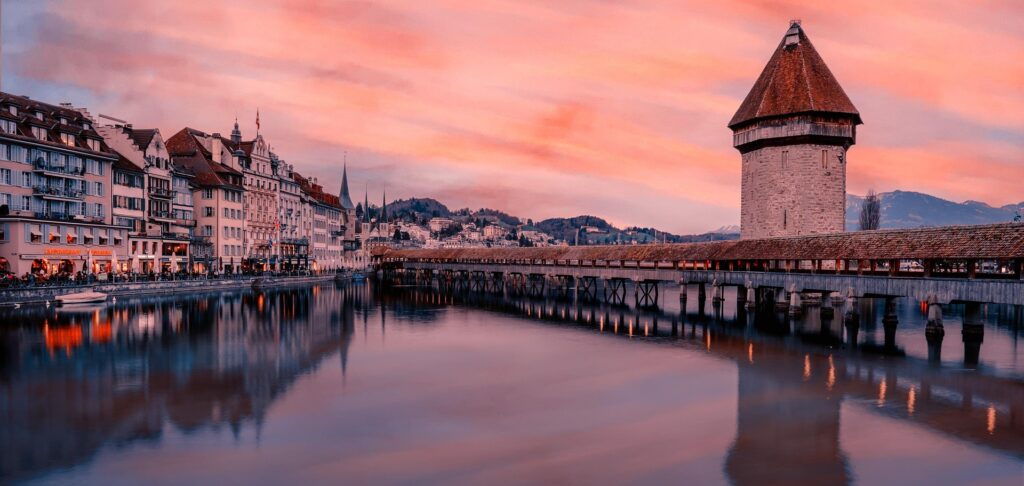
Central and Eastern Europe is the part of the world that history used hardest — the territory that sat between the ambitions of the Ottoman, Habsburg, Russian, and German empires for five centuries, absorbing their architectures, their languages, their administrative systems, and the full weight of the 20th century’s two defining catastrophes. Fourteen countries share this geography today, most of them nations that either did not exist or existed under other names within living memory, and most of them carrying in their old towns, their fortified hilltops, their Jewish quarters, and their Soviet-era housing blocks a layered record of occupation, resistance, and reinvention that no other region in the world concentrates quite so densely per square kilometre. The food is honest. The cities are underpriced by Western European standards and overdelivering by every other. The people have a directness that the tourist brochures describe as reserve and that reveals itself, on the second evening, as something considerably warmer. Come knowing that the map has changed within living memory and that the history is not abstract here — it is personal, and recent.
The Baltic Arc
Estonia is the northernmost and most digitally advanced small nation in Europe — the country that rebuilt itself from Soviet occupation not by replicating what had come before but by skipping the analogue infrastructure entirely and constructing one of the world’s most sophisticated digital governance systems from scratch, giving the world Skype, e-residency, and the concept of a country as a platform. Tallinn’s medieval Old Town, one of the best-preserved in northern Europe, operates within its 13th-century walls at a standard of architectural completeness that UNESCO designated in 1997 and that the twenty-first century has not yet managed to compromise. The Lahemaa National Park’s manors and bog trails, the university town of Tartu, and the islands of Saaremaa and Hiiumaa in the Western Archipelago complete a country whose physical scale belies its civilisational confidence. [Read the full Estonia Travel Guide →]
Latvia holds the Baltic proposition at its most architecturally surprising — Riga containing the largest collection of Art Nouveau buildings in the world, a fact that stops most visitors momentarily still on Elizabetes and Alberta streets, where the facades of Mikhail Eisenstein’s early 20th-century apartment buildings produce an ornamentation so concentrated that the eye requires time to process it. The Old Town’s medieval guild halls and the Daugava River below them, the seaside resort town of Jūrmala with its wooden art nouveau villas, the Gauja National Park’s sandstone gorges and medieval castle ruins, and the wide-skied bog landscapes of the interior complete a country that the cognoscenti have been recommending to each other for a decade ahead of the crowds. [Read the full Latvia Travel Guide →]
Lithuania is the Baltic state with the deepest medieval history — the Grand Duchy of Lithuania was, in the 14th century, the largest country in Europe, stretching from the Baltic to the Black Sea, a fact that the compact contemporary nation wears with a quiet but persistent historical confidence. Vilnius’s Old Town is the largest surviving medieval old town in northern Europe, a UNESCO-designated baroque cityscape built over the foundations of a multi-ethnic capital where Lithuanian, Polish, Jewish, Belarusian, and Russian communities coexisted in productive proximity for centuries. The Hill of Crosses near Šiauliai — where pilgrims have been planting crosses since the 19th century in an act of devotional accumulation that now numbers in the hundreds of thousands — is the most singular single site in the Baltic states. The Curonian Spit’s sand dunes drifting along the Neringa peninsula complete the argument. [Read the full Lithuania Travel Guide →]
The Central European Core
Poland is the country that the 20th century attempted to eliminate and that answered by surviving — the nation that was partitioned off the map of Europe for 123 years, rebuilt after the First World War, erased again in 1939, and re-emerged after 1989 to become one of the continent’s fastest-growing economies and most confident cultures. Warsaw’s Old Town, painstakingly reconstructed brick by brick from wartime photographs after its near-total destruction in 1944, is simultaneously a memorial and an act of collective will that says something essential about the Polish character. Kraków’s Royal Mile and the Wawel Castle above it survived the war intact and represent Central European medieval urbanism at its most complete. The Tatra Mountains, the Mazury Lake District, the wooden churches of the Małopolska region, and the Auschwitz-Birkenau memorial site — the most morally necessary visit in Europe — complete a country of enormous cultural range and unresolved historical weight. [Read the full Poland Travel Guide →]
Czech Republic is Central Europe’s most immediately legible argument — Prague’s Old Town Square and the Charles Bridge across the Vltava constitute a medieval urban set piece so compositionally perfect that the city has been drawing artists, writers, and eventually tourists since the Grand Tour made Central Europe itinerary-worthy, and that has somehow retained, in the lanes behind the main thoroughfares, the specific atmosphere of a city that Franz Kafka described and that has not fundamentally changed the terms of its mystery. Český Krumlov’s castle above the river bend, the spa towns of Karlovy Vary and Mariánské Lázně, the Moravian wine country around Mikulov, and the UNESCO-listed historic centres of Telč and Olomouc make the case for the Czech Republic beyond the capital that the capital’s reputation consistently overshadows. [Read the full Czech Republic Travel Guide →]
Slovakia is the country that the Velvet Divorce of 1993 separated from Czechoslovakia and that spent three decades quietly developing one of Central Europe’s most compelling independent travel arguments — the High Tatras delivering Alpine terrain without Alpine crowds or Alpine prices, the Slovak Paradise National Park’s gorges requiring ladders and chains to navigate and rewarding the effort with a landscape that Bohemia’s gentler topography cannot match. Bratislava’s compact Old Town sits immediately on the Danube below its crown-shaped castle with the specific intimacy of a capital city that has not yet been overwhelmed by the tourism infrastructure that its proximity to Vienna and Budapest should logically have delivered by now. The wooden churches of the Carpathian arc, the medieval hilltop stronghold of Spiš Castle — one of the largest castle complexes in Central Europe — and the vernacular architecture of Vlkolínec’s UNESCO village complete a country operating below its deserved profile. [Read the full Slovakia Travel Guide →]
Hungary anchors Central Europe at its most culturally distinctive — a nation whose language is related to nothing else in Europe except Finnish and Estonian, which arrived on the Pannonian Plain in 895 AD and proceeded to build an empire, a cuisine, a musical tradition, and a thermal bathing culture that the Ottoman occupation enhanced rather than erased. Budapest is the Danube’s great capital argument — Buda’s castle district on the western bank facing Pest’s grand boulevards on the eastern, the Chain Bridge between them, the Széchenyi and Gellért thermal baths operating since the 16th century at a standard of architectural grandeur that makes the London spa concept feel aspirational. The Tokaj wine region producing its legendary aszú, the Eger fortress where Ottoman expansion was halted in 1552, and the Great Plain’s puszta landscape of horse culture and flat horizon complete a country whose cultural self-confidence is entirely proportionate to its history. [Read the full Hungary Travel Guide →]
The Balkans
Serbia is the Balkans at their most urban and most musically alive — Belgrade sitting at the confluence of the Sava and Danube rivers as one of Europe’s most underestimated capitals, a city of fortress walls, floating river clubs, and a nightlife culture that has drawn comparisons to Berlin at a fraction of the price and with considerably more spontaneity. The Kalemegdan Fortress’s walls contain two thousand years of occupation history from Celtic through Roman through Byzantine through Ottoman. Novi Sad and the Petrovaradin Fortress above it host the EXIT Festival, one of Europe’s finest music events, in a setting that the festival industry could not have designed better from scratch. The monasteries of the Studenica and Sopoćani UNESCO sites, the Đavolja Varoš rock formations, and the Uvac Canyon’s meandering river through white limestone walls complete a country whose reputation lags its actual offer by approximately ten years. [Read the full Serbia Travel Guide →]
Bosnia & Herzegovina is the country that absorbed the worst the 1990s delivered and rebuilt itself around a cultural hybridity that the conflict was designed to destroy and could not. Sarajevo is the only European capital where an Ottoman bazaar, an Austro-Hungarian boulevard, an Orthodox cathedral, a Catholic church, a synagogue, and a mosque occupy the same city block — a proximity that the city’s residents describe not as remarkable but as simply the correct arrangement of a city that understood pluralism before the concept had a name. The Ottoman bridge at Mostar, the Stari Most, destroyed in 1993 and rebuilt in 2004 to the original 16th-century specifications, has become the most photographed act of architectural restoration in Europe, and earns it. The Kravice waterfalls, the medieval tombstones of the Stećci, and the Via Dinarica hiking route through the mountains of the interior complete a country that the informed traveller consistently rates among Europe’s most surprising revelations. [Read the full Bosnia & Herzegovina Travel Guide →]
Romania contains the Carpathian Mountains in a horseshoe arc through its centre and has been building civilisations in the valleys and on the plateaus they enclose since the Dacian kingdom that the Roman Emperor Trajan needed two full military campaigns to subdue in 106 AD. Transylvania is not a fictional landscape — it is a medieval Hungarian-Saxon-Romanian cultural layering in which Braşov, Sibiu, and Sighişoara’s fortified old towns operate at a standard of preservation that Western European equivalents achieved with considerably more tourism revenue. The painted monasteries of Bucovina in the northeast — their exterior frescoes surviving six centuries of Moldavian winters — are among the most extraordinary religious artworks in Europe. The Danube Delta at the country’s eastern edge, the most biodiverse wetland in Europe, and the Transfăgărășan Highway crossing the Carpathians at 2,042 metres complete a country whose scale and variety the single Dracula association has been drastically underselling. [Read the full Romania Travel Guide →]
Bulgaria is the oldest country in Europe to have retained its original name — founded in 681 AD and operating under that designation continuously since, a fact that sits behind a cultural confidence that the country’s underexposure in the Western European travel market has not diminished. The Rila Monastery, set in a mountain valley in the range below the Balkans’ highest peak and containing the most complete cycle of 19th-century Bulgarian Revival frescoes in existence, is the country’s spiritual and artistic centre. The old capital of Veliko Tarnovo on its dramatic river gorge, the Black Sea coast’s ancient Greek colonies at Sozopol and Nesebar, the Valley of the Roses producing attar that Bulgaria has been supplying to the world’s perfume industry since the 17th century, and the Rhodope Mountains’ village culture complete an argument for a country that the market has priced as budget and the experience consistently delivers as premium. [Read the full Bulgaria Travel Guide →]
North Macedonia is the country that contains Ohrid — and Ohrid alone is sufficient justification for the journey. The lakeside town on the shores of Lake Ohrid, one of the world’s oldest and deepest lakes, contains 365 churches within its Byzantine and medieval urban fabric, a UNESCO designation covering both the cultural and natural heritage of the lake and its surrounds, and a light in the late afternoon that falls on the water and the hillside monasteries with the specific quality that painters travel to find and that photographs cannot adequately transmit. Skopje’s dramatic Macedonian Square, the Matka Canyon accessible by kayak twenty minutes from the capital, and the ancient site of Stobi in the Vardar Valley complete a small country with a quietly exceptional travel proposition. [Read the full North Macedonia Travel Guide →]
The East Side
Despite ongoing situation, these two countries deserve to be mentioned and visited once conditions permit.
Ukraine is the country that 2022 reminded the world is central, not peripheral — the largest nation entirely within Europe, a civilisation of 44 million people with a literary tradition, an artistic heritage, a culinary culture, and a landscape from the Carpathian west to the Black Sea coast that the world was in the early stages of properly discovering when the full-scale Russian invasion changed the terms of every conversation about it. Kyiv’s St. Sophia Cathedral and the Kyiv Pechersk Lavra monastery complex, both UNESCO World Heritage Sites, represent the Kievan Rus civilisation that preceded Moscow by several centuries. Lviv’s UNESCO-listed old town in the west — a Central European city of coffee houses, baroque churches, and Habsburg urban planning — remains one of the most complete medieval and Renaissance city centres in Eastern Europe. The world will return to Ukraine. It deserves to be on the list now, in the understanding that planning for when that return becomes possible is itself an act of solidarity with a culture that is demonstrating, at considerable cost, what it values. [Read the full Ukraine Travel Guide →]
Russia presents the most complex editorial question in this guide — a country of extraordinary civilisational depth and geographic scale, whose cultural heritage, artistic tradition, and landscape represent some of the most significant in the world, and whose government’s actions since 2022 have made conventional tourism both logistically constrained and, for many travellers, morally contested. St. Petersburg’s Hermitage Museum contains three million objects across the Winter Palace complex that Peter the Great built to announce Russia’s arrival as a European power. The Trans-Siberian Railway across eight time zones is the greatest land journey in the world. Lake Baikal holds twenty percent of the planet’s unfrozen fresh water. Moscow’s Red Square, the wooden architecture of the Golden Ring, and the volcanic landscape of Kamchatka complete a geographic and cultural inventory that no honest assessment of this region can omit. The traveller must determine their own position on visiting, with current visa restrictions, airspace limitations, and individual conscience as the governing variables. [Read the full Russia Travel Guide →]
When to Visit
Central and Eastern Europe runs a broad but readable seasonal calendar. The operative peak across the entire region is May through September — the period when the mountain passes are open, the river valleys are in full colour, and the old town squares of Warsaw, Prague, Budapest, and Tallinn are functioning at their most compelling. June and September are the optimal shoulder months: the summer crowds have not yet arrived or have just departed, the light is at its finest, and the accommodation operates at rates that the July and August peak does not.
The Balkans — Serbia, Bosnia, Bulgaria, North Macedonia, Romania — extend the viable window into October with particular generosity. The Rhodope mountains in autumn, the Danube Delta in September, and the monastery circuits of Romania in October offer a colour and atmospheric quality that the summer visit cannot match.
The Baltic states — Estonia, Latvia, Lithuania — reward the June visit specifically for the midsummer solstice, which the Baltic cultures celebrate with a conviction and communal energy that the Scandinavian equivalent has received considerably more international attention for, without the Baltic version being any less extraordinary. The winter offers the old town Christmas markets and, in Estonia and Latvia, the possibility of a frozen coast and a silence in the forests that the summer does not deliver.
Poland and the Czech Republic operate at sustained quality year-round, with the Christmas market season of late November through December making a secondary case for the winter visit that the summer crowds make difficult to appreciate in the same way. Prague in January, with the tourist volume at its annual low and the medieval lanes empty in the morning frost, is a different city from Prague in August — and a better one for the traveller who knows what they are choosing.
For the full seasonal breakdown, explore the monthly travel guides by destination.