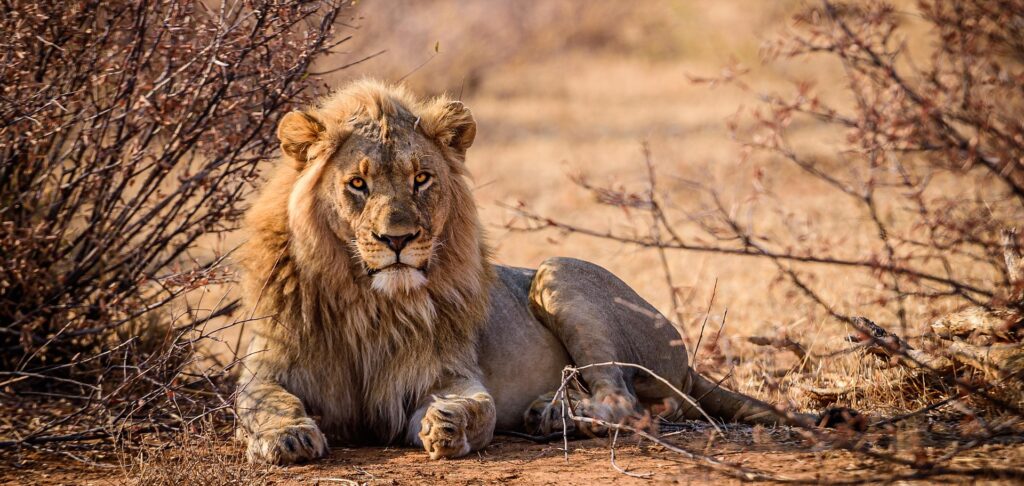
Africa is not a destination with a backdrop. It is the origin — the continent where the human story begins, where the oldest evidence of our species was pulled from the soil of the Rift Valley, where the first cities, the first writing systems, and the first astronomical observations were made, and where a biodiversity so dense and so ancient that it predates the concept of natural history continues to operate on its own terms, largely indifferent to the observation of the four billion people who have arrived on the planet since. Fourteen countries and four island nations share this guide — from the Atlantic-facing shores of Senegal and the ancient highland kingdoms of Ethiopia to the Antarctic-approaching cape of South Africa and the coral-ringed interiors of Mauritius and the Seychelles. The word safari is Swahili for journey. The continent has always understood that the point was never the destination.
West Africa & The Atlantic
Senegal is West Africa’s most open conversation with the world — the country that produced Léopold Sédar Senghor, poet and philosopher-president, who argued that African civilisation’s contribution to the world was not in spite of its difference from Western rationalism but precisely because of it. Dakar sits on the Cap-Vert Peninsula at Africa’s westernmost point, a city of music — the mbalax rhythm that Youssou N’Dour carried to global audiences — of Wolof hospitality, and of the fish markets at Soumbédioune that operate at the specific intensity of a society that takes its relationship with the Atlantic seriously. The island of Gorée, a fifteen-minute ferry ride from Dakar, is the most visited site in West Africa and the most morally necessary: the Door of No Return through which enslaved Africans passed into the Middle Passage is the continent’s most unflinching historical monument. The Siné-Saloum Delta, the Casamance region’s forest and river culture, and the desert city of Saint-Louis complete the argument. [Read the full Senegal Travel Guide →]
Ghana is the country that West Africa hands the first-time traveller with the greatest confidence — the nation of stable democratic governance, English-language accessibility, exceptional hospitality, and a cultural self-assurance rooted in the fact that the Ashanti Kingdom, one of the great pre-colonial West African powers, never fully yielded its identity to British colonial administration and never entirely forgot what it had been before the flag changed. Accra’s Labadi Beach and the vibrant Jamestown neighbourhood, the Cape Coast and Elmina slave castles confronting the full weight of the transatlantic trade along the Atlantic shoreline, the Ashanti cultural capital of Kumasi, and the Mole National Park in the north — Ghana’s finest wildlife reserve — complete a country that the African diaspora has been returning to in increasing numbers as a form of historical reckoning, and that receives that return with the warmth it deserves. [Read the full Ghana Travel Guide →]
Cape Verde is the Atlantic argument — the archipelago of ten volcanic islands 570 kilometres off the Senegalese coast that Portugal discovered in 1456, found uninhabited, populated with settlers and enslaved Africans from the mainland, and inadvertently created in the process one of the world’s most distinctive creole cultures, the morna music tradition that Cesária Évora carried barefoot onto the world’s stages, and a landscape of extraordinary geographic variety compressed into islands that feel simultaneously African, European, and entirely themselves. Santiago’s capital Praia and the cobblestone UNESCO town of Cidade Velha on the oldest European colonial settlement in the tropics, the volcanic caldera of Fogo rising 2,829 metres from the Atlantic with a village inside its crater, the wind-sculpted dunes of Sal and the hiking terrain of Santo Antão’s ribeiras complete an archipelago that the beach resort industry discovered before the cultural traveller and that rewards the one who looks past the sunbed. [Read the full Cape Verde Travel Guide →]
East Africa & The Great Rift
Ethiopia is the country that rewrites the timeline — the only African nation never colonised by a European power, the homeland of Lucy, the 3.2-million-year-old Australopithecus whose bones sit in the National Museum of Addis Ababa and whose discovery in 1974 moved the acknowledged origin of our species back by a million years, and the site of a continuous Christian civilisation whose rock-hewn churches at Lalibela, carved downward into the basalt plateau in the 12th century, are simultaneously the most extraordinary architectural achievement in Africa and an active religious site where pilgrims arrive on foot from distances that the modern traveller accomplishes by vehicle. The ancient stelae fields of Axum, where the Queen of Sheba’s kingdom was headquartered, the walled city of Harar with its 368 alleyways and 82 mosques, the Simien Mountains’ Gelada baboon population found nowhere else on earth, and the Danakil Depression’s sulphurous volcanic landscape at 125 metres below sea level — the hottest inhabited place on earth — complete a country of unmatched civilisational depth that the tourism industry has barely begun to describe accurately. [Read the full Ethiopia Travel Guide →]
Kenya is where the safari as a concept was codified and where it remains most completely executable — the Maasai Mara’s savannah producing the Great Migration between July and October, when 1.5 million wildebeest cross the Mara River in a biological spectacle that David Attenborough has returned to film more times than any other single event on earth, and that retains despite the cameras and the vehicles a wildness that no amount of infrastructure has managed to domesticate. Nairobi is the most economically dynamic capital in East Africa, with a tech ecosystem that has earned the city the designation of Silicon Savannah and a restaurant and cultural scene operating well above its international profile. Mount Kenya, the Amboseli plains with Kilimanjaro above the Tanzanian border, the marine ecology of Watamu and Malindi on the Indian Ocean coast, and the ancient Swahili trading port of Lamu — accessible only by boat and operating in its medieval urban form with a completeness that Zanzibar’s tourist economy has complicated — complete a country whose travel infrastructure is the most developed in the region and whose natural argument has not required the development to improve it. [Read the full Kenya Travel Guide →]
Tanzania holds the two most unambiguous natural superlatives on the continent — Kilimanjaro and the Serengeti — and has the good editorial sense to let them speak without assistance. Kilimanjaro at 5,895 metres is the world’s highest freestanding mountain and Africa’s highest peak, accessible without technical climbing equipment to anyone with sufficient acclimatisation time and a willingness to be cold, slow, and present with the effort in a way that the summit rewards with a view across a curvature of earth that the word panorama was inadequate to describe before the climb and remains so after it. The Serengeti’s 30,000 square kilometres of open grassland, the Ngorongoro Crater’s enclosed ecosystem of the densest wildlife concentration on earth, the spice islands and UNESCO Stone Town of Zanzibar, and the Selous Game Reserve — the largest in Africa — complete a country that has positioned conservation as its primary economic strategy and its most durable competitive advantage. [Read the full Tanzania Travel Guide →]
Southern Africa
South Africa is the country that managed the most scrutinised political transition of the 20th century and emerged with a democracy, a constitution rated among the most progressive in the world, eleven official languages, and a travel proposition of such geographic and cultural range that most visitors require multiple trips before they feel they have begun to understand the terms. Cape Town is the most physically beautiful city in the southern hemisphere — Table Mountain above it, the Cape Peninsula below, the Winelands of Stellenbosch and Franschhoek behind it, and the cold Atlantic and warmer Indian Ocean meeting at Cape Agulhas forty kilometres to the east in a confluence of currents and cultures that the city has been mediating since the Dutch East India Company established its refreshment station here in 1652. The Kruger National Park, the Garden Route, the Drakensberg’s amphitheatre escarpment, the Zulu cultural heartland of KwaZulu-Natal, and the Wild Coast complete a country whose apartheid history and post-apartheid complexity the traveller cannot responsibly bracket from the landscape they are moving through, and that the best travel here does not ask them to. [Read the full South Africa Travel Guide →]
Namibia is the oldest desert in the world meeting the most sparsely populated country in Africa — the Namib Desert, 55 million years old, running the full length of the Atlantic coast in a landscape of orange dunes, fog-belt succulents, and shipwrecks on the Skeleton Coast that produces, at Sossusvlei and Deadvlei, the most otherworldly photographs taken on the African continent. The dead camel thorn trees of Deadvlei standing in their white clay pan against the 300-metre red dunes behind them have been dead for approximately 900 years and have not decomposed in the desert air. The Etosha Pan’s salt flat — a former lake now reduced to a shimmering mineral desert around which the full roster of southern Africa’s megafauna congregates at waterholes in a wildlife watching format that requires no vehicle movement — and the Himba communities of the Kunene region in the northwest complete a country of extraordinary visual intensity and deliberate restraint. [Read the full Namibia Travel Guide →]
Botswana made the most consequential natural resource decision in African development history — using diamond revenues not to enrich a political elite but to fund the conservation of the Okavango Delta, the largest inland delta in the world, where the Okavango River flows not to the sea but into the Kalahari Desert’s sands and disappears, creating in the process a seasonal floodplain of channels, islands, and papyrus reeds that attracts the densest elephant population on earth and a biodiversity that the country has deliberately kept accessible only through high-cost, low-volume safari camps. Botswana’s conservation model — where the ecosystem pays its own costs through premium tourism — is the argument that the rest of Africa’s wildlife estates are slowly being asked to replicate. The Chobe National Park’s river frontage, the Central Kalahari Game Reserve, and the salt pans of Makgadikgadi completing this remarkable ecosystem. [Read the full Botswana Travel Guide →]
Zimbabwe contains Victoria Falls — one of the seven natural wonders of the world, where the Zambezi River drops 108 metres across a 1,700-metre-wide basalt cliff, generating a spray cloud visible from 50 kilometres and a roar that the Kololo people who lived near it called Mosi-oa-Tunya, the smoke that thunders, which is not a description that requires improvement. The falls are shared with Zambia but Zimbabwe’s Rainforest walk along the opposite cliff edge, directly into the spray, is the more complete physical encounter. The ancient stone enclosure of Great Zimbabwe — the ruins of the 11th-century Shona Kingdom capital from which the country takes its name, and which 19th-century European colonisers refused for decades to acknowledge as African-built — and the wildlife of Hwange National Park, the country’s largest, complete a Zimbabwe that politics obscured for two decades and that the traveller who looks past the headlines finds in excellent natural and cultural condition. [Read the full Zimbabwe Travel Guide →]
Mozambique is the Indian Ocean coast in its least developed and most beautiful form — 2,470 kilometres of shoreline running from Tanzania to South Africa, with the Quirimbas Archipelago in the north offering 32 coral islands in a marine protected area where the dhow is still the primary mode of inter-island transport and the dive sites have not yet been subjected to the traffic that their quality would generate if accessibility were not the limiting factor. Maputo, the capital, is the most architecturally interesting city in southern Africa that most people have not yet visited — the iron house designed by Gustave Eiffel, the Art Deco municipal market, and the pavement café culture that the Portuguese colonial period deposited and the Mozambican character absorbed and made its own. The Bazaruto Archipelago, the Gorongosa National Park undergoing one of Africa’s most ambitious rewilding programmes, and the Lake Malawi shoreline in the north complete a country in the productive early stages of its travel story. [Read the full Mozambique Travel Guide →]
The Indian Ocean Islands
Madagascar is the evolutionary argument made island — the fourth largest island in the world, separated from the African mainland 88 million years ago before the placental mammals arrived, and that proceeded to evolve in isolation a biota so distinct from the rest of life on earth that 90 percent of its wildlife species exist nowhere else on the planet. The lemur, the fossa, the baobab forests of the Menabe, the rainforests of Masoala, the limestone karst pinnacles of the Tsingy de Bemaraha — a UNESCO World Heritage landscape so vertiginous and geometrically precise that it looks computer-generated — and the Avenue of the Baobabs near Morondava, where ancient trees up to 800 years old stand along a red dirt road in a composition that photographers make pilgrimages for, complete an island that is simultaneously a biological archive of incomparable value and a country whose human poverty sits in permanent tension with the conservation of the wilderness that makes it irreplaceable. [Read the full Madagascar Travel Guide →]
Mauritius is the Indian Ocean proposition that reputation built first and reality has consistently vindicated — the volcanic island of 2,040 square kilometres that the Dutch found uninhabited in 1598, the French governed with sugarcane and slavery from 1715, the British acquired in 1810 and governed with indentured Indian and Chinese labour after abolition, and that independence in 1968 inherited as one of the most ethnically diverse and, by most measured standards, successfully pluralistic small nations in the world. The underwater waterfall optical illusion off Le Morne Brabant’s peninsula — sand and silt cascading off the continental shelf into the Indian Ocean deep, visible from above as a waterfall descending into the abyss — is the island’s most arresting single image. The Black River Gorges National Park, the 7 Coloured Earths of Chamarel, the Pamplemousses Botanical Garden established in 1770, and the northern island of Rodrigues — three hours by boat and three decades behind in the best possible sense — complete an island that the luxury resort industry has colonised most completely and that still rewards the traveller who moves between the resorts and the interior. [Read the full Mauritius Travel Guide →]
Seychelles is the archipelago that geography arranged as an argument against restraint — 115 islands in the western Indian Ocean, the only mid-oceanic granitic islands in the world, producing a combination of pink granite boulders, takamaka trees, and water achieving shades of turquoise and emerald that the camera consistently fails to render at accurate saturation. Mahé, Praslin, and La Digue are the inhabited inner islands; the outer coral islands of Aldabra, whose giant tortoise population of 150,000 is the largest in the world, and Vallée de Mai on Praslin — the forest of coco de mer palms with their extraordinary double coconuts that Enlightenment-era explorers convinced themselves was the original Garden of Eden — hold the UNESCO designations. The Seychelles operates as the Indian Ocean’s premium register, and prices itself accordingly, with the outer islands accessible primarily through liveaboard diving boats and private island resorts that offer the most complete version of removed from everywhere that the contemporary travel market provides. [Read the full Seychelles Travel Guide →]
When to Visit
Africa’s seasonal logic is governed by three systems — the equatorial rain belt that moves north and south of the equator through the year, the Indian Ocean monsoon cycle, and the Southern Hemisphere’s inversion of the European calendar — and understanding their interaction is the difference between the visit that delivers and the one that does not.
East Africa — Kenya and Tanzania — runs on two dry seasons: the long dry of July through October, which is the Great Migration’s Mara crossing window and the premium wildlife season; and the short dry of January and February, which offers lower prices and excellent game viewing as the short rains have deposited new grass and brought animals out in numbers. The shoulder months of June and November offer the best balance of wildlife concentration and manageable visitor numbers.
Southern Africa — South Africa, Namibia, Botswana, Zimbabwe, Mozambique — operates on the Southern Hemisphere calendar. The dry winter of May through October is the prime wildlife season across Botswana’s Okavango and Zimbabwe’s Hwange, when the lack of surface water concentrates game around permanent water sources and the vegetation thins to reveal what is there. The Namibian coast is unique: the Namib’s cold Benguela current creates a year-round moderate coastal climate while the interior heats significantly December through February. Victoria Falls is highest and most dramatic March through May following the rains; July and August offer the clearest views with lower water levels.
West Africa — Senegal, Ghana, Cape Verde — runs November through April as its dry and accessible season, when the Harmattan wind has passed or is manageable and the humidity of the wet season has retreated. Cape Verde’s position in the Atlantic creates its own microclimate on each island: Fogo and Santo Antão receive enough rainfall for lush cultivation while Sal and Boa Vista remain arid year-round.
Ethiopia’s highland circuit of Lalibela, Axum, and the Simien Mountains is best October through March, after the main rains and before the short rains — though Lalibela’s Genna Christmas ceremony in January and the Timkat Epiphany festival draw pilgrims and travellers simultaneously in a convergence that is among East Africa’s most extraordinary cultural events.
The Indian Ocean islands — Mauritius, Seychelles, Madagascar — run on the south-east trade winds, with the cyclone season of January through March representing the primary risk window. The Seychelles benefits from its position near the equator, which places it largely outside the cyclone belt; Mauritius and Madagascar are more exposed. October through December and April through June are the optimal shoulder-season windows across all three — the weather settled, the prices not at their January peak, and the coral reefs in their best visibility condition.
For the full seasonal breakdown, explore the monthly travel guides by destination.

Beyondia
Trusted Travel CompanionReal digital nomad. I travel. I learn. I grow.
What about you? Where are you going?