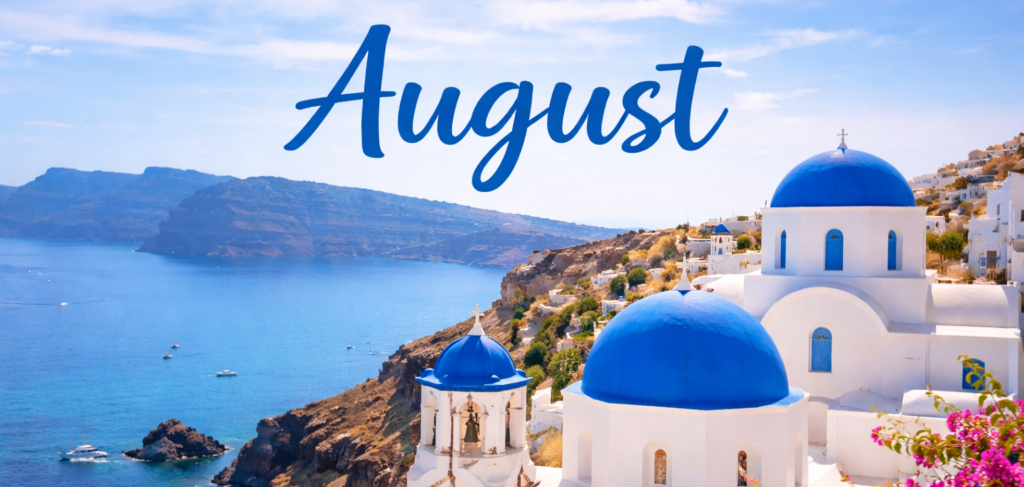
August is the month travel stops being a choice and becomes a consensus. The world is moving — the school holidays are at full stretch, the Mediterranean is at its warmest, Africa’s dry season is delivering the finest game viewing of the year, and the destinations that have been building toward this month are operating at maximum capacity. The crowd in August is not a reason to stay home. It is a reason to choose more deliberately.
The conscious traveller’s advantage in August is not finding places nobody has discovered. It is understanding which destinations justify their crowds and which ones the crowd has simply inherited by habit. The Mara River crossings in Kenya are worth every other vehicle on the track. Sri Lanka’s east coast is worth being found. Indonesia’s Komodo archipelago is worth the boat. Bolivia’s altiplano is worth the cold. August belongs to those who chose correctly, not those who chose quietly.
Twelve destinations. Twelve arguments for moving now rather than waiting for September’s version of the same places.
Choose your August:
- Wild + Africa: Tanzania, South Africa, Zimbabwe, Kenya, Botswana
- Island + ocean: Croatia, Montenegro, Sri Lanka, Indonesia
- High + remote: Peru, Bolivia, Iceland
Tanzania: The Mara River Crossings Begin
Best for: Great Migration river crossings, Ngorongoro, Serengeti northern circuit, Zanzibar Go to: Serengeti Northern Circuit · Ngorongoro · Zanzibar Why August: the wildebeest migration reaches the Mara River — the most dramatic wildlife crossings of the annual cycle, predator density at its annual maximum, dry season game viewing at full intensity
Tanzania in August is Africa’s wildlife calendar at its single most concentrated moment — the wildebeest migration’s northern push reaching the Mara River, the boundary between Tanzania and Kenya that the herds cross and recross through August and September in the chaotic, crocodile-attended spectacle that the phrase Great Migration was coined to describe. The Mara River crossing is not a single event. It is a series of crossings — the herd building at the bank, the lead animals hesitating at the water’s edge while the crocodiles below hold position, the pressure from behind eventually forcing the crossing in a surge that can last minutes or hours and involves thousands of animals simultaneously.
The northern Serengeti in August delivers the crossing alongside the sustained predator activity that the migration’s presence generates — the lion prides following the herd’s edge, the cheetah hunting the calves that the crossing separates from their mothers, the hyena clans operating the cleanup that the predator kills leave. The northern Serengeti camps position themselves on the river to maximise crossing access — book camps with river frontage for the view from the tent rather than the vehicle alone.
Ngorongoro in August maintains the dry season game viewing that July established — the vegetation at its lowest, the waterhole concentrations at their highest, the crater floor in the specific amber light of the African winter morning that the dry season’s clear air produces. Zanzibar in August continues the kusi wind season that brings the island’s finest diving visibility and its coolest temperatures — the east coast beaches of Paje and Jambiani operating in the conditions that the kitesurfing community, which has discovered the reliable August wind, now arrives specifically to use.
Temperatures: 17–25°C on the Serengeti plains · 23–27°C in Zanzibar · Colder at altitude
Read the full Tanzania Travel Guide →
Croatia: The Adriatic at Its Absolute Warmest
Best for: island life, old city evenings, sailing, national parks, food and wine Go to: Vis · Dubrovnik · Plitvice Lakes Why August: sea temperature peaks at 26–27°C, island ferry network at maximum frequency, summer festivals at their peak, the Adriatic at its most Mediterranean
Croatia in August is the Adriatic at its annual maximum — the sea temperature reaching 26–27°C, the islands operating at the full summer frequency that makes spontaneous island hopping genuinely possible, and the outdoor evening culture of the Dalmatian coast in the specific warm condition that makes the concept of going inside feel like a category error. August is Croatia’s most visited month. It is also, for the coastal experience specifically, the month for which it is most justifiably visited.
Vis in August carries the advantage of its relative inaccessibility — the outermost inhabited island, without the hotel infrastructure that Hvar’s development has built, it operates in August at a density that feels like the Adriatic coast a generation ago. The Blue Cave on Biševo islet — accessible by morning boat from Komiža, the sunlight entering through an underwater opening and reflecting off the white limestone bottom to fill the cave with blue light between 11am and noon — in August runs the morning boats daily, the window of correct light brief enough to make the timing feel like a gift.
Dubrovnik in August manages the summer at full volume — the city walls, the Stradun, the cable car to Mount Srđ, the Elaphiti Islands day trip — all of them operating at peak capacity with the advance booking that the city’s popularity has made essential. The wall walk at 8am, the cable car at 6pm for the sunset, the old city after 10pm when the day-trippers have returned to their cruise ships and the city briefly returns to the people who love it most. August Dubrovnik is worth the planning it requires.
Temperatures: 27–33°C on the coast · Sea: 26–27°C
Read the full Croatia Travel Guide →
South Africa: The Whale Coast at Its Peak
Best for: Hermanus whale watching, Kruger game viewing, Cape Town winter end, Garden Route Go to: Hermanus · Kruger · Cape Town Why August: southern right whale season peaks at Hermanus — the finest land-based whale watching in the world, Kruger maintains dry season excellence, Cape Town approaching the end of its winter
South Africa in August delivers the southern right whale season at its statistical peak — the population of whales in Walker Bay at Hermanus reaching its maximum concentration as the mothers who calved in June and July are joined by the late arrivals and the males seeking mating opportunities. The whale watching from the cliff path above Walker Bay in August is among the finest wildlife experiences in the southern hemisphere conducted entirely from land — the whales breaching, spy-hopping, and lobtailing in water close enough to the shore that the binoculars are optional and the sound of their exhalations audible from the cliff above. Hermanus’s whale crier blows the kelp horn when sightings occur. In August the horn is rarely silent.
Kruger National Park in August sits in the final weeks of the prime dry season — the vegetation at its lowest, the waterholes still concentrating the elephant herds and buffalo aggregations that the rain will disperse when it arrives in October. The morning game drives in August, the air cold enough for a fleece before the sun clears the acacia horizon, the animals active in the cool hours before the midday heat reduces activity — this is the Kruger experience that the summer visitor, arriving in the wet season’s lush green park, finds difficult to recognise as the same place.
Cape Town in August is emerging from its winter — the last of the cold fronts arriving from the Southern Ocean, the mountain alternating between cloud and the washed clarity that rain-cleaned air produces, the wine estates of Stellenbosch and Franschhoek in the bare-vine condition that reveals the geometry of the terraced slopes that the summer canopy conceals. The Cape in August is the city for those who understand that the winter version is a different and equally valid argument.
Temperatures: 10–18°C in Cape Town · 14–26°C in Kruger · 12–20°C at Hermanus
Read the full South Africa Travel Guide →
Peru: Machu Picchu in Its Prime Month
Best for: Machu Picchu, Sacred Valley, Lake Titicaca, Amazon basin Go to: Cusco · Machu Picchu · Colca Canyon Why August: dry season peak continues — the clearest month of the Peruvian year, Sacred Valley at its finest, Colca Canyon condor flights most reliable in morning thermals
Peru in August is the Andean world at the peak of its dry season clarity — the skies above the Sacred Valley the specific blue that the thin air at altitude and the absence of the wet season’s clouds produces, the Inca sites fully accessible in the warm sunny days and cold clear nights that the Peruvian winter at elevation delivers. August is Peru’s most visited month and its most visually rewarding — the combination of perfect weather, full site access, and the dramatic Andean landscape in its driest condition makes the popularity entirely understandable.
Machu Picchu in August — the timed entry slots booked weeks or months in advance, the 5am first slot the only correct answer for those who value the site over the convenience of the later start — is the citadel in the dry season’s maximum clarity. The views from the Sun Gate, the Inca Bridge, and the Huayna Picchu summit on the clear August mornings extend across the Urubamba valley to peaks that the wet season’s cloud permanently obscures. The agricultural terraces in the morning light, the llamas that occupy the site with the indifference of animals who have been there considerably longer than the tourists, the sound of the Urubamba River 450 metres below — August is Machu Picchu working at full power.
The Colca Canyon in August — at 3,270 metres depth the second deepest canyon in the world, the Cruz del Cóndor viewpoint where the Andean condors ride the morning thermals from the canyon floor — delivers the condor flights that the warming air of the August mornings produces most reliably. The condors, with wingspans reaching 3.2 metres, circle upward from the canyon without a single wingbeat, the thermal columns invisible but their effect on the largest flying bird in the world entirely evident. The viewpoint fills by 9am. The condors arrive between 8 and 11. The alarm is worth setting.
Temperatures: 4–20°C in Cusco · 12–22°C at Machu Picchu · Cold nights throughout
Read the full Peru Travel Guide →
Montenegro: The Adriatic’s Last Wild Summer
Best for: Bay of Kotor, Budva coast, Durmitor, sailing, canyon hiking Go to: Kotor · Budva · Durmitor Why August: sea at its warmest, Durmitor in peak alpine condition, the entire country operating at full summer capacity — the Adriatic’s most dramatic geography at its most accessible
Montenegro in August is the compressed country at its fullest extension — the Bay of Kotor and the Budva Riviera at 26°C sea temperatures, the Durmitor massif accessible in the long August days that make the high-altitude hiking routes achievable as day trips from the coast, the canyon systems of the interior in the dry summer condition that the spring snowmelt transforms into a completely different landscape. August is Montenegro at maximum volume. The country’s relatively undeveloped infrastructure, compared to Croatia’s more built coastal strip, means maximum volume here is a different proposition from maximum volume in Dubrovnik.
The Bay of Kotor in August — the southernmost fjord in Europe, the medieval walls of Kotor climbing the mountain behind the old city, the village of Perast with its two islands visible from the shore — operates in the conditions that make the boat the correct mode of exploration rather than the road. Water taxis between Kotor, Perast, and the village of Tivat run throughout the day in August, the bay’s enclosed geometry making every crossing a view of the mountain walls that the road hugs too closely to appreciate. Our Lady of the Rocks, the 17th-century island church built on a manually constructed foundation that Perast’s sailors added to for centuries by dropping rocks from their boats each time they passed, in August is accessible by the rowboat that the church’s guardian operates from the village quay.
Durmitor in August — the national park’s high plateau with its 18 glacial lakes, the Black Lake in the specific summer condition where the snowmelt has cleared and the hiking trails are at their driest — delivers the alpine Montenegro that the coastal visitor consistently fails to reach and consistently regrets missing.
Temperatures: 27–33°C on the coast · Sea: 26°C · 15–24°C in Durmitor
Read the full Montenegro Travel Guide →
Sri Lanka: The East Coast at Its Annual Best
Best for: east coast beaches, cultural triangle, elephant gathering, surfing Go to: Trincomalee · Arugam Bay · Minneriya Why August: east coast dry season at its peak — Trincomalee beaches at their finest, Minneriya elephant gathering peaks, Arugam Bay surfing season
Sri Lanka in August undergoes the seasonal inversion that rewards those who understand the island’s dual weather systems — the southwest monsoon that has been delivering rain to the west and south coast since late May has redirected the island’s finest weather to the north and east, and August is when the east coast benefits most completely. Trincomalee’s beaches — Nilaveli and Uppuveli, the natural harbour that the British Empire considered the finest deep-water port in Asia — in August receive the clear conditions that make the snorkelling over the coral at Pigeon Island National Park, 300 metres offshore, the finest underwater experience on the Sri Lankan coast.
Arugam Bay on the southeast coast in August is the surfing community’s open secret — a bay with a right-hand point break that the surfing media has ranked among the finest in Asia, the wave consistent in August with the specific swell that the Indian Ocean’s southern winter generates. The town itself operates on the unhurried schedule of a beach community that the surfing culture and the backpacker circuit found before the mainstream travel industry and that maintains, in August, enough of its original character to reward the visitor who arrives without a luxury resort itinerary.
Minneriya National Park in August peaks for the elephant gathering — the water level in the ancient Minneriya tank at its lowest, the grasslands around the reservoir’s receding edge exposed, and up to 300 elephants converging on the same area of open ground in what wildlife biologists describe as the largest wild elephant gathering in Asia. The gathering in August is at its maximum concentration — the herds from the surrounding forests arriving as the dry season removes the alternative water sources, the matriarchs leading their family groups to the same location that has been providing this service for longer than the national park that now protects it.
Temperatures: 27–32°C on the east coast · 28–34°C in the cultural triangle
Read the full Sri Lanka Travel Guide →
Zimbabwe: Hwange at Maximum Concentration
Best for: Hwange game viewing, Victoria Falls, Mana Pools, painted wolves Go to: Hwange · Victoria Falls · Mana Pools Why August: Hwange’s dry season peaks — elephant herds at waterholes in the thousands, painted wolf sightings at their most reliable, Victoria Falls spray receding to reveal the full gorge structure
Zimbabwe in August is the dry season at its most persuasive argument for the country’s place at the top of the African safari conversation — Hwange National Park’s artificial waterholes surrounded by wildlife concentrations that the late-dry-season water scarcity produces at a density that the wet season, for all its green abundance, simply cannot replicate. The elephant herds at Hwange’s major waterholes in August — Nyamandhlovu Pan, Masuma Dam, the Main Camp waterholes — arrive in the late afternoon in aggregations that regularly exceed a hundred animals, the matriarchs leading their families to water with the unhurried confidence of animals that know exactly where they are going and have been making this journey for decades.
The painted wolves — African wild dogs — that Hwange supports in one of Africa’s last viable populations are in August at their most observable, the pack’s denning season over and the nomadic hunting circuits resuming across the park’s open woodland. A painted wolf hunt in August morning light, the pack coordinating at speeds of up to 60 kilometres per hour across terrain that the dry season’s reduced vegetation makes fully visible, is the wildlife experience that consistently recalibrates the visitor who arrived expecting lions and leopards to be the main event.
Victoria Falls in August — the Zambezi’s flow reduced from the June maximum but still producing the spray plume that announces the falls from 50 kilometres away — reveals the geological structure of the gorge that the June volume obscures behind a wall of water. The Devil’s Pool becomes accessible in August from the Zambian side — the natural rock pool at the very lip of the main falls, separated from the 108-metre drop by a submerged rock barrier, where swimming at the edge of the largest waterfall on earth is either the finest or the most alarming experience available in southern Africa depending entirely on your relationship with the concept of a natural safety barrier.
Temperatures: 14–27°C in Hwange · 16–28°C at Victoria Falls · Cold nights throughout
Read the full Zimbabwe Travel Guide →
Kenya: The Mara River Crossings Peak
Best for: Masai Mara river crossings, predator viewing, Maasai culture, Lamu coast Go to: Masai Mara · Samburu · Lamu Why August: the Great Migration Mara River crossings reach their peak — the most dramatic wildlife spectacle on earth at maximum intensity, predator activity at its annual highest
Kenya in August is the Great Migration at its cinematic peak — the wildebeest that crossed from Tanzania into the Masai Mara in July now building in numbers as the herds follow the rainfall north, the Mara River crossings that began in July reaching their most frequent and most dramatic concentration through August. The crossings in August happen at multiple points along the Mara River — the traditional crossings at the Musiara Marsh and the Serena crossing, the less visited points where the herds find their own geometry through the crocodile-held water. The guides who have spent decades reading the herd’s movement have developed an instinct for where the next crossing will build, and the camps that position their vehicles correctly deliver the experience that the migration’s global reputation has been built around.
The Masai Mara’s resident predator population in August operates at its annual maximum activity — the prey density that the migration delivers generating predator sightings that the rest of the year’s game viewing, excellent as it is, doesn’t replicate in the same frequency. The lion prides of the Mara — the Marsh Pride, the Ridge Pride, the Topi Plains lions — are in August hunting in conditions where the wildebeest volume makes success a near-daily event rather than the hard-won outcome that the lean months require.
Samburu National Reserve in the north of Kenya — the arid-country counterpart to the Mara’s savanna, home to the Grevy’s zebra, the reticulated giraffe, and the Beisa oryx that the southern parks don’t carry — in August delivers the dry-season game viewing that the reserve’s seasonal Ewaso Ng’iro River concentrates at the riverbanks. Samburu in August is Kenya without the migration crowds, the wildlife different in character and the landscape in a completely different register.
Temperatures: 18–26°C in the Masai Mara · 24–32°C in Samburu · 26–30°C in Lamu
Read the full Kenya Travel Guide →
Bolivia: The Altiplano in Winter Clarity
Best for: Uyuni Salt Flats, coloured lagoons, colonial cities, Amazon basin Go to: Salar de Uyuni · Eduardo Avaroa Reserve · Sucre Why August: dry season at full intensity — Uyuni’s pure white salt crust at its maximum, coloured lagoons at their most vivid, Bolivian winter skies the clearest of the year
Bolivia in August continues the altiplano dry season that July established — the Salar de Uyuni in its pure white condition, the vast salt crust reflecting the Bolivian winter sky with a clarity that the wet season’s shallow water layer replaces with the famous mirror effect. The dry season version is the more disorienting of the two — the pure white geometry extending to the horizon in every direction without a single landmark to calibrate distance, the hexagonal salt formations at the surface stretching across 10,582 square kilometres in a pattern that the aerial photographs render as wallpaper and the standing-in-it experience delivers as something closer to vertigo.
The Eduardo Avaroa Andean Fauna Reserve in August — the extension of the three-day Uyuni circuit into the altiplano’s most extreme landscape — carries the coloured lagoons at their most saturated: Laguna Colorada’s red water from the Dunaliella algae that the flamingo population feeds on, the Laguna Verde’s mineral-driven turquoise at the foot of the dormant Licancabur volcano, the Sol de Mañana geysers erupting at 4,800 metres in the −15°C that the August altiplano night produces. The circuit’s final crossing into Chile over the Paso de Jama at 4,200 metres, if the itinerary continues south, delivers the Atacama desert through one of the highest road crossings in the world.
Potosí — the silver mining city at 4,090 metres that was once the largest city in the Americas, the Cerro Rico mountain above it having produced the silver that financed the Spanish Empire for two centuries — in August is the urban Bolivia that the salt flat circuit uses as its cultural counterweight. The Casa Nacional de la Moneda, the colonial mint that processed the silver, is among the finest museums in South America.
Temperatures: −15–15°C on the altiplano (extreme diurnal range) · 8–18°C in Sucre · 10–15°C in Potosí
Read the full Bolivia Travel Guide →
Indonesia: Komodo, Bali, and the Archipelago at Its Driest
Best for: Komodo National Park, Bali, Lombok, Flores overland Go to: Komodo · Bali · Lombok Why August: dry season peak across the Indonesian archipelago, Komodo Island at its driest and most accessible, Bali’s best weather window, Lombok’s Rinjani climbing season
Indonesia in August is the world’s largest archipelago at its driest and most accessible — the southeast monsoon that brings rain to Australia’s north is, from Indonesia’s perspective, the dry season that delivers the low humidity, clear skies, and calm seas that make the islands between Bali and Flores the finest sailing and island-hopping geography in Southeast Asia. The Komodo National Park — the UNESCO biosphere reserve protecting the Komodo dragon, the largest living lizard on earth at up to 3 metres in length and 70 kilograms in weight, found only on Komodo, Rinca, and a few smaller islands — in August is at its most accessible by the liveaboard boats that run from Labuan Bajo on Flores.
The Komodo dragon is not a zoo exhibit — it is a wild apex predator operating in its own ecosystem, the guides at the ranger stations accompanying visitors with forked sticks that serve as the barrier between the animal’s indifference and its capability. The dragons at Komodo Island in August are active in the morning before the midday heat reduces their activity — the patrol routes around the ranger station, the waterhole where prey animals drink, the open grassland between the forest and the shore producing encounters at ranges that make the forked sticks feel simultaneously inadequate and entirely appropriate.
Bali in August is the island at its driest and most consistently sunny — the terraced rice fields of Ubud in the specific green of the growing season that the dry weather supports, the temple culture of the interior in full ceremonial swing, the surf on the Bukit Peninsula’s Uluwatu and Padang Padang at the specific swell direction that the Indian Ocean’s winter produces. Bali in August is fully operational and worth its reputation — the crowds at Ubud’s Monkey Forest and Tanah Lot temple are real and manageable before 9am and after 5pm.
Temperatures: 25–32°C across the archipelago · Water: 27–28°C · Low humidity throughout
Read the full Indonesia Travel Guide →
Iceland: The Last Month of the Midnight Sun
Best for: midnight sun final weeks, Laugavegur trail, whale watching, highland driving Go to: Landmannalaugar · Húsavík · Westfjords Why August: the midnight sun’s final weeks before the autumn equinox begins reducing the light, Laugavegur trail at peak condition, highland roads fully open, tourist volumes at their annual maximum
Iceland in August is the midnight sun in its closing weeks — the sun setting briefly in the early days of the month and the darkness returning incrementally toward the September equinox. The specific quality of the August light in Iceland, the sun low in the sky even at noon producing the golden angle that the high-summer solstice light doesn’t, is the version that the landscape photographers who come specifically for the light choose over the complete midnight sun of June and July. August is Iceland’s most visited month. It is also the month when everything is simultaneously open, operational, and competing for the same highland campsites.
The Laugavegur trail in August — the 55-kilometre route from Landmannalaugar through the rhyolite mountains, the obsidian lava fields, the geothermal valley of Landmannalaugar itself — is at its maximum trail condition. The rivers that the route crosses without bridges are at their lowest August flow, the summer runoff reduced from the snowmelt peak of June and July. The hut booking that the trail requires — the Ferðafélag Íslands mountain huts fill months in advance for August — is the single administrative challenge that the logistics of the trail require. The trail itself is among the finest multi-day hikes in the world at any month. August delivers it in its most accessible condition.
The northern lights are not visible in August — the midnight sun’s residual light prevents the darkness that aurora viewing requires. The aurora season resumes in September. August is Iceland for the landscape, the daylight, and the version of the country that its summer delivers. September is Iceland for those who want both the landscape and the aurora. August does not require the apology.
Temperatures: 10–15°C in Reykjavik · Colder and more variable in the highlands · Rain possible at any time
Read the full Iceland Travel Guide →
Botswana: The Okavango at Its Finest Hour
Best for: Okavango Delta mokoro safaris, Chobe elephant herds, Kalahari wildlife, walking safaris Go to: Okavango Delta · Chobe · Moremi Why August: Okavango Delta flood at its maximum — the mokoro channels navigable at their fullest extent, Chobe River’s elephant concentration at its dry-season peak, Botswana’s finest wildlife month
Botswana in August is Africa’s most exclusive wildlife destination at its annual maximum — the Okavango Delta’s flood, arriving from the Angolan highlands after a journey of several months, reaching its peak extent in August just as the dry season that surrounds it reaches its most intense. The Delta in August is simultaneously flooded and dry-season concentrated — the islands of permanent vegetation surrounded by the seasonal floodwaters, the wildlife that inhabits the papyrus channels and the raised islands compressed into the specific geography of a landscape that exists nowhere else on earth in the same form.
The mokoro — the dugout canoe poled by a guide standing at the stern, the traditional transport of the Okavango’s Bayei people — in August navigates the papyrus channels at their highest water level, the channel vegetation at its fullest, and the birdlife of the Delta at its most spectacular. The sitatunga antelope that the papyrus swamp specifically supports, the African fish eagle’s call that defines the Delta’s soundscape, the hippos navigated around in the channels at close range by guides whose pole work incorporates the knowledge of exactly which hippo is where — the mokoro safari in August is the most intimate wildlife experience that the African continent provides.
Chobe National Park in the north of Botswana in August — the Chobe River forming the border with Namibia, the elephant herds arriving at the riverbank in the late afternoon in aggregations that consistently exceed 200 animals — delivers the largest concentration of African elephant in the world at a river crossing point that the riverboat safaris navigate at water level, the elephants swimming between the islands within metres of the boats in the complete indifference that Chobe’s habituated elephant population has developed toward the vessels that have shared their river for decades.
Temperatures: 14–28°C in the Delta · 12–30°C in Chobe · Cold nights, warm days throughout
Read the full Botswana Travel Guide →

Beyondia
Trusted Travel CompanionReal digital nomad. I travel. I learn. I grow.
What about you? Where are you going?