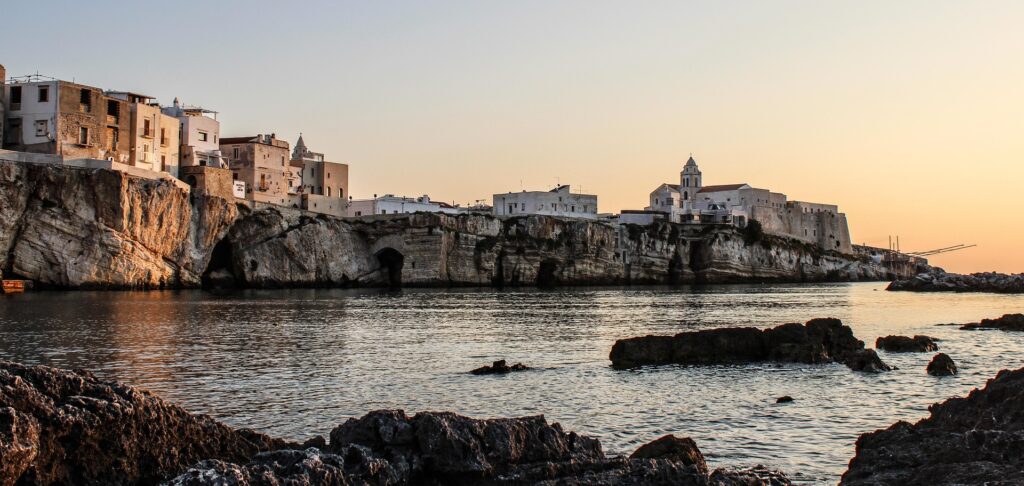
The Mediterranean is not a destination. It is the origin point — the sea that connected the ancient world’s greatest civilisations before the concept of travel existed, and that continues to draw more visitors than any comparable region on earth for reasons that have not fundamentally changed in three thousand years. The light is different here. The food is serious. The history is not behind glass. Fourteen countries share this coastline, each with a distinct identity, each connected by the same body of water that the Romans called *Mare Nostrum* — Our Sea. They were not wrong.
Around the World with Beyondia — episodes from the Mediterranean. From Italy and Croatia to Greece, Egypt, Tunisia, Malta, France, Spain and Morocco, each destination explores the coastal towns, hidden islands, ancient streets and local food of a sea that has connected civilizations for millennia.
The Western Shore
Spain
Spain anchors the western Mediterranean with the full range of what the region promises — the Moorish architecture of Andalusia, the modernist ambition of Barcelona, the Basque culinary culture that has produced more Michelin stars per square kilometre than anywhere on earth. [Read the full Spain Travel Guide →]
France
France contributes Provence, the Côte d’Azur, and Languedoc to the Mediterranean conversation — the lavender fields, the Roman aqueducts, the markets of Aix-en-Provence operating on a schedule that has not changed since the Romans established the town in 123 BC. [Read the full France Travel Guide →]
Morocco
Morocco crosses the Strait of Gibraltar to complete the western arc — the imperial cities of Fes and Marrakech, the High Atlas above them, the Sahara beyond, a country that contains more geographic and cultural range than its single outline on the map suggests. [Read the full Morocco Travel Guide →]
The Central Mediterranean
Italy
Italy is the argument that the Mediterranean makes most completely — the ancient Rome beneath the modern city, the Renaissance concentrated in a single valley in Tuscany, the Amalfi coast doing precisely what dramatic coastline is supposed to do, the food culture that the rest of the world has been attempting to replicate since the 13th century. [Read the full Italy Travel Guide →]
Slovenia
Slovenia contributes Lake Bled and the Julian Alps to the northern edge of the Mediterranean world — the alpine country whose southern reach touches the Adriatic at Piran, the Soča River running emerald through the limestone gorges above. [Read the full Slovenia Travel Guide →]
Croatia
Croatia offers the Adriatic at its most concentrated — the Dalmatian coast, the walled city of Dubrovnik, the islands of Hvar and Vis and Korčula, the Plitvice Lakes cascading through the limestone interior. The Adriatic here is the Mediterranean distilled. [Read the full Croatia Travel Guide →]
Montenegro
Montenegro compresses the full Mediterranean proposition into a country the size of Connecticut — the Bay of Kotor’s fjord-like geometry, the medieval walls of Kotor, the Budva Riviera, and the Durmitor mountains rising behind the coast in a single day’s drive. [Read the full Montenegro Travel Guide →]
Albania
Albania is the Mediterranean country that the 20th century kept closed and the 21st century is in the process of discovering — the Ottoman old town of Berat, the Ionian coast from Sarandë to Himarë, the mountains of Theth in the north, a country at the precise moment before mass tourism rewrites the terms of access. [Read the full Albania Travel Guide →]
The Eastern Mediterranean
Greece
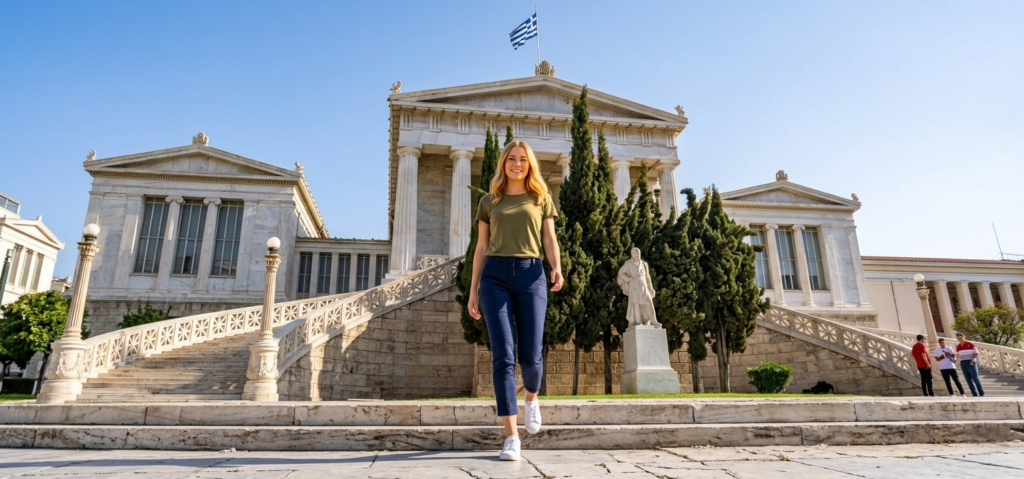
Greece is the Mediterranean’s philosophical centre — the Acropolis, the island archipelago of the Aegean, the ancient sites of the Peloponnese, the white and blue Cycladic architecture that the region’s visual identity has been built around since the first photograph proved it was real. [Read the full Greece Travel Guide →]
Lebanon
Lebanon contains Beirut — the city that has rebuilt itself more times than any other Mediterranean capital and that maintains, through each reconstruction, the specific cultural energy of a place that understands itself as the meeting point between East and West rather than a point on either side. The Bekaa Valley’s vineyards and the Cedars of God above Bcharre complete the argument. [Read the full Lebanon Travel Guide →]
Cyprus
Cyprus divides its Mediterranean identity between the ancient — Kourion, the Troodos monasteries, the Aphrodite myth born on its shores — and the contemporary, the island’s wine renaissance and the Akamas Peninsula’s wilderness sitting alongside the resort coast that the island’s international reputation was built on. [Read the full Cyprus Travel Guide →]
Malta
Malta is the Mediterranean in miniature — three islands, 7,000 years of continuous human habitation, the megalithic temples of Ħaġar Qim older than Stonehenge, the walled capital of Valletta containing more monuments per square metre than any other city in the world, the Azure Window gone but the Blue Lagoon of Comino unchanged. [Read the full Malta Travel Guide →]
When to Visit
The Mediterranean operates on a broad seasonal window with significant variation by country and coast. Spring — April and May — is the finest sustained period across the region: the wildflowers on the hills, the sea warming, the summer crowd weeks away. September and October match or exceed the spring window with the addition of warmer water and the harvest season. Summer delivers the full Mediterranean experience at full volume — worth it for those who choose correctly. Winter belongs to the interior — Morocco’s Sahara, the imperial cities, the archaeological sites — rather than the coast.
For the full seasonal breakdown, explore the monthly travel guides by destination.

Beyondia
Trusted Travel CompanionReal digital nomad. I travel. I learn. I grow.
What about you? Where are you going?